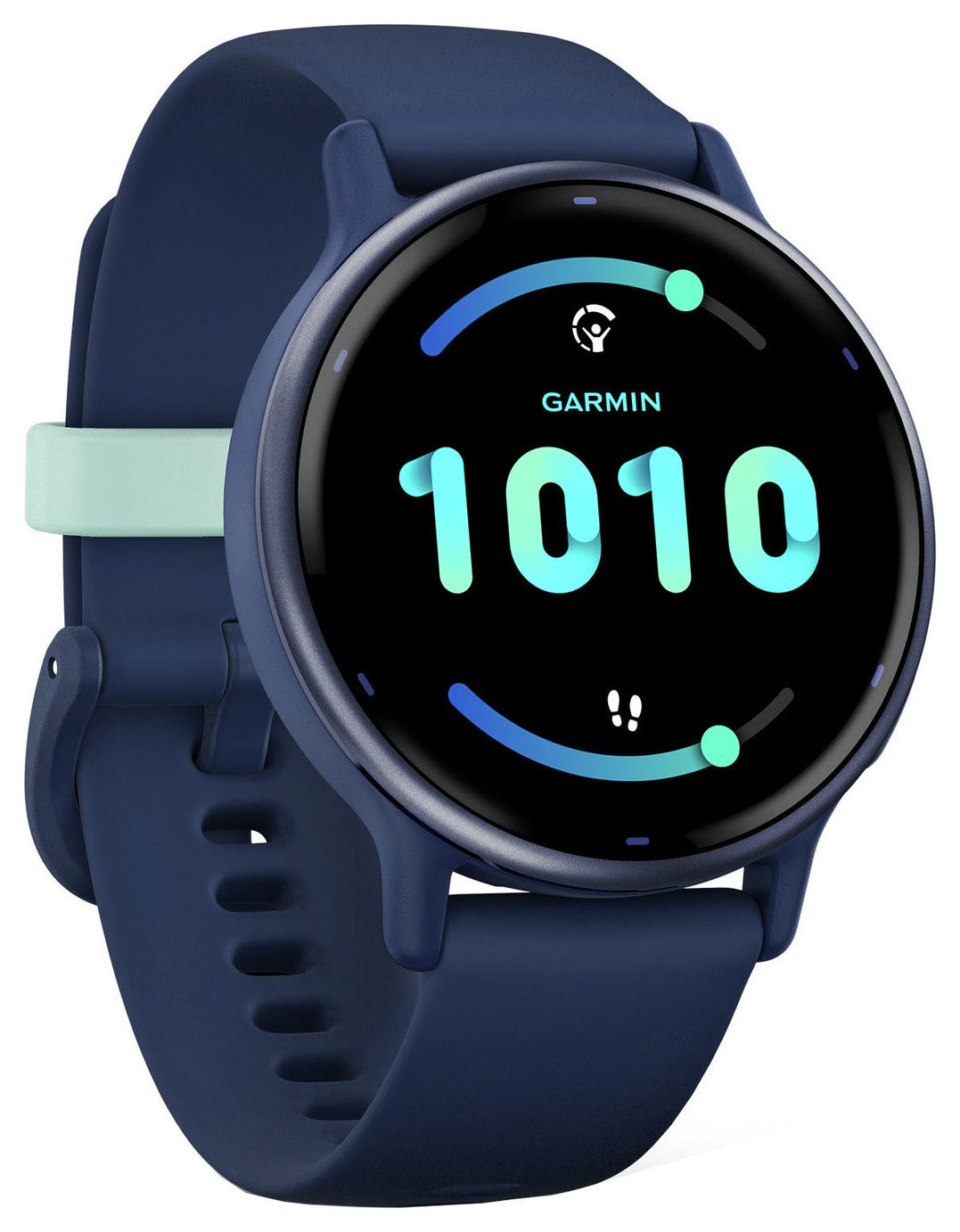
Garmin Vivoactive 5
Garmin
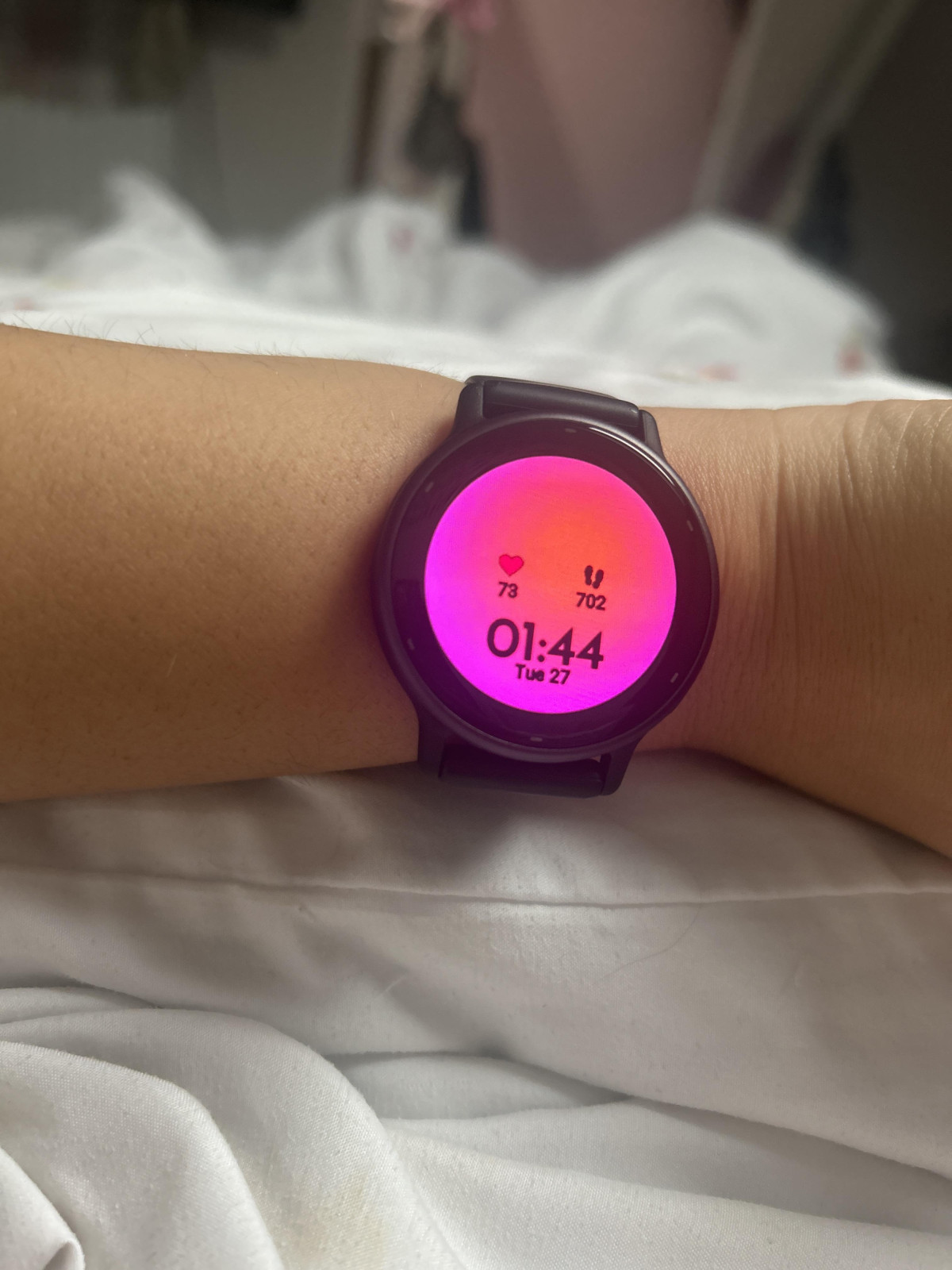
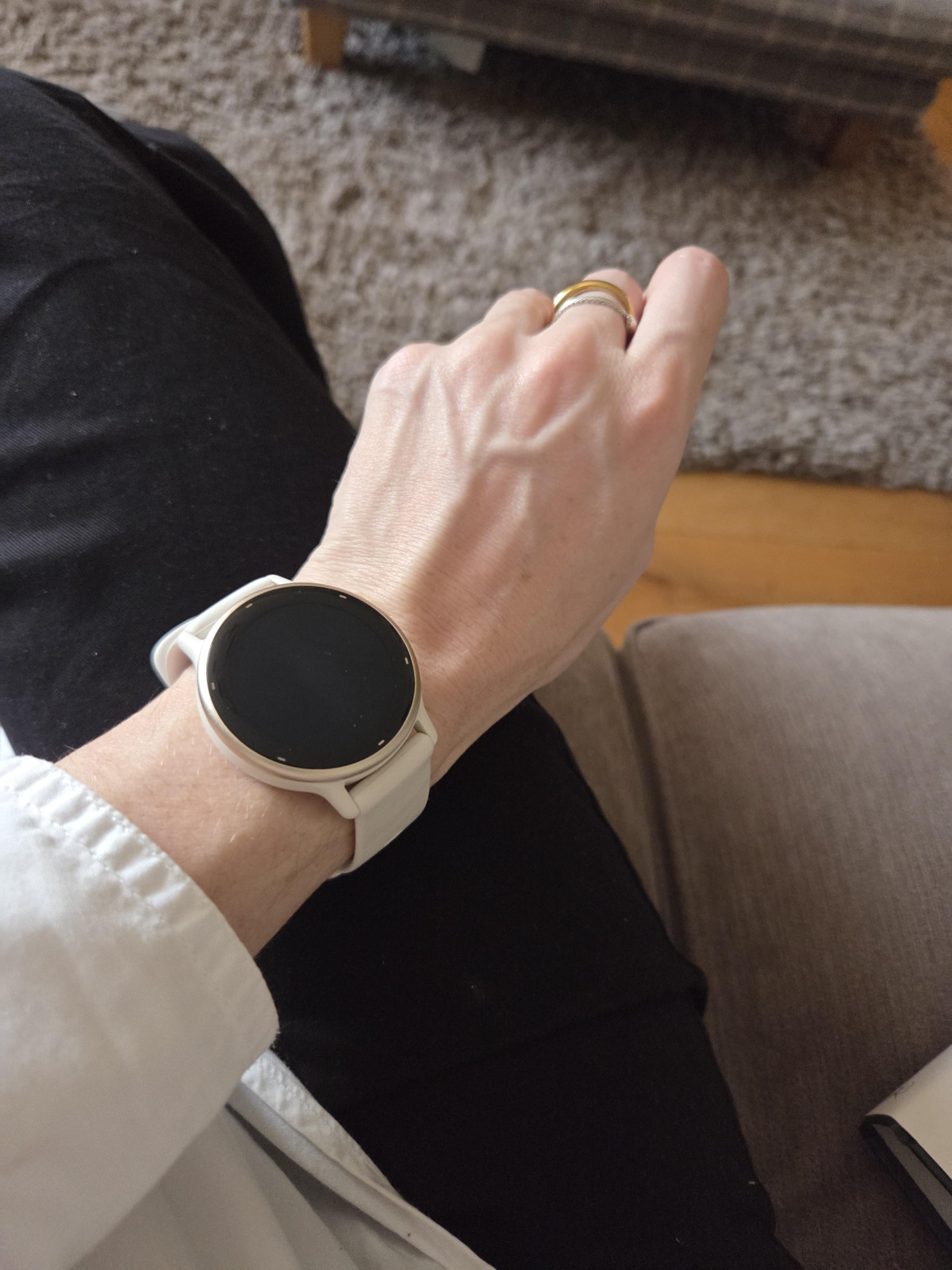
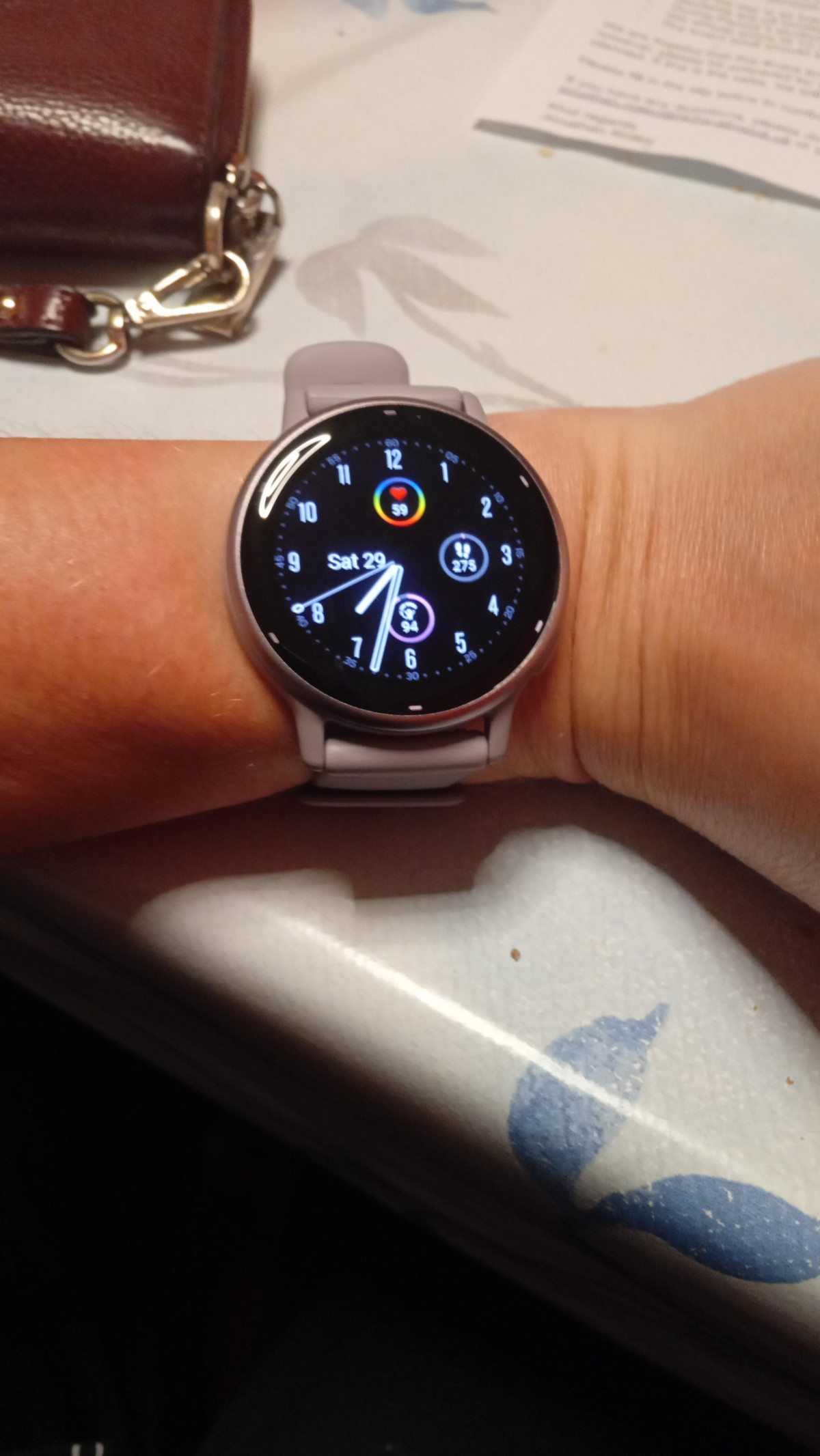
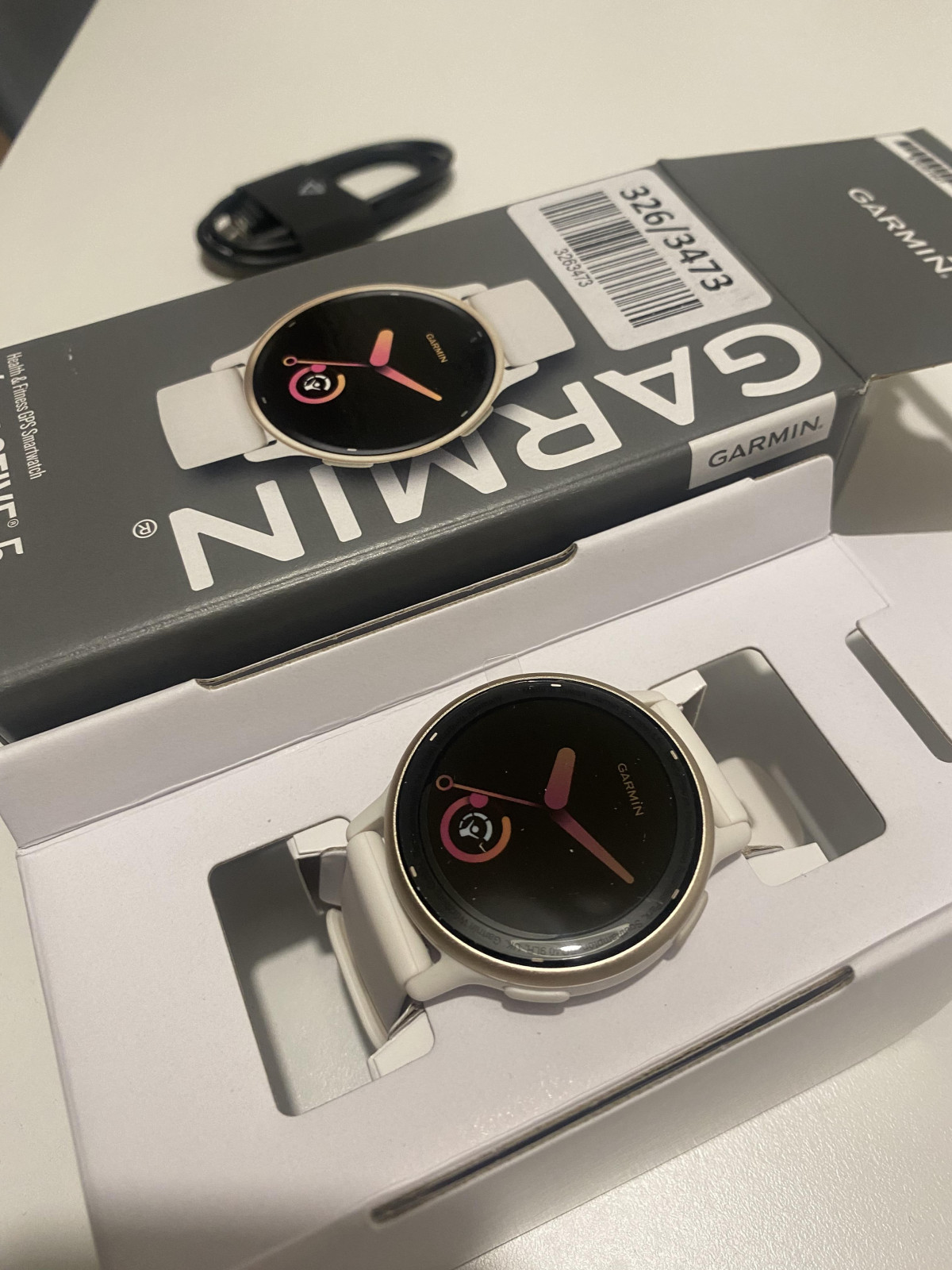
Why This Watch Keeps Showing Up on Every Shortlist
Most fitness trackers ask you to choose a side: either you get a stripped-down band that lasts a week on a charge but tells you almost nothing useful, or you get a full smartwatch that dies before bedtime and buries its best insights behind a subscription. The Garmin Vivoactive 5 sits in the gap between those two worlds, and it does so with a level of polish that Garmin has spent two decades refining. If you've been eyeing this watch because you want real health data — not just a step count — without babysitting a charger every night, this is the model worth understanding in detail before you buy.
What follows is a full breakdown of how it performs in daily life, where it genuinely earns its price, and where you might be better served by something else.
Design and Everyday Wearability
Case, Display, and Materials
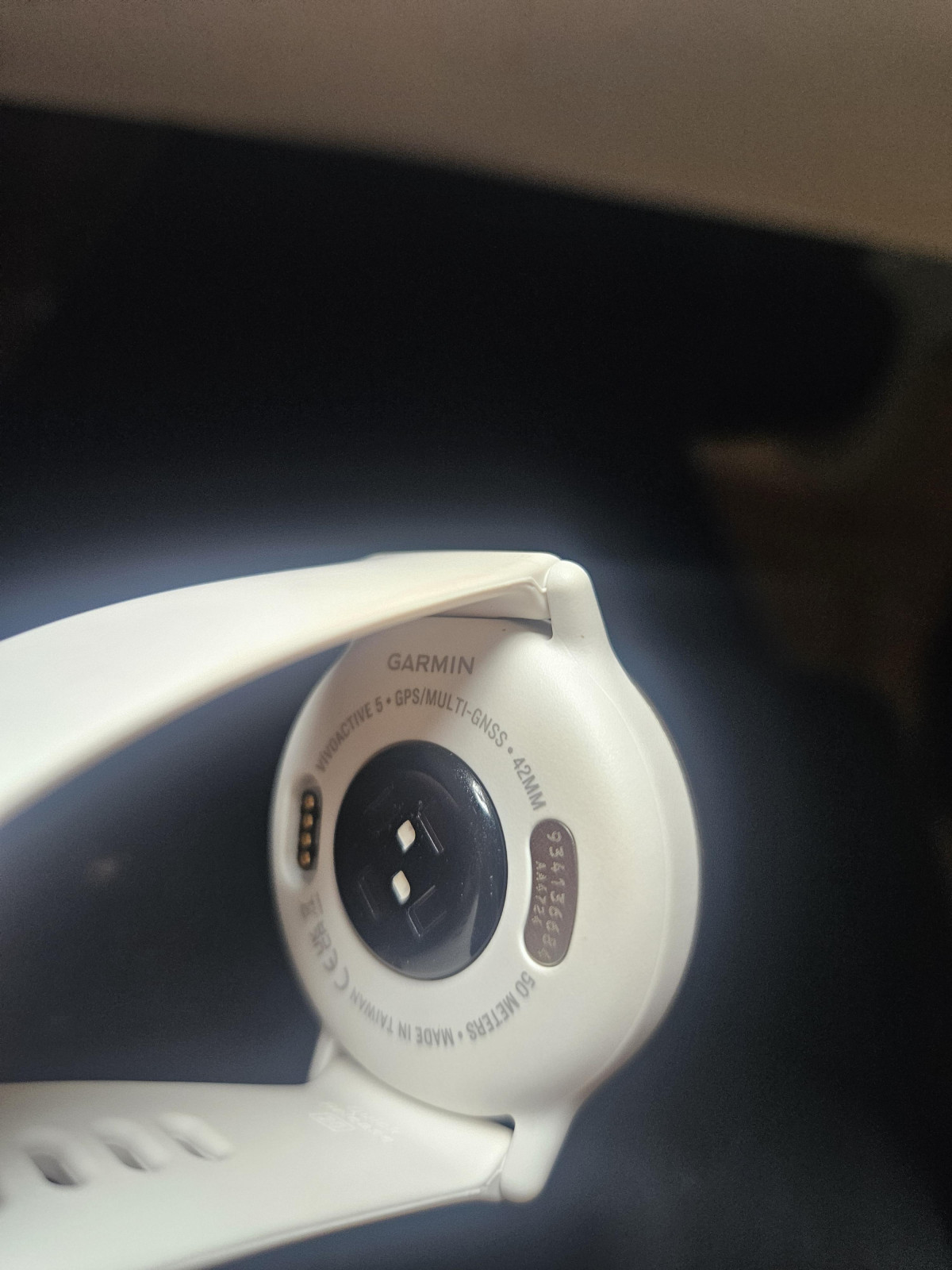
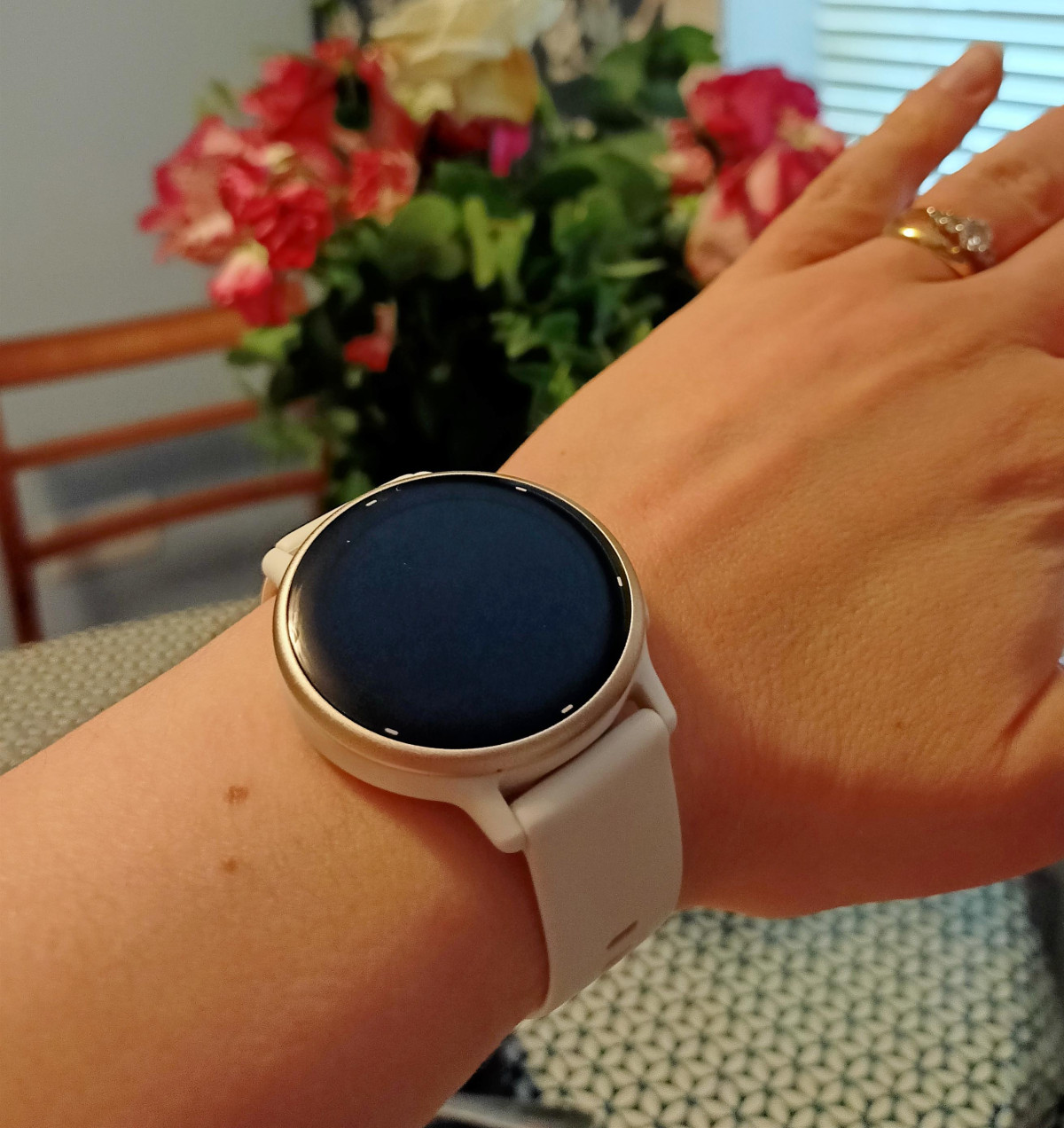
The Vivoactive 5's case measures a compact 42.2mm across and just 11.1mm thick, which puts it firmly in "wears like a normal watch" territory rather than the chunky, multi-tool look of Garmin's outdoor-focused Fenix or Instinct lines. At 36 grams with the strap attached, it disappears on the wrist in a way that heavier hybrid smartwatches don't — you'll forget you're wearing it during a desk-bound workday, which matters if you plan to keep it on 24 hours a day for sleep tracking.
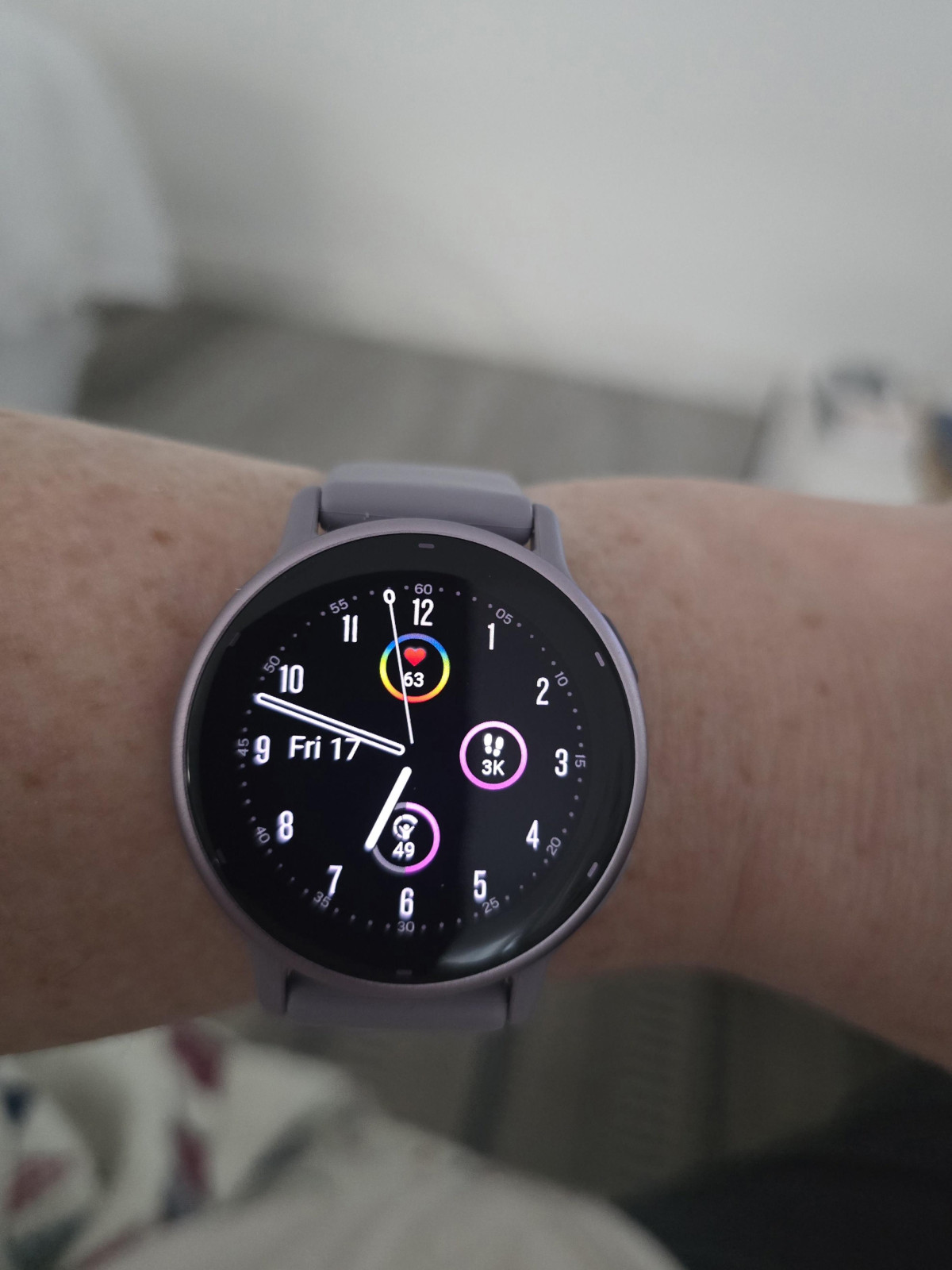
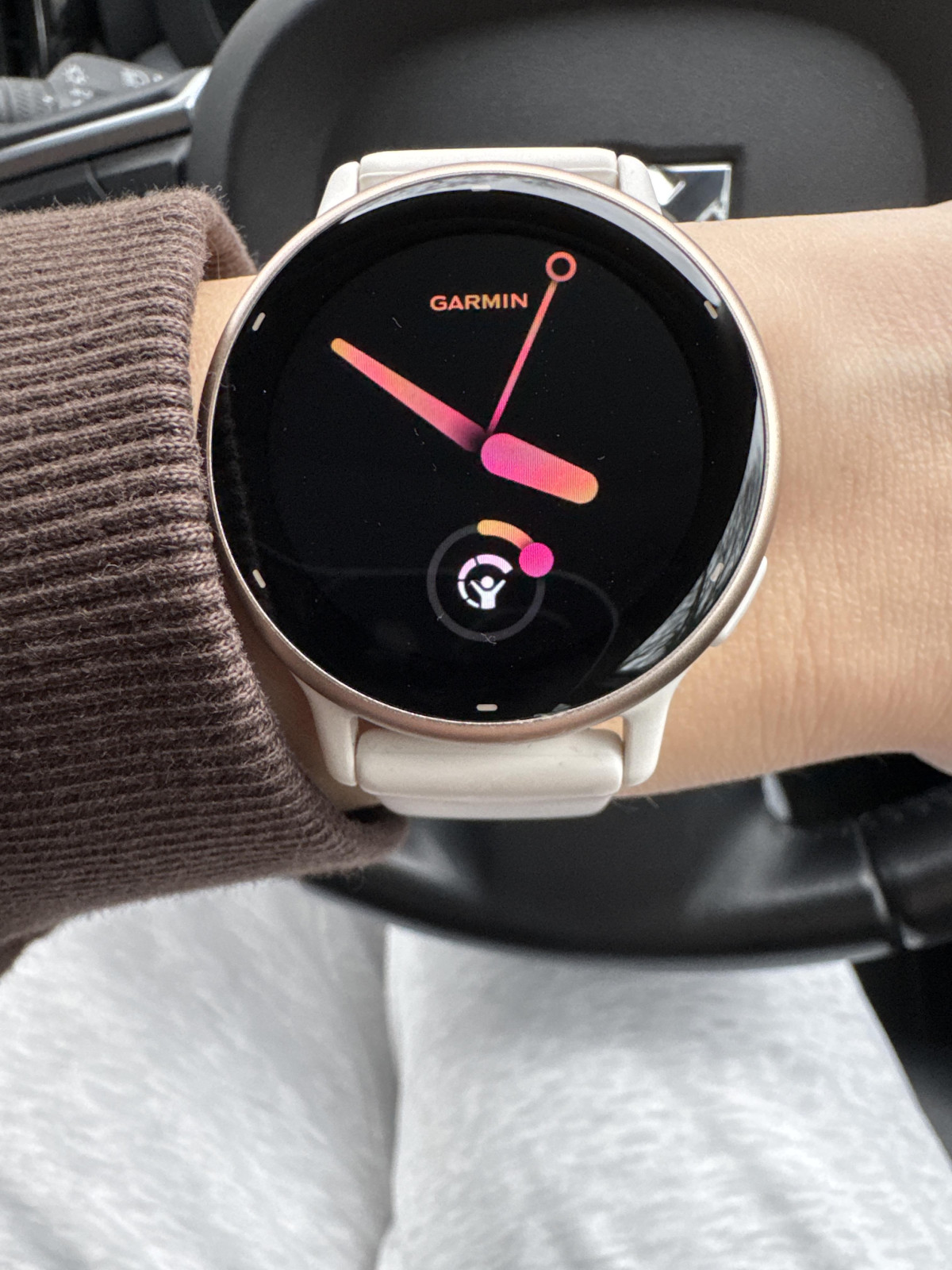
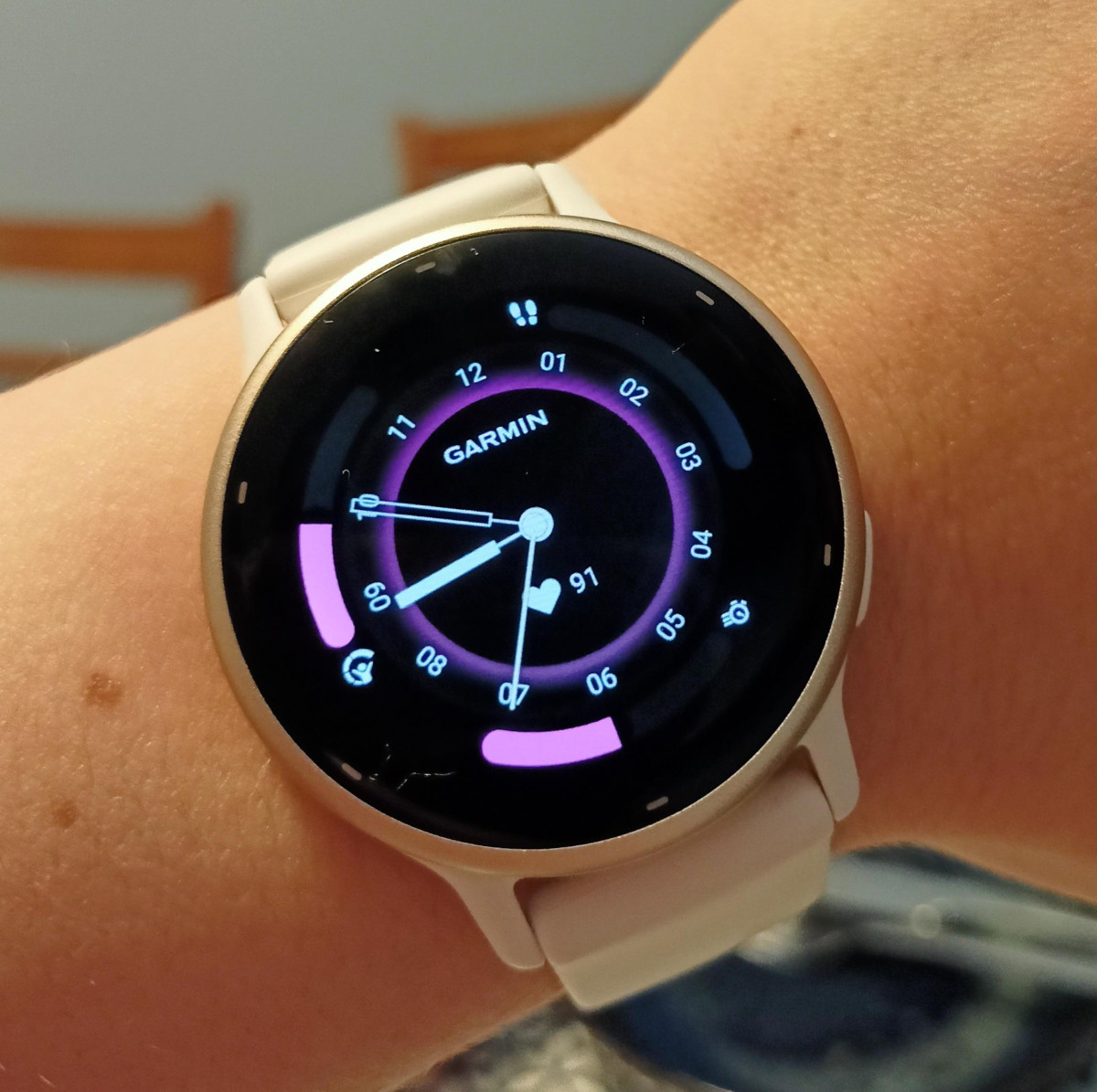
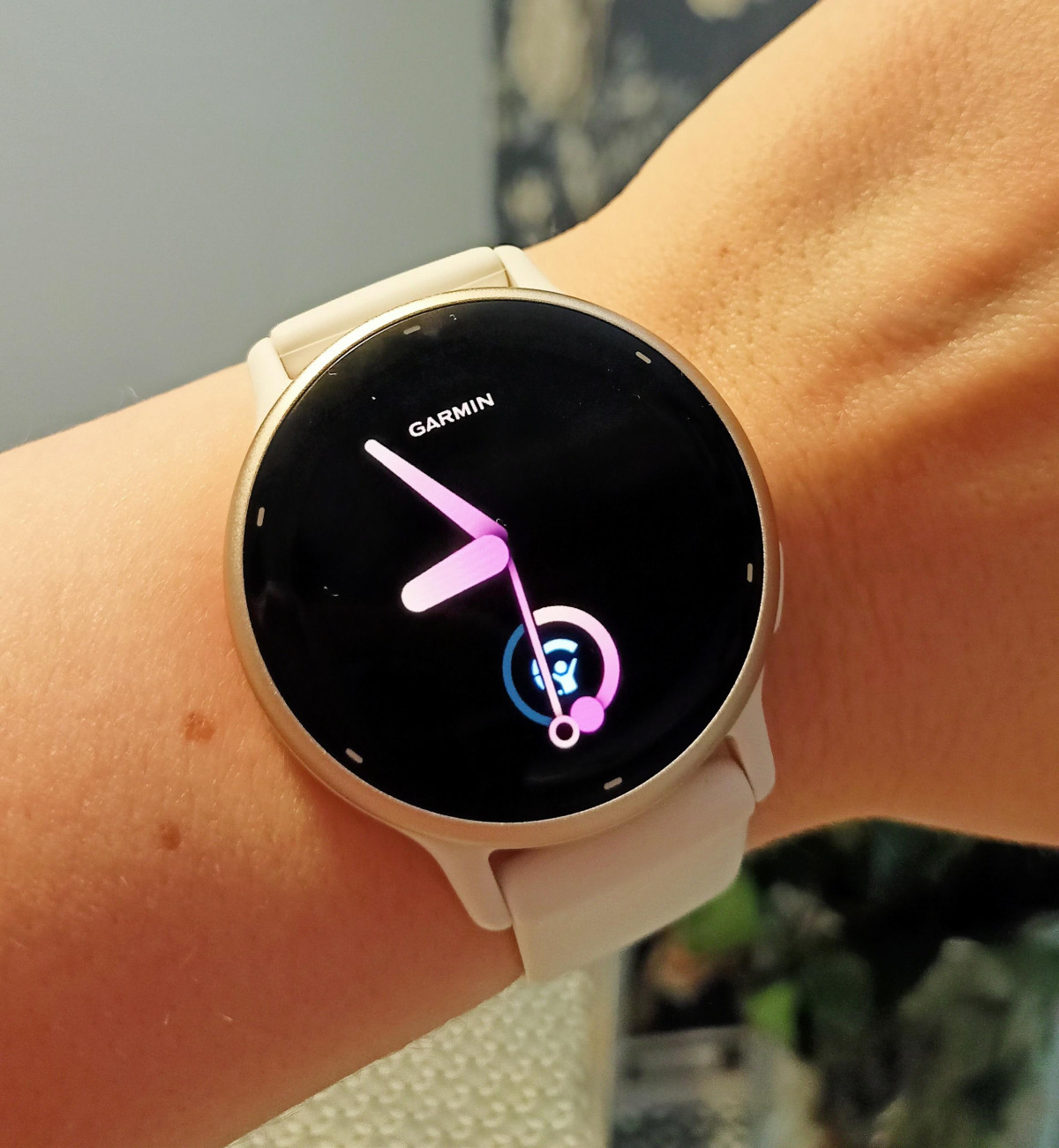
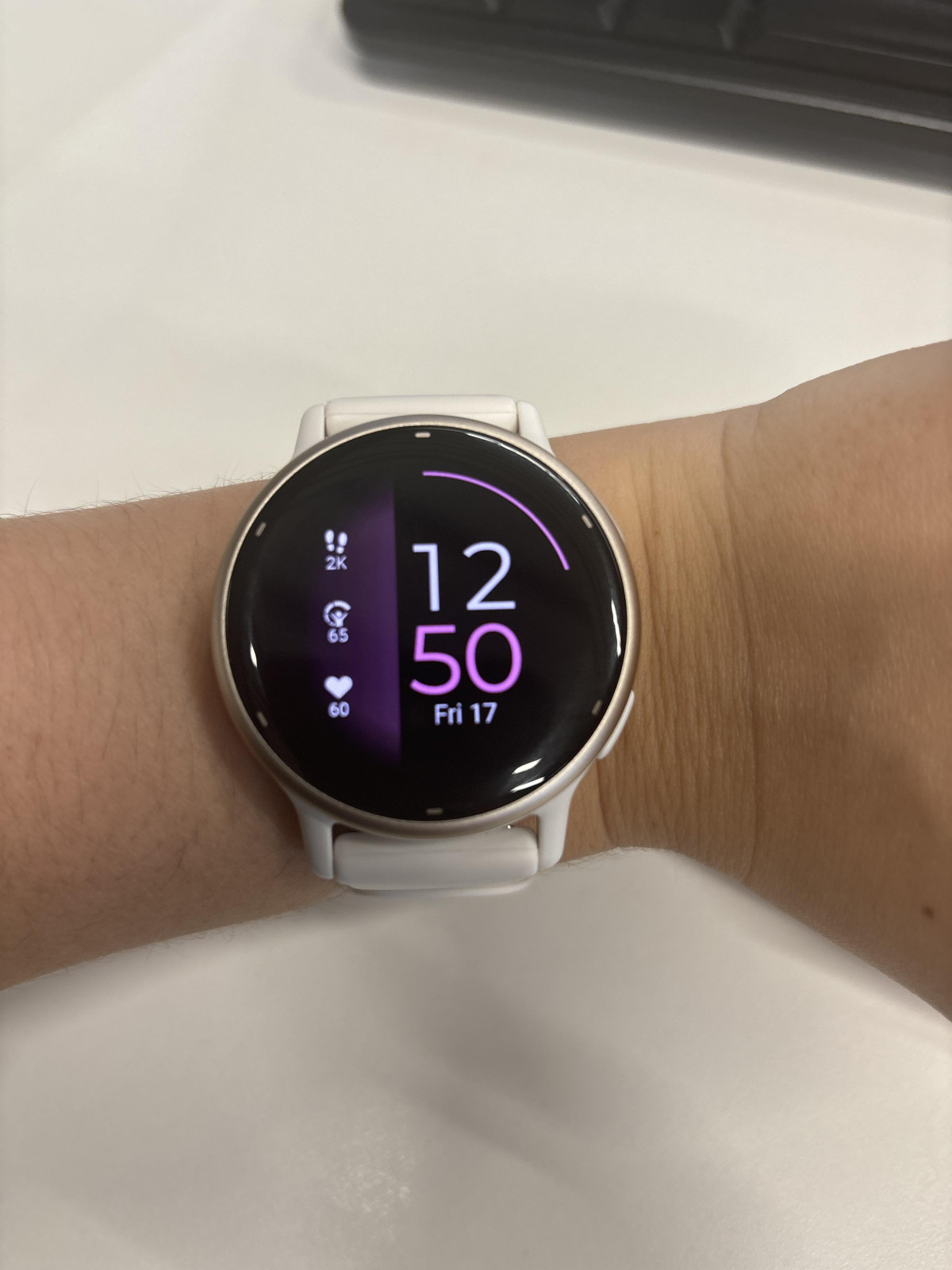
The centerpiece is a 30.4mm OLED touchscreen running at 390 x 390 resolution. OLED (organic light-emitting diode) technology means each pixel produces its own light rather than relying on a backlight shining through a filter, which translates into genuinely deep blacks, punchy colors, and text that stays legible even in direct sunlight — a real-world advantage over the muted transflective displays found on some of Garmin's more battery-obsessed outdoor watches. The trade-off, which is inherent to OLED panels generally, is that an always-on display setting will drain the battery considerably faster than the default raise-to-wake behavior.
Comfort and Fit
The removable silicone strap accommodates wrist sizes from 125mm to 190mm, covering the vast majority of adult wrists comfortably, and because it's a standard quick-release band, you're not locked into Garmin's own accessory ecosystem if you'd rather swap in a leather or metal alternative for evenings out. That swappability, combined with the watch's slim profile, is a large part of why this model reads as socially wearable in a way that bulkier sports watches don't — you can go from a gym session to a dinner reservation without feeling like you're wearing lab equipment.
Health and Fitness Tracking: What the Sensors Actually Tell You
Heart Rate Monitoring and Body Battery
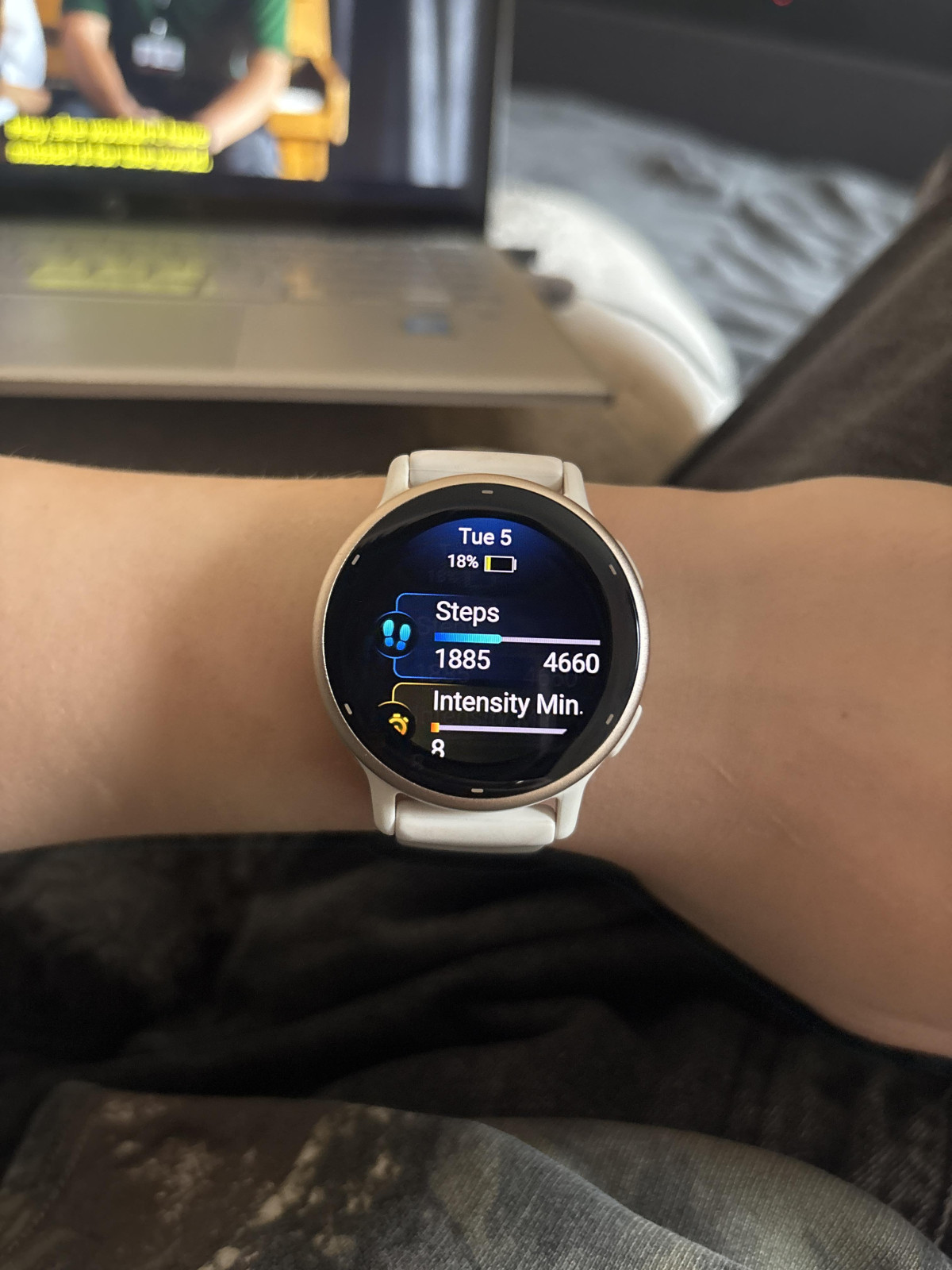
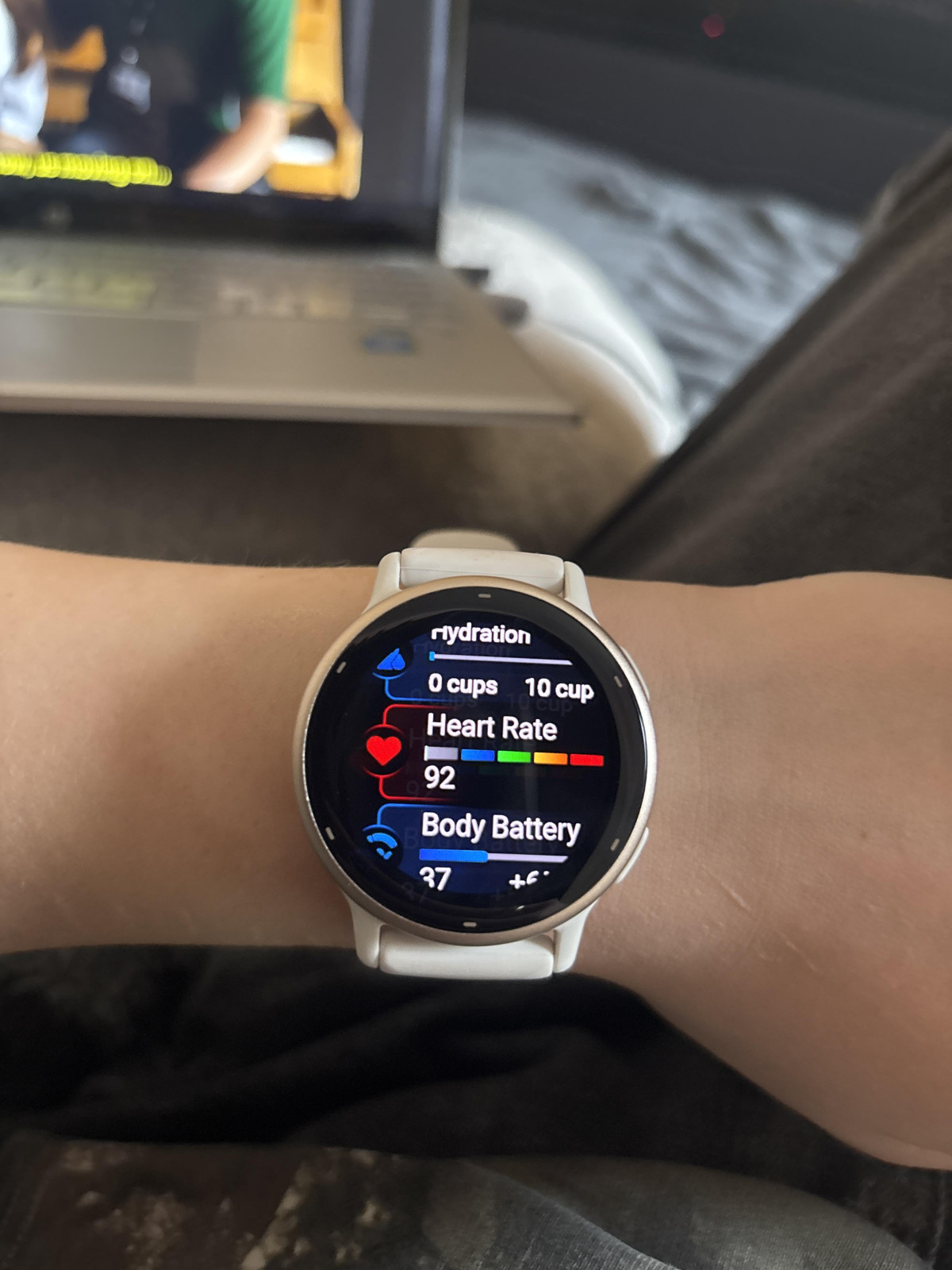
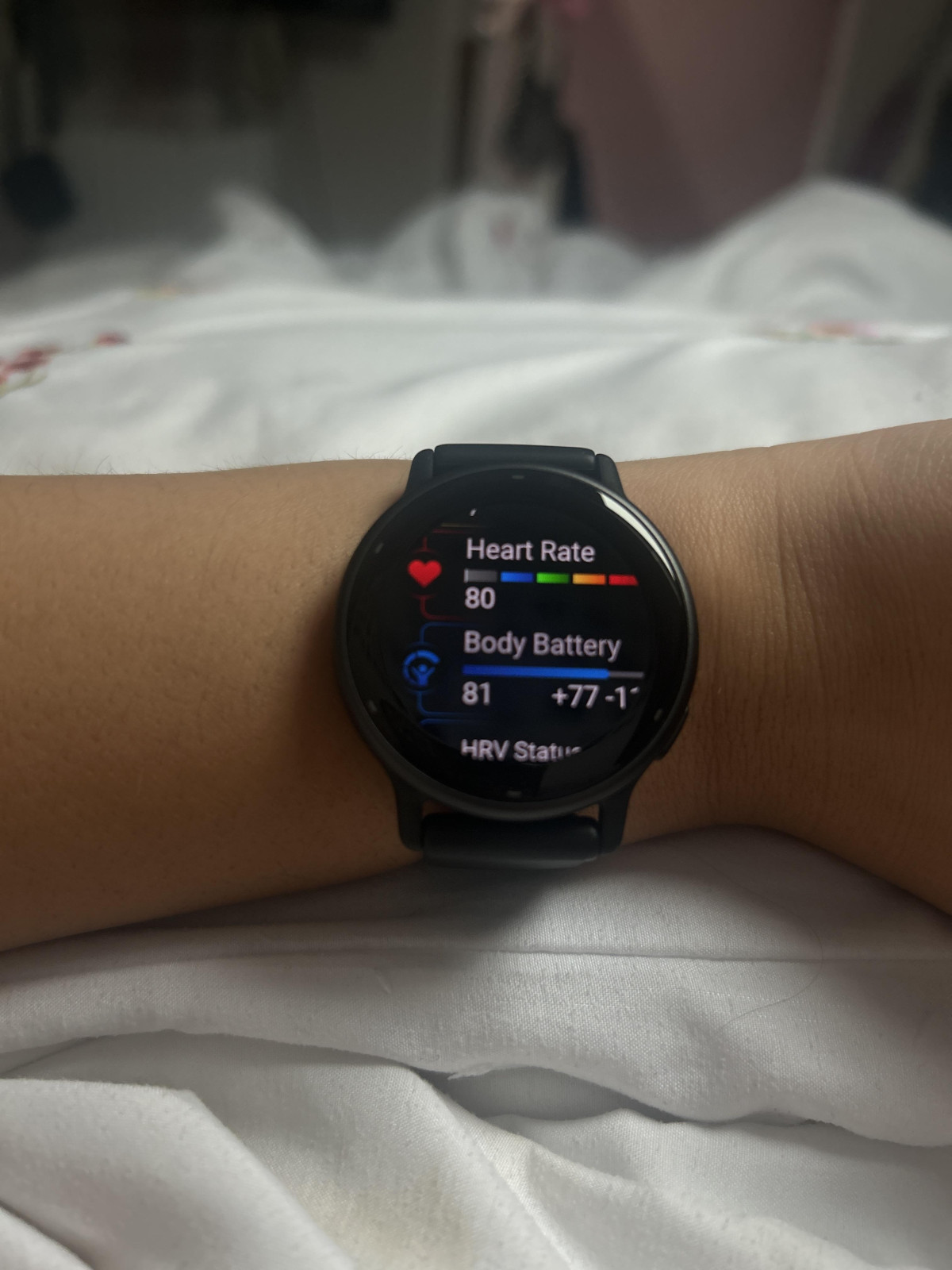
The wrist-based heart rate sensor runs continuously in the background, not just during workouts, which is what makes Garmin's signature Body Battery feature possible. Body Battery translates your heart rate variability, stress signals, sleep quality, and activity load into a single running number that estimates how much physical energy you have left in the tank — think of it as a fuel gauge for your body rather than your phone. In practice, this is one of the more genuinely useful features on the watch: instead of guessing whether you're run-down or just tired, you get a number that tells you whether push through a hard workout or take a recovery day. Garmin is upfront that this is an estimate rather than a clinical measurement, and it's worth treating it the same way — as a helpful trend indicator, not a diagnosis.
Sleep Coaching and HRV Status
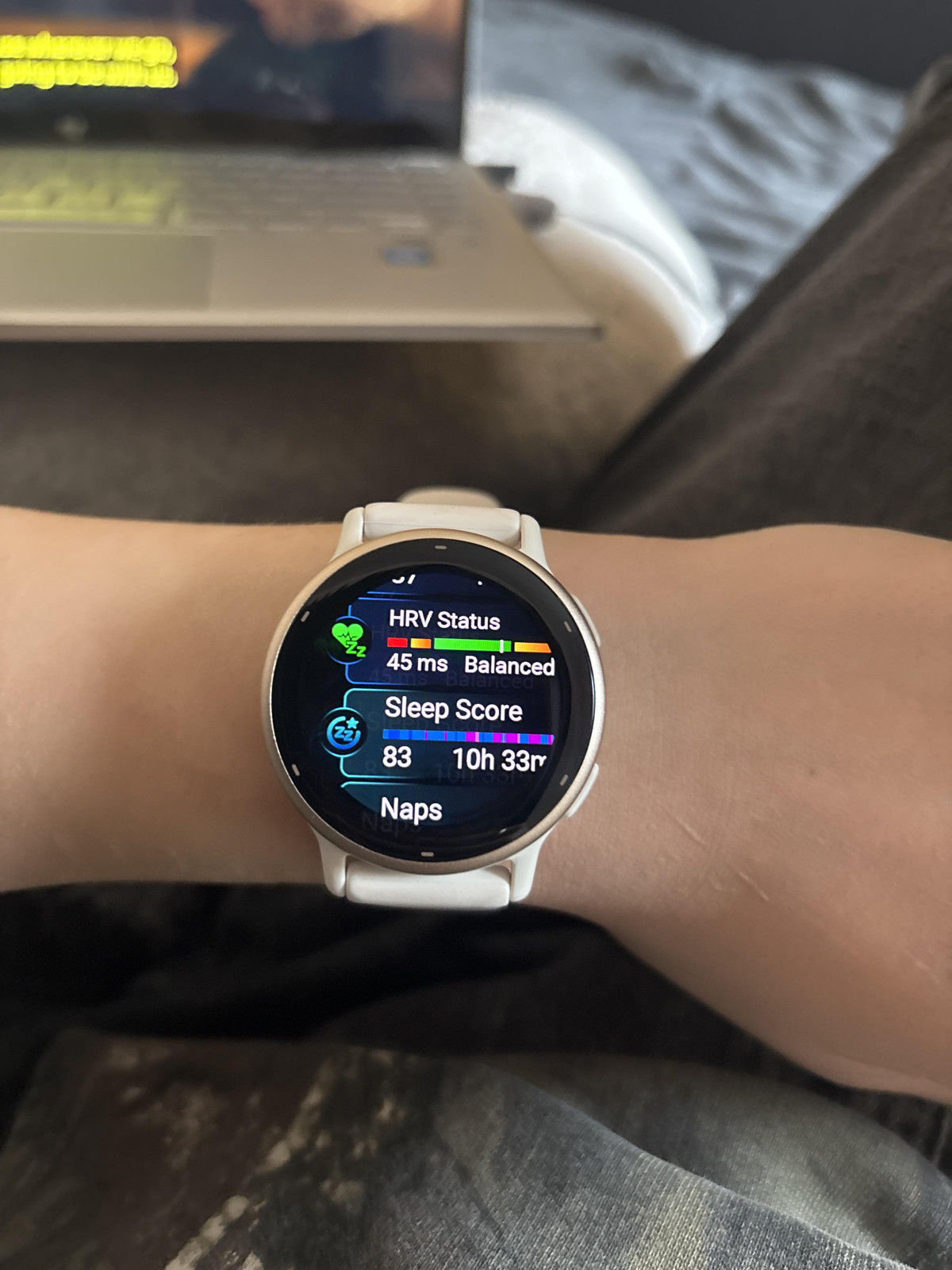
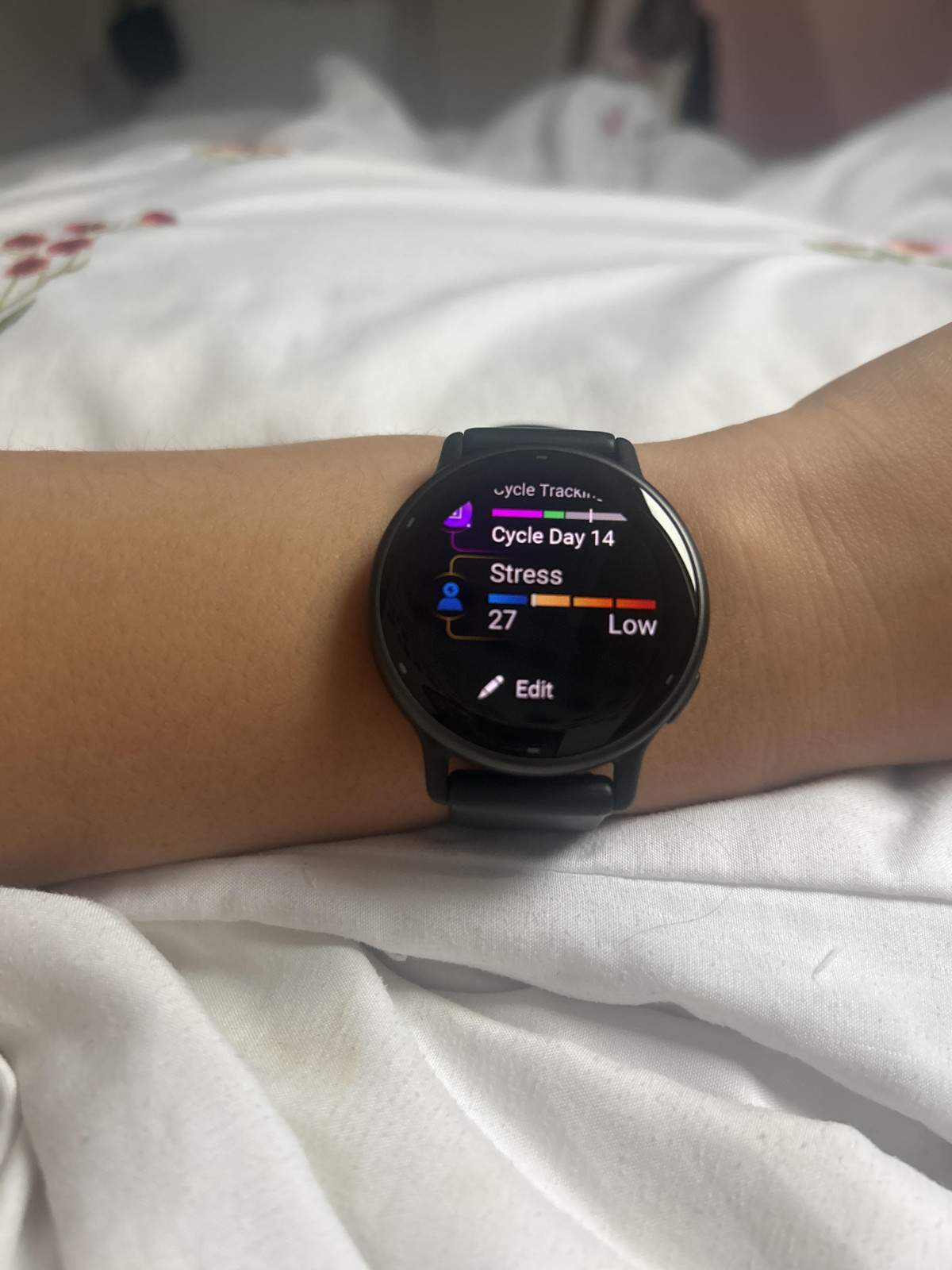
Overnight, the watch tracks sleep stages and delivers a sleep score each morning along with personalized coaching on how much rest you actually need, factoring in your recent activity and stress load rather than applying a flat eight-hour rule to everyone. It also surfaces HRV (heart rate variability) status — a measure of the tiny fluctuations between heartbeats that tends to correlate with how well your nervous system is recovering. Falling or unusually low HRV over several nights is often an early sign that you're overtraining, under-sleeping, or fighting off something, well before you'd notice it yourself. For this data to be meaningful, you do need to wear the watch to bed every night with a snug fit — inconsistent wear produces gappy, less trustworthy trends, which is a genuine adjustment for anyone used to taking a watch off before sleeping.
Built-In GPS and Sports Tracking
One of the more consequential features on this list is built-in GPS, meaning the watch can independently record your route, pace, and distance on a run, ride, or hike without your phone in your pocket. That's a real convenience for anyone who's ever wanted to head out for a run with just their watch and headphones. Independent testing of this GPS chipset shows it locks onto a signal quickly and tracks distance and pace accurately enough to match dedicated running watches, with only minor route discrepancies under heavy tree cover — a known limitation of single-frequency GPS rather than something specific to this model. It does not include multi-band (dual-frequency) GPS, a more advanced positioning technology found on some pricier Garmin models, which slightly reduces precision in dense urban canyons but rarely matters for typical outdoor training.
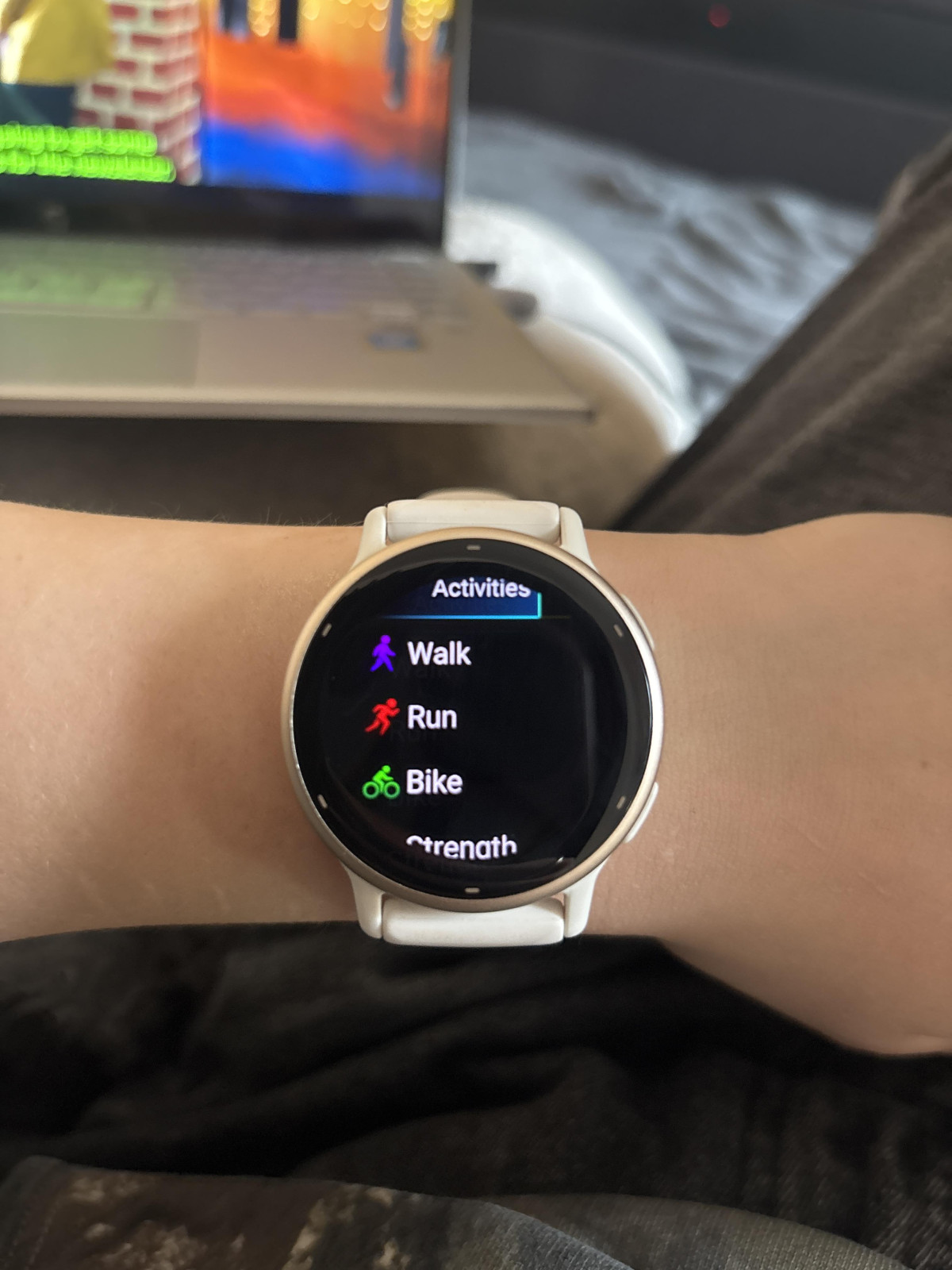
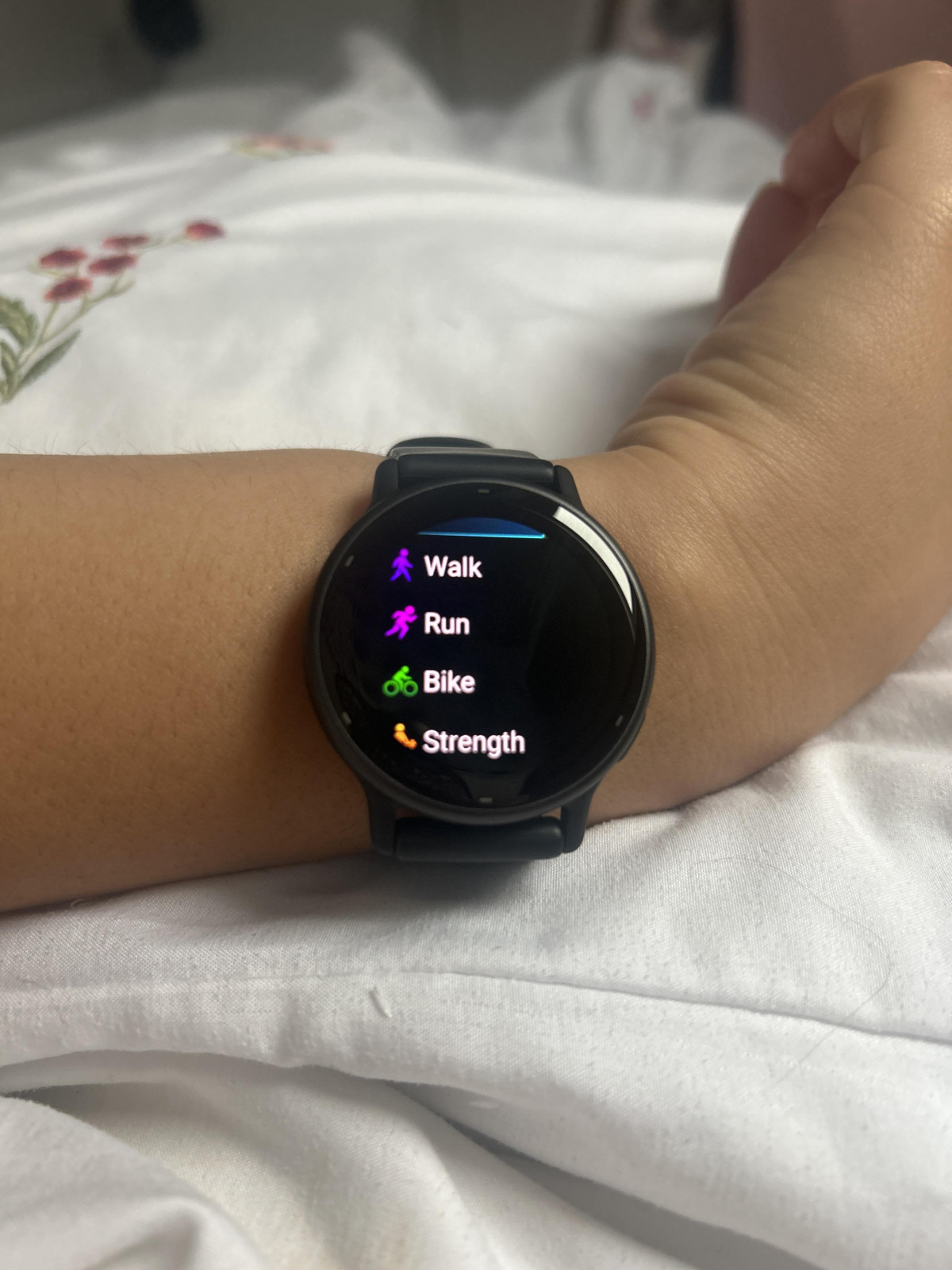
Beyond raw GPS tracking, the watch ships with more than 30 preloaded sports profiles. Rather than listing them as a flat spec dump, here's how they break down by the kind of training they actually support:
| Activity Category | Examples | What It's Good For |
|---|---|---|
| Cardio & Endurance | Running, cycling, indoor cycling, walking | Pace, distance, heart rate zones, route mapping |
| Strength & Conditioning | HIIT, strength training | Rep and set logging, work/rest interval tracking |
| Water Sports | Pool swimming | Stroke type, lap counting, pace per 100m |
| Precision & Leisure Sports | Golf | Course-aware tracking of rounds and activity |
| Outdoor Adventure | Hiking | Distance, elevation via GPS, pace on trail |
The heart rate sensor itself is Garmin's fourth-generation Elevate optical sensor. It's a step down from the newest fifth-generation version found on pricier models like the Venu 3, but independent testing against chest-strap heart rate monitors — generally considered the gold standard for accuracy — found it performs well overall, with only a slight lag in detecting heart rate drops during recovery periods after hard intervals. For the vast majority of runners, cyclists, and gym-goers, that's a difference you'd need a spreadsheet to notice, not one you'd feel mid-workout.
Battery Life and Charging: Real-World Endurance
Battery anxiety is the single biggest reason people abandon smartwatches, so it's worth spelling out exactly what to expect here rather than repeating a single headline number.
| Usage Mode | What You Get | What It Means Day to Day |
|---|---|---|
| Typical smartwatch use | Up to 11 days | A full work week plus the weekend without touching the charger |
| Battery Saver smartwatch mode | Up to 21 days | Roughly three weeks if you dial back notifications and continuous tracking, useful for travel |
| GPS activity tracking | Several hours of standalone recording | Covers long runs, rides, or hikes without draining the watch for the rest of the week |
| GPS with music playback | Noticeably shorter | Streaming or storing music locally is the single fastest way to burn through a charge |
The pattern that emerges from real-world testing is consistent: this is a watch built for people who track workouts a few times a week and wear the display in its default raise-to-wake state, not for someone who wants an always-on screen and daily multi-hour GPS sessions with music streaming — that combination will have you charging every day or two instead of every week and a half. When you do need to top up, a 1.5-hour full charge is quick enough to top off during a shower or lunch break rather than requiring an overnight commitment.
Smart Features That Matter Day to Day
Beyond fitness tracking, a handful of features quietly do a lot of the daily heavy lifting:
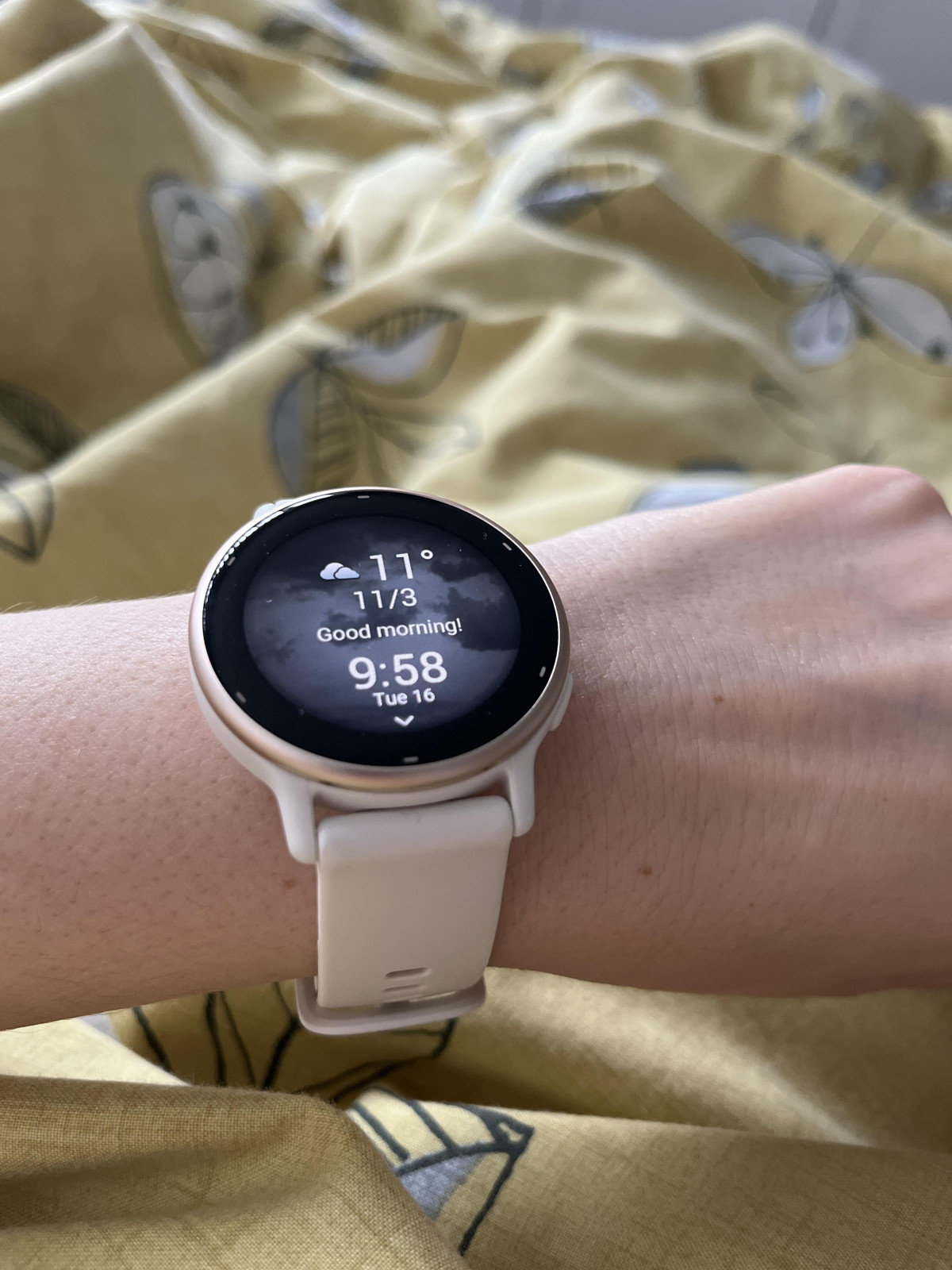
- Weather at a glance — current conditions and forecasts sync automatically whenever the watch is paired with your phone, so you know whether to grab a jacket without unlocking your phone.
- On-wrist music control — 4GB of onboard storage means you can load playlists directly onto the watch and pair Bluetooth headphones, letting you leave your phone behind entirely on a run. Note this is local storage and control, not a built-in cellular music service.
- NFC for contactless payments and phone-free notifications — tap-to-pay support and smart notifications work over Bluetooth when your phone is nearby, covering the two features most people actually want from a smartwatch beyond fitness.
- Fall detection — the watch can recognize a hard fall and alert designated contacts, a feature originally aimed at older or solo athletes that adds meaningful peace of mind for anyone who trains alone.
- Cross-platform compatibility — it works equally well with iOS and Android, which matters if your household mixes phone ecosystems or you're not ready to commit to a single one.
Durability and Water Resistance
The watch is rated water-resistant and swimproof, which covers showering, swimming laps, and being caught in the rain without a second thought, and it carries additional dust and scratch resistance for day-to-day knockabout use — useful if you're the type to wear a watch while doing yard work or moving furniture. It's worth noting that "swimproof" here refers to pool and everyday water exposure rather than deep-water diving, and like most electronics with water ratings, sustained exposure to very hot water (saunas, hot tubs) isn't recommended even though a fitness-level workout in warm conditions is perfectly fine.
Who the Vivoactive 5 Is Built For — and Who Should Look Elsewhere
This watch is aimed squarely at people who exercise regularly but don't need a coach-level training platform. If you run a few times a week, hit the gym, swim laps, or play a round of golf, and you want that activity backed by genuinely useful recovery and sleep insight, this hits the mark. It's also a strong pick if smartwatch battery anxiety has kept you away from the category entirely — going more than a week without charging is a real behavioral shift compared to most touchscreen smartwatches.
It's a weaker fit for two specific groups. Serious trail runners, mountaineers, or ultra-distance athletes will miss the barometric altimeter (a sensor that measures elevation via air pressure rather than GPS estimation) and the floors-climbed tracking that Garmin's more rugged and higher-tier watches include — this model estimates elevation through GPS alone, which is less precise on technical terrain. And anyone deeply embedded in Apple's ecosystem who wants deep iPhone-specific integration, a large third-party app store, or cellular independence will find Garmin's more fitness-first, notification-only approach comparatively limited.
How It Stacks Up Against the Competition
| Garmin Vivoactive 5 | Garmin Venu 3 | Apple Watch SE | Fitbit Charge 6 | |
|---|---|---|---|---|
| Typical battery life | Up to 11 days | Longer, multi-week options | About 18 hours | Up to 7 days |
| Built-in GPS | Yes | Yes | Yes | Yes |
| Display | OLED touchscreen | OLED touchscreen, larger case | Always-on OLED | Small touchscreen, no full watch face |
| Heart rate sensor generation | 4th-gen Elevate | 5th-gen Elevate | Proprietary Apple sensor | Includes ECG |
| Altimeter | No | Yes | Limited | Yes |
| Phone ecosystem | iOS and Android | iOS and Android | iPhone only | iOS and Android |
| Best suited for | Balanced fitness and daily wear | Athletes wanting the latest sensors | Deep Apple ecosystem users | Budget-conscious basic tracking |
The pattern here is straightforward: step up to the Venu 3 and you get a sharper heart rate sensor and an altimeter at a higher price and in a larger case. Step down to a Fitbit Charge 6 and you save money and get ECG readings, but lose the full touchscreen smartwatch experience and land on a noticeably shorter battery cycle. The Apple Watch SE offers the richest notification and app ecosystem if you're an iPhone user, but its roughly 18-hour battery life means daily charging is non-negotiable — a real lifestyle difference if you've never had to think about your watch's power level before. The Vivoactive 5 lands in the middle of all three trade-offs, which is exactly why it tends to be the recommendation for people who haven't yet committed to a specific ecosystem or training philosophy.
Honest Trade-offs
The strongest case for this watch is how little it asks of you in exchange for what it gives back. You're not charging nightly, you're not squinting at a dim screen outdoors, and you're not paying for sensors you'll never use. The Body Battery and sleep coaching features in particular do something most trackers don't even attempt: they turn raw biometric noise into a single, actionable daily signal.
Where it falls short is mostly a matter of what's been deliberately left out to hit this price and size. The lack of a barometric altimeter means elevation data on hikes is a GPS-based estimate rather than a precise pressure reading, which serious trail users will notice on technical terrain. The fourth-generation heart rate sensor, while accurate for the overwhelming majority of workouts, isn't the sharpest tool Garmin makes, and if you're chasing scientific-grade recovery lag detection, you'll feel that ceiling eventually. The minimal physical button layout also means some menu navigation leans entirely on touch, which a small number of users — particularly in the pool, where the touchscreen is intentionally locked to prevent water-triggered taps — find slightly less convenient than a button-driven interface during workouts.
None of these are dealbreakers for the audience this watch is built for. They're the kind of trade-offs that exist because Garmin clearly decided what to cut to keep the price, size, and battery life in balance, rather than oversights.
The Verdict: Should You Buy the Garmin Vivoactive 5?
If your priority is a smartwatch that gives you genuinely useful daily health insight, tracks a wide range of workouts accurately, and doesn't demand a nightly place on the charging pad, the Garmin Vivoactive 5 is a confident recommendation. It's built for the person who trains consistently but isn't chasing marginal performance gains — someone who wants to understand their sleep, stress, and recovery as clearly as their step count, in a watch that's comfortable enough to forget you're wearing.
Buy something else if you specifically need a barometric altimeter for serious hiking or mountaineering, want the sharpest heart-rate accuracy Garmin offers for structured training, or you're deeply invested in Apple's ecosystem and want native, always-on integration with your iPhone. For everyone else — the far larger group of people who exercise regularly and want a smart, comfortable, long-lasting companion for it — this is one of the easiest recommendations in its price range.
What People Say
19 commentsDoesn't connect to Spotify
Got an old Fitbit Charge 5 that keeps glitching so decided I'd upgrade. After extensive research I decided on a Garmin Vivoactive 5 because it says you can use Spotify independently, leaving your phone at home on a run/walk (or hotel safe whilst enjoying the pool on holiday), however no matter what I tried it wouldn't connect (not even to control Spotify on my phone). I searched online for hours for a solution only to find many other people with the same issue. I added the Garmin app & checked my WiFi was compatible with their instructions but still no luck. The watch itself is more complex than the Fitbit & personally I think overkill for my needs but seems great quality if you like to monitor fitness/health/sleep & you're not bothered about a music connection. Argos were great accepting a return due to it not doing as advertised. Garmin needs to sort this out & stop doing 'music' edition watches, just fix the existing range as per their product descriptions.
Great stylish Smart Watch.
Bought for my wife who is very happy with it. She only wanted it to track steps and swimming and it does that and quite a bit more. She has started to track walks on Strava and is starting to use the sleep tracking.
Battery life is very good - she is getting days and days out of a single charge.
And she likes the look of it.
Good watch for my fitness routines VG battery life
This watch replaced a forerunner 55 which was 4 yes old when the batteries kept failing.
Vivoactive 5 was difficult to link to the Garmin app as my phone couldn't read the QR code on the watch display other than that it is good, easy to operate once you get used to it. Very good battery life so far.
Great Quality for an unbeatable price!
I bought this watch a little over two weeks ago. The amount of features this watch has for the price is outstanding! It is music enabled and keeps track of so many activities. After using two different garmin watches, this is by far the best. I highly recommend this watch.
Great all round watch with GPS!
Bought it 2 weeks ago and have to say that it was a great decision! Very easy to work it’s features out, intuitive and amazing screen adds to the value. Charged twice in the last 14days so amazing battery life, considering plenty of activities done almost everyday.
Great all rounder!
Bought this to monitor my running and fitness goals. Debated between the myriad of Garmin watches but settled on this after checking reviews. Great little watch. Tracks everything I need. Easy to use. Fantastic battery life compared to my Apple watch.
Great watch
Does more than what I needed but it’s Perfect to track all my activity and battery life is fab got the full 11 days out of it
Did have a connection issue but that was my lack of tech skills rather than watch
Very happy looks fab aswell
Got most for a watch re health.
Great watch. Easy to read and has many functions. Saved £100 in sale. Light wait and covers most of the activities I want. Sleep, battery life, steps and body battery. Only downside is no heart monitor for oxygen in blood.
Great watch
Great watch. Had several garmins over the last 15 years and this reminds me of how good their watches are.
Excellent battery life, enough data screens without being too nerdy, smaller design and looks okay on a night out.
Great all around
Brilliant watch for all sports. Battery is great & information provided is clear & concise. I’m training for the Paris marathon & it’s been a huge asset
Excellent watch, Easy to use
I bought this watch as a replacement for my Vivoactive 3. So easy to use. The watch quickly links to GPS and is accurate. Very happy with my choice.
Fabulous fitness watch
Garmin just get better and better- easy to use- so many functions. The only fitness watches to consider in the market and great customer service
Replacement of Venu 2
I bought to replace a Venu 2. It doesn't have Hills or Hike, which isn't an issue for me. The battery seems to last a lot longer.
Looks great, lovely colours. Thrilled with it!
I bought this for a valentines present. My husband is thrilled with it. He loves the look, the fit and the extras on it.
Good Product. Stylish.
Bought this recently. Haven't used it really yet, but seems to tick all boxes. Hopefully less flaky than a competitor.
GREAT SMART WATCH FOR A GREAT PRICE
Great watch! I made the mistake of not charging it fully before use but now that I charge it fully it's brilliant.
Ideal for fitness tracking
Excellent battery life, easy to set up and many premium features including sleep coach, strain and HR variability
Amazing Garmin
My garmin work perfectly. The battery is amazing! I row every day and it is perfect for that and tracking sleep.
Not good
Does not hold charge after the first recharge after letting each die completely before doing the recharge