Canon EOS R100
Canon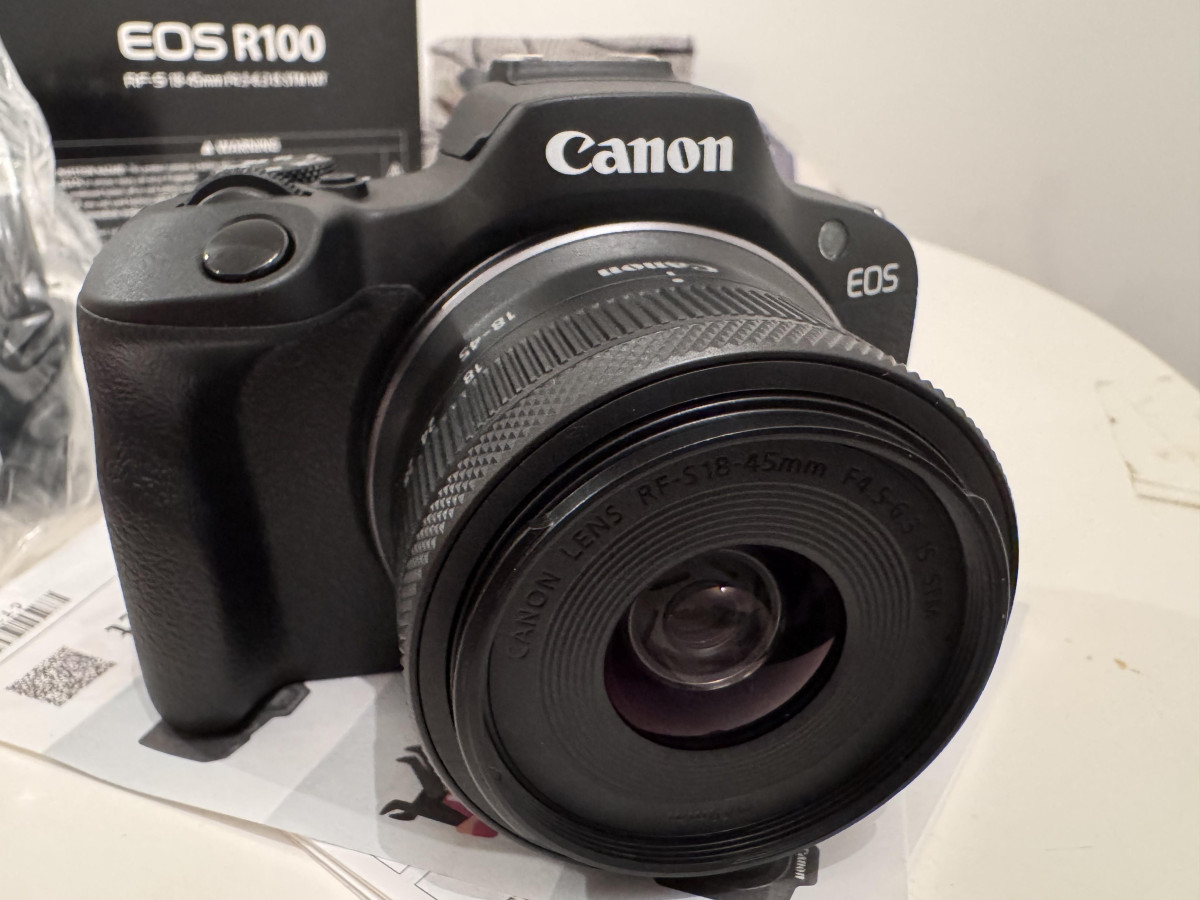




Who Canon Built the EOS R100 For
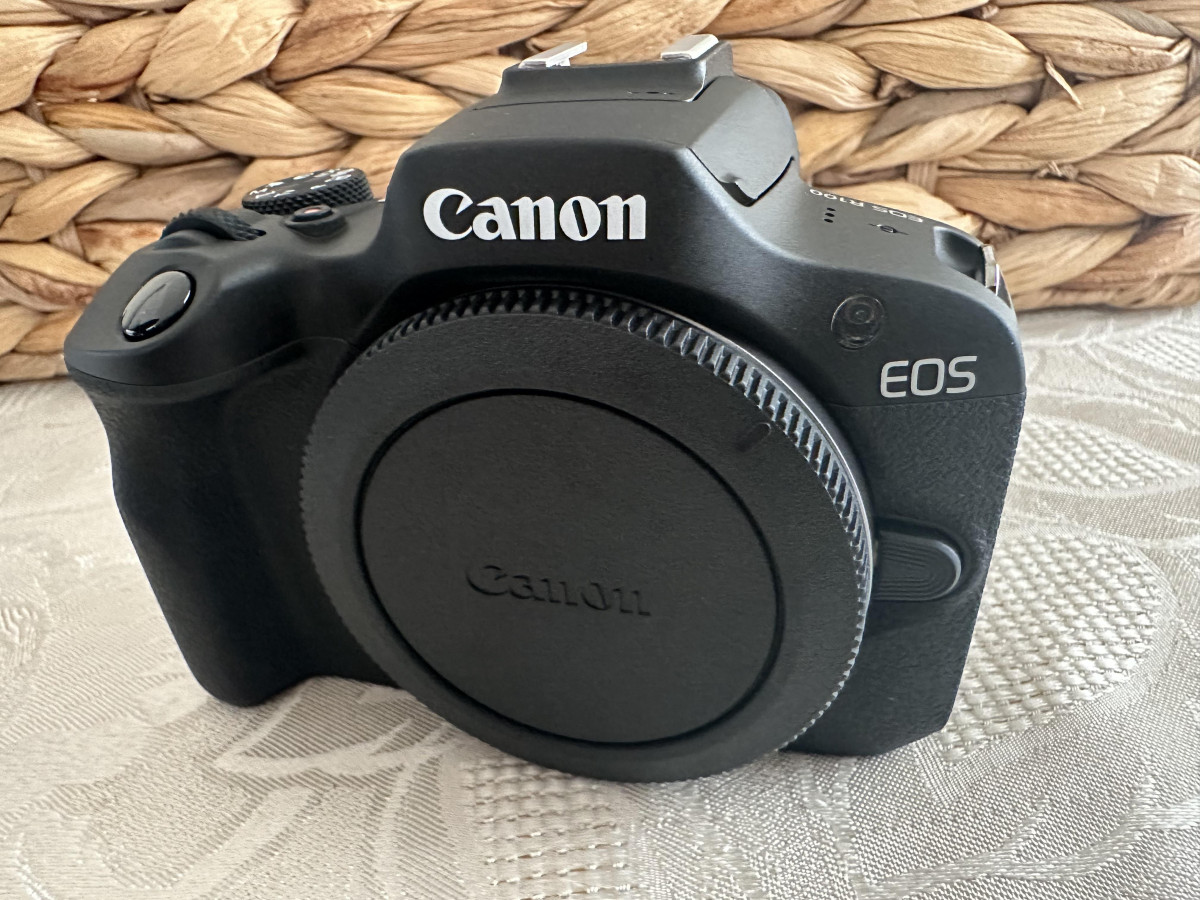
Most people don't want a camera that requires a manual to understand — they want one that gets out of the way and lets them capture the moment. The Canon EOS R100 is built around that exact idea. It pairs a proper APS-C sensor and Canon's RF lens mount with a stripped-back, beginner-first control scheme, all wrapped in a body light enough to forget you're carrying it. This is a camera aimed squarely at someone stepping up from a smartphone for the first time, not at someone chasing frame rates and pixel-peeping charts.
That said, "beginner-friendly" and "compromise-free" are not the same thing, and Canon made some very deliberate cuts to hit this price point. Whether those cuts matter to you depends entirely on what you plan to shoot — and that's exactly what this review will help you figure out.
Design, Build Quality and Handling
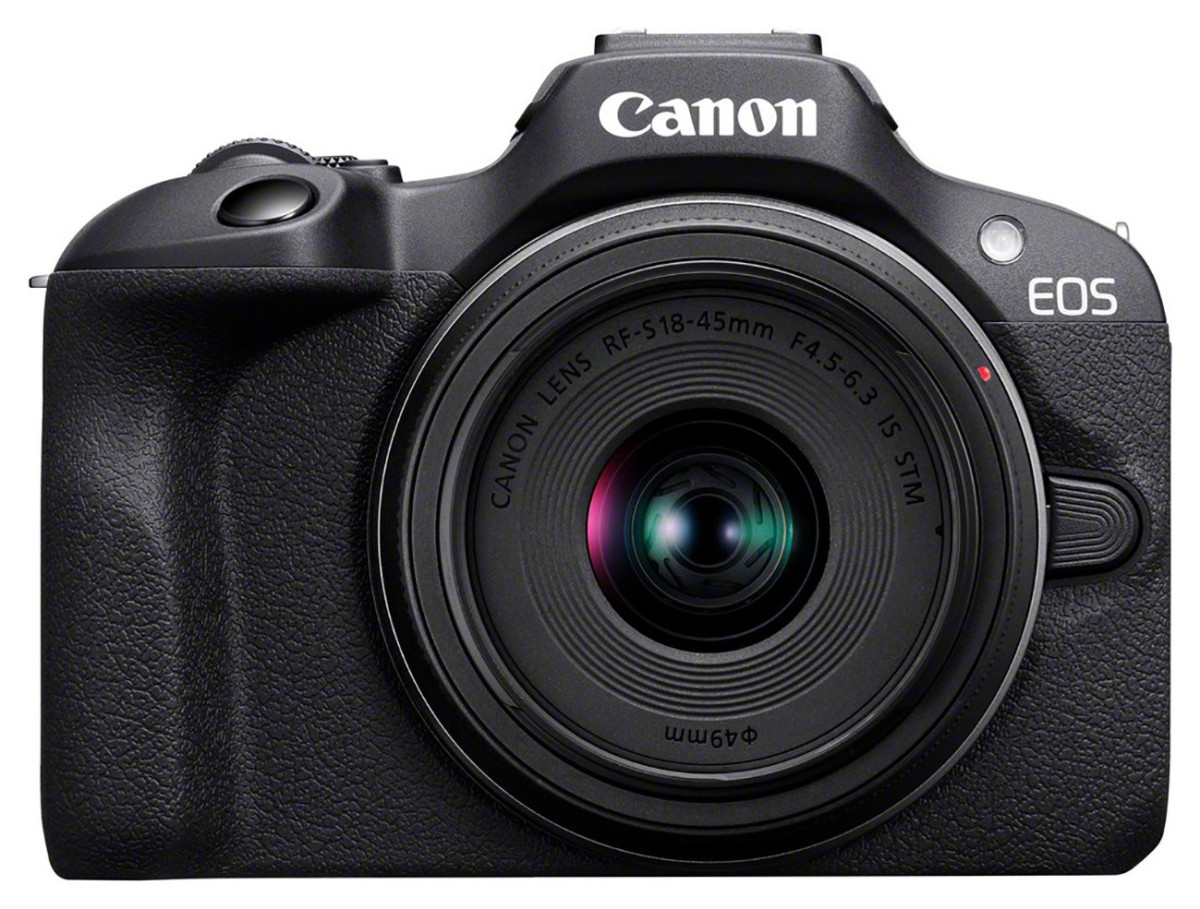
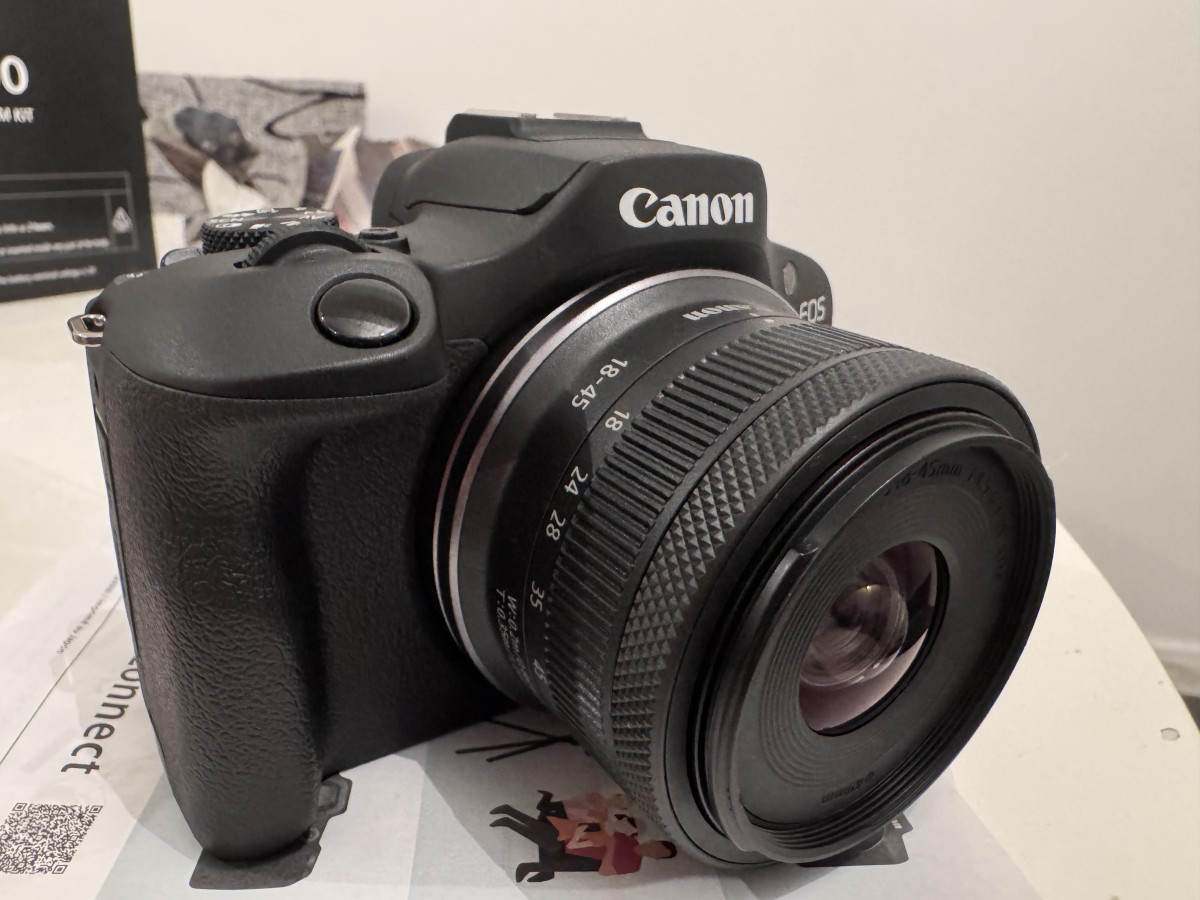
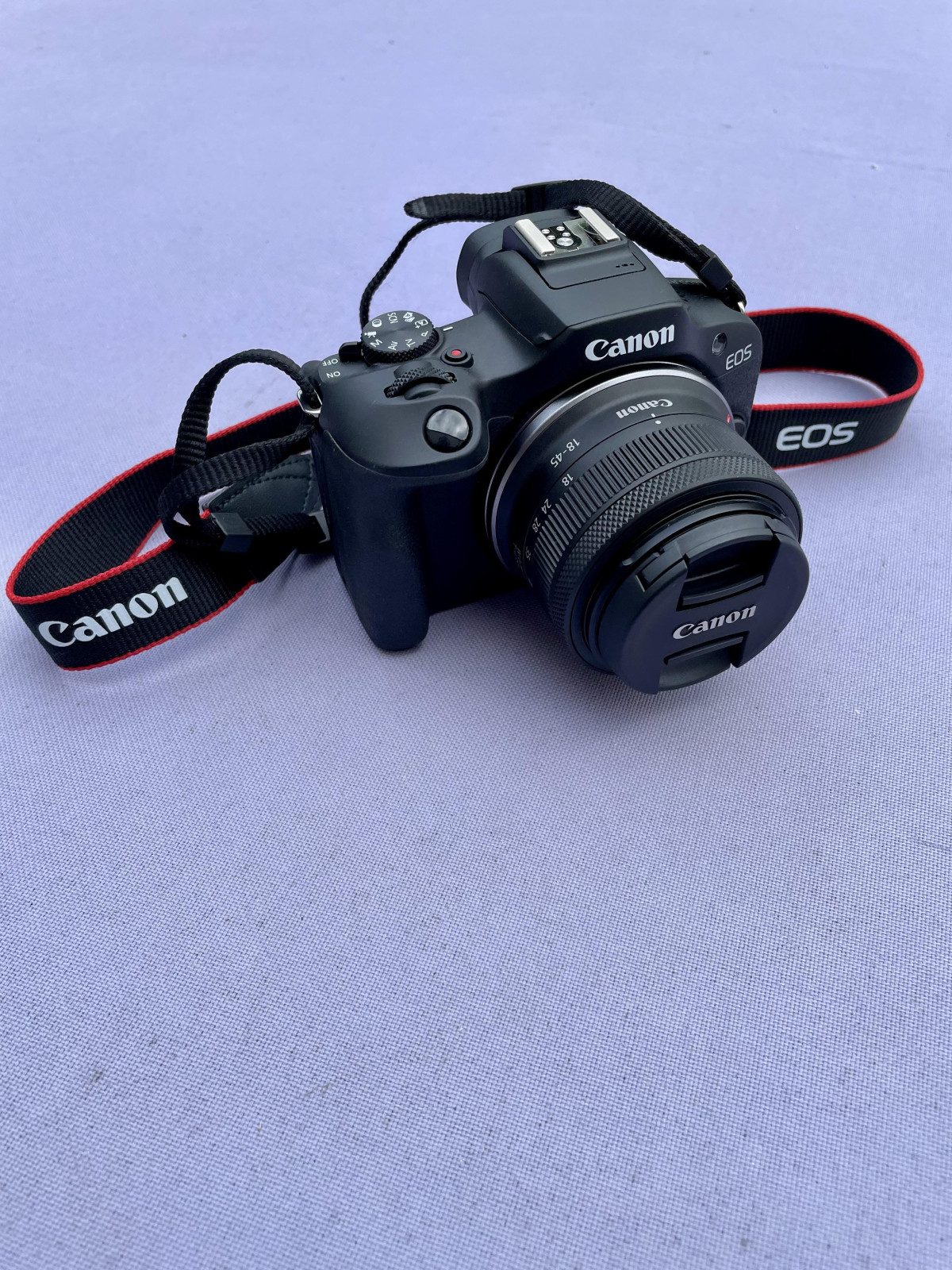
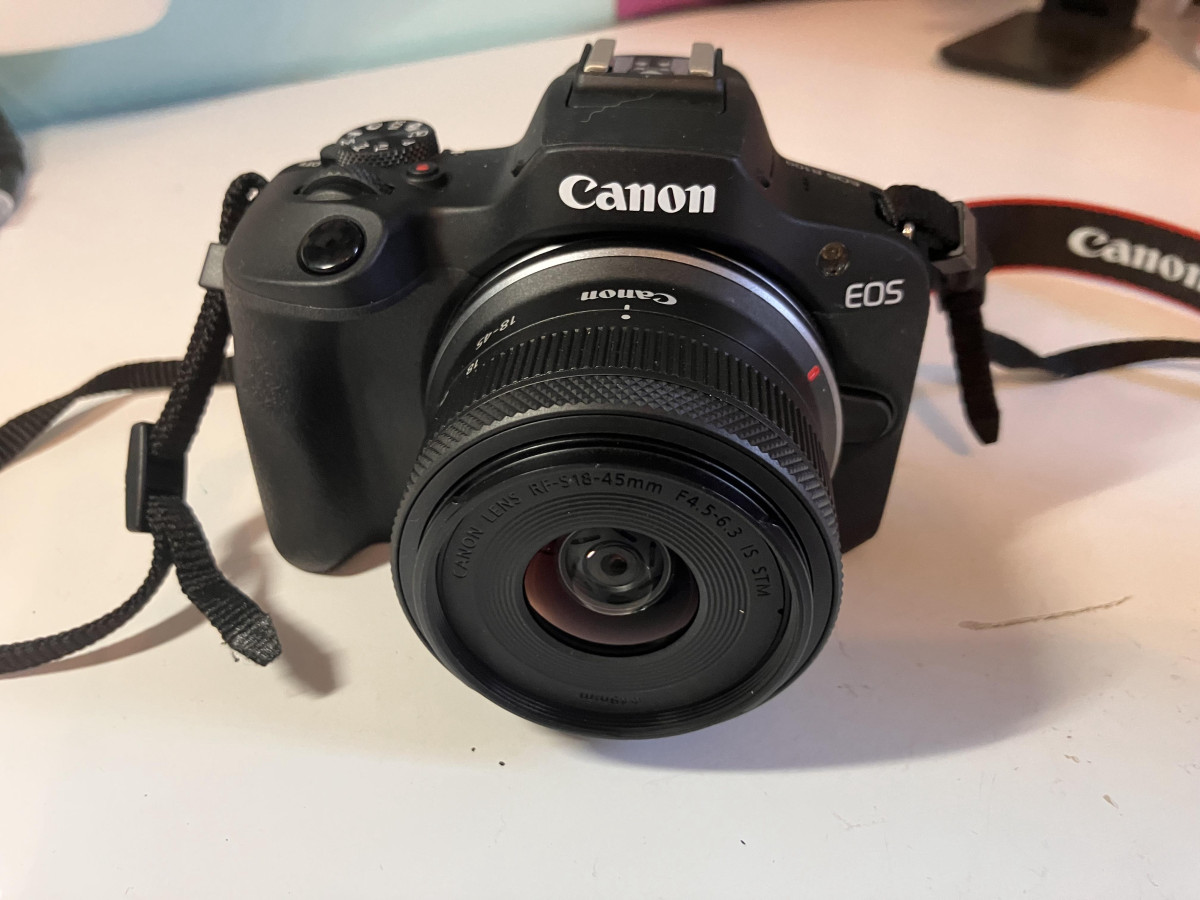
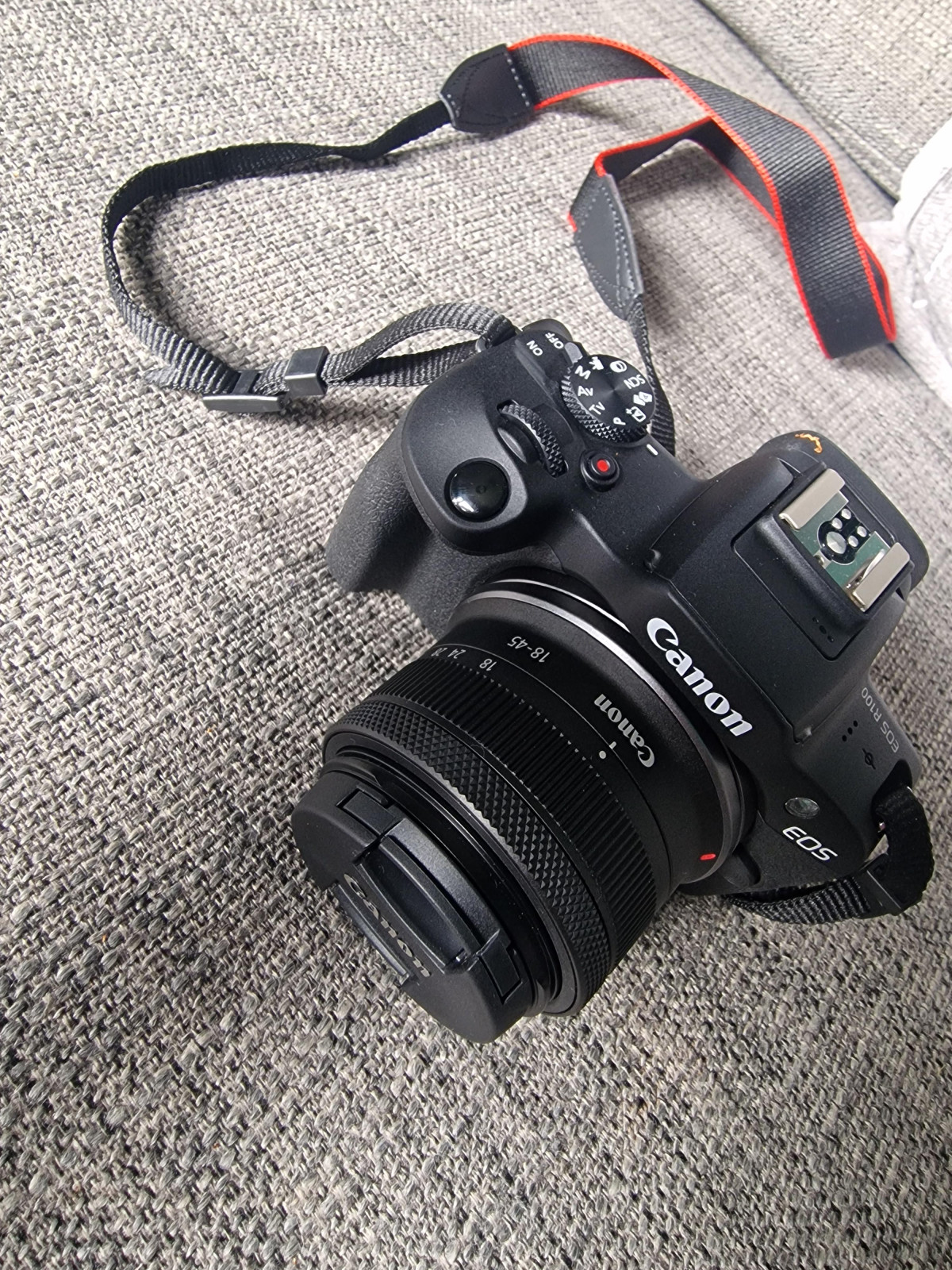
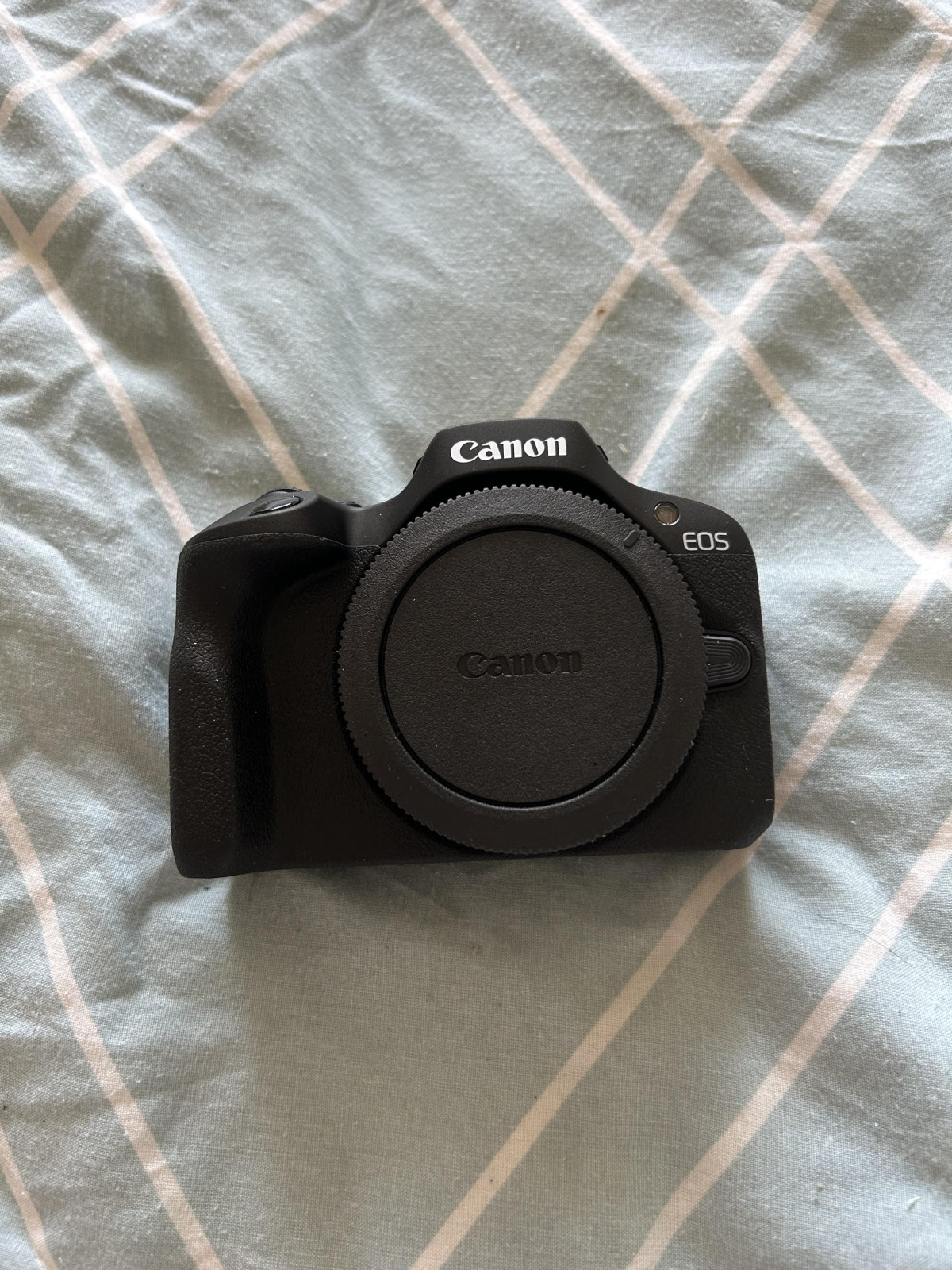
Pick up the EOS R100 and the first thing you notice is how little it weighs. The camera body and kit lens together tip the scales at under 500 grams, putting it firmly in the "grab it on your way out the door" category rather than the "dedicated camera bag" one. The body measures roughly 8.5cm tall, 11.6cm wide, and 6.9cm deep — small enough to disappear into a daypack, a coat pocket in a pinch, or the side compartment of a stroller if you're chasing toddlers around instead of composing careful landscapes.
The shell leans plastic-heavy, which is exactly what you'd expect at this tier and is part of how Canon kept the weight and price down. It doesn't feel fragile, but it also doesn't have the reassuring heft of Canon's mid-range bodies. The grip is shallow but usefully shaped, giving your fingers something to wrap around even though the camera is small. If you have particularly large hands, expect your pinky to hang off the bottom.
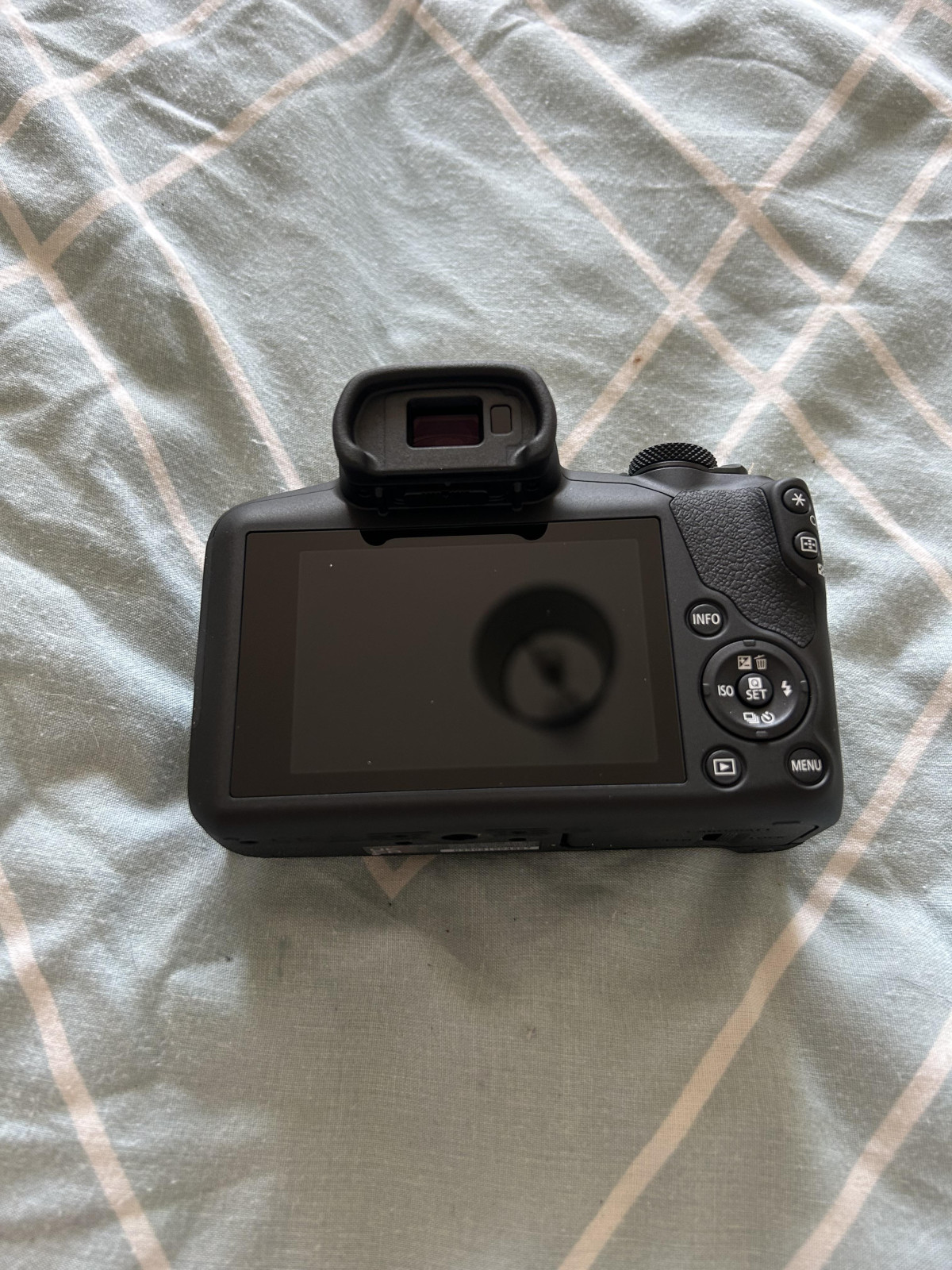
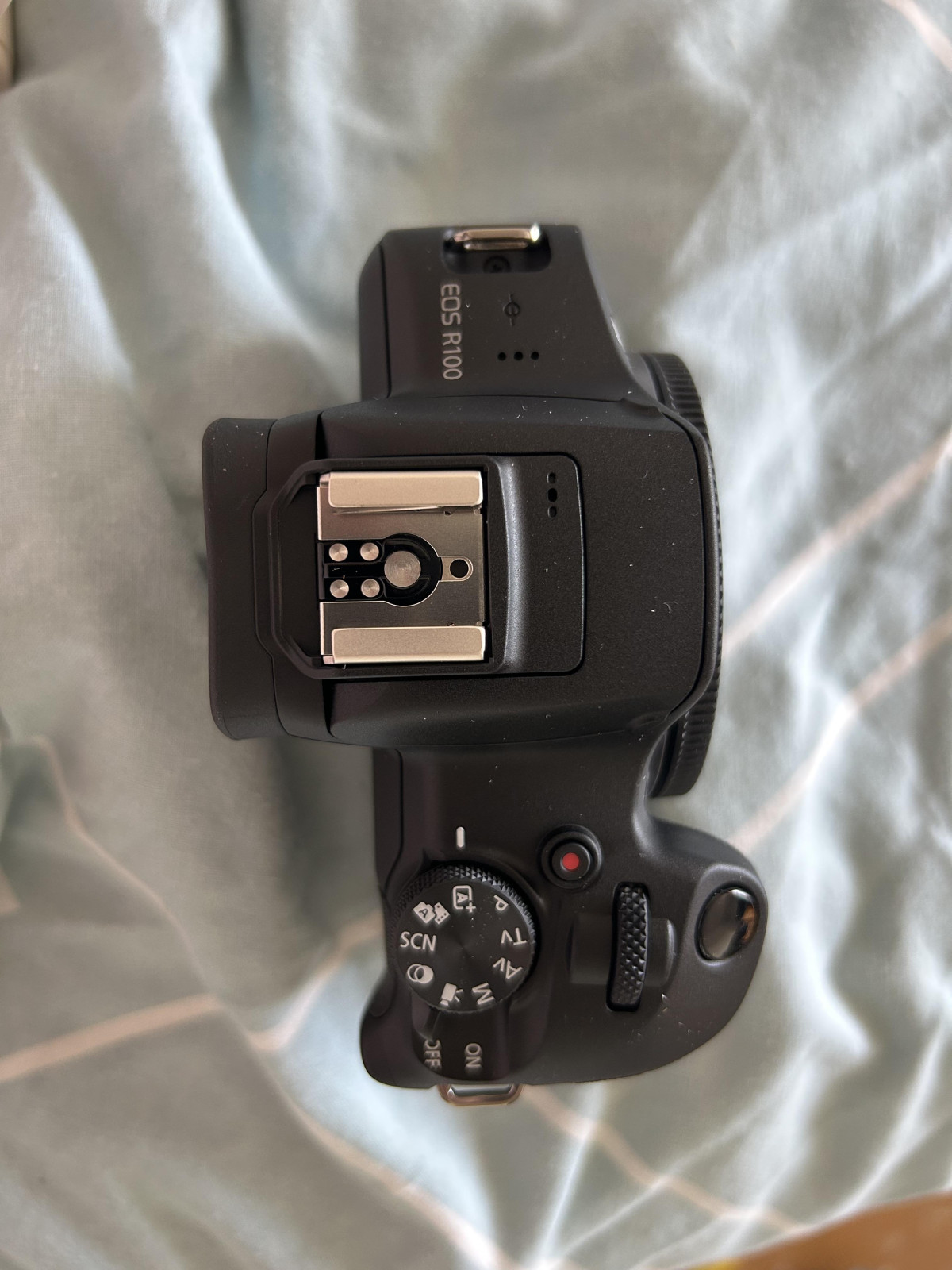
Physical controls are minimal by design. There's a mode dial, a shutter button wrapped in a zoom-style control, and a small handful of buttons — Canon clearly wants you living inside the on-screen menus rather than reaching for external dials, which is a very different philosophy from cameras aimed at people who already know what they're doing.
Image Quality: What the 24.1-Megapixel Sensor Actually Delivers
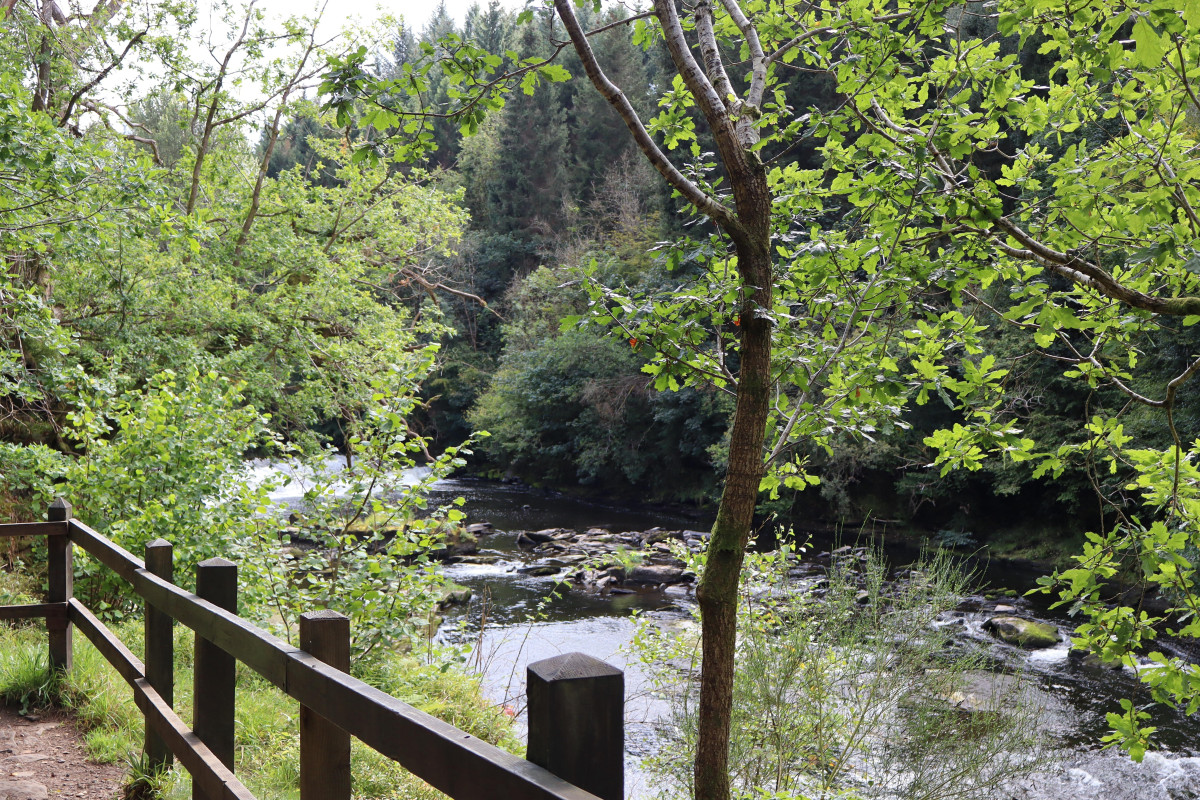
At the heart of the R100 sits a 24.1-megapixel APS-C CMOS sensor. In plain terms, that resolution is enough to produce large, detailed prints, crop into a scene after the fact without losing sharpness, and hold up well on any screen you're likely to view images on — laptop, TV, or a friend's phone during a photo-sharing session.
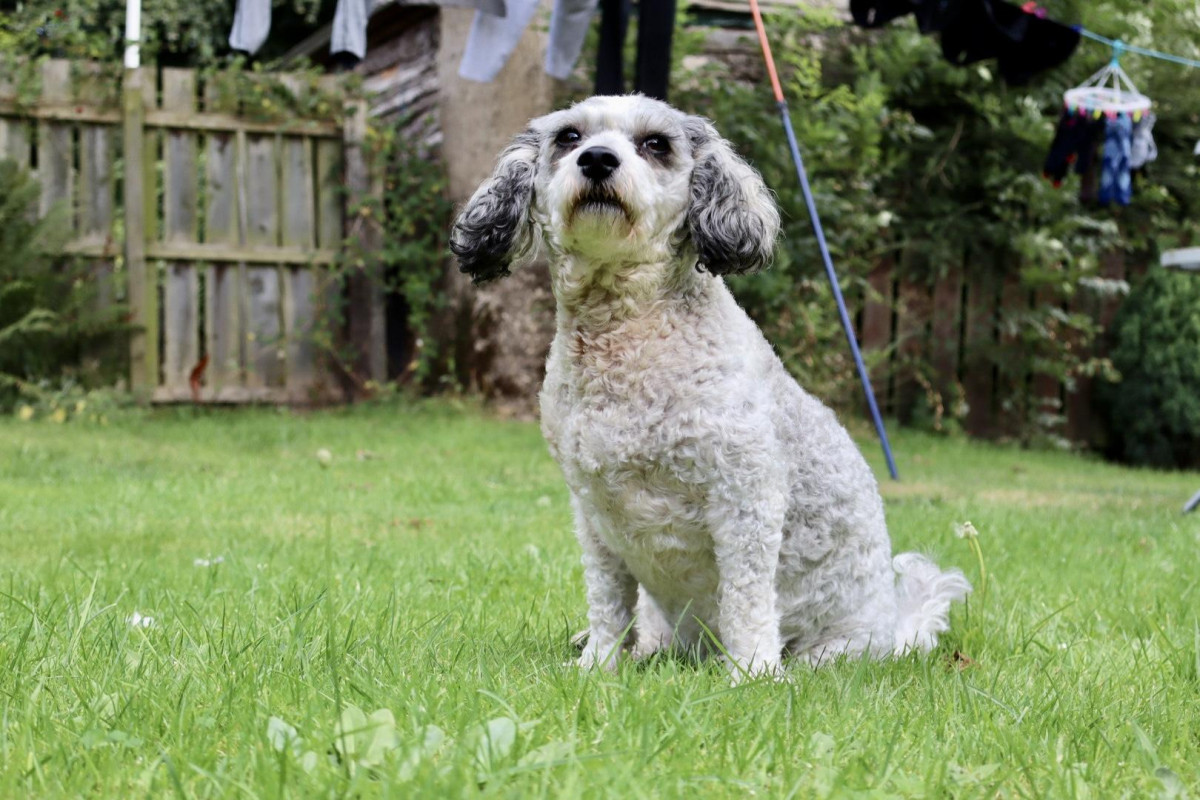
What matters more than the megapixel count is the sensor's physical size. At roughly 22.3 x 14.9mm, this sensor is several times larger than the ones packed into flagship smartphones. A bigger sensor gathers more light per pixel, which translates into cleaner images in dim rooms, more natural skin tones, and — critically for family and portrait shooters — the soft, blurred backgrounds that smartphone cameras have to fake with software. On the R100, that background blur happens optically, simply by pointing the lens and shooting, which is a genuinely different look from a phone photo.
Where the sensor shows its age a little is at higher ISO settings. Push the camera into dim, artificially lit environments — an indoor birthday party, a poorly lit restaurant — and grain becomes noticeably more visible than on newer sensor designs, particularly if you shoot in RAW and view files at full size. For casual sharing and standard print sizes this is rarely a dealbreaker, but it's worth knowing this isn't a class-leading low-light performer.
Files save as JPEG, RAW, or both simultaneously, at a maximum resolution of 6000 x 4000 pixels. Shooting RAW+JPEG together is a smart habit for beginners: you get an instantly shareable JPEG plus the flexibility of a RAW file to properly edit later, once you're ready to learn.
Autofocus and Real-World Focus Reliability
Canon's Dual Pixel CMOS autofocus is the R100's genuine standout feature, and it's the part of the spec sheet that translates most directly into better everyday photos. In practice, this system uses light-sensing pixels spread across almost the entire sensor to detect faces and lock focus almost the instant a person steps into frame — no half-pressing the shutter and waiting, no hunting back and forth.
For family photography, this is a big deal. Point the camera at a group, and it reliably finds and tracks faces even as kids move, turn, or dash across the frame. Eye-detection sharpens this further, favoring the nearest eye in a portrait so your subject's face stays crisp even at wider apertures where depth of field gets thin.
The autofocus system does have a real ceiling, though. There's no dedicated animal or vehicle detection mode here — features that have become common on rival entry-level cameras. If you're photographing pets or wildlife, you're relying on general subject tracking rather than a purpose-built detection algorithm, and results will be noticeably less consistent than with faces. Continuous autofocus during fast action also shows its limits; burst shooting with autofocus tracking tops out at a modest pace, and the buffer fills quickly once you start firing off multiple frames per second. This is not the tool for chasing a sprinting dog or a kid's soccer match.
Shooting Modes and Creative Assist: Beginner-Friendly by Design
Guided Menus and Creative Assist
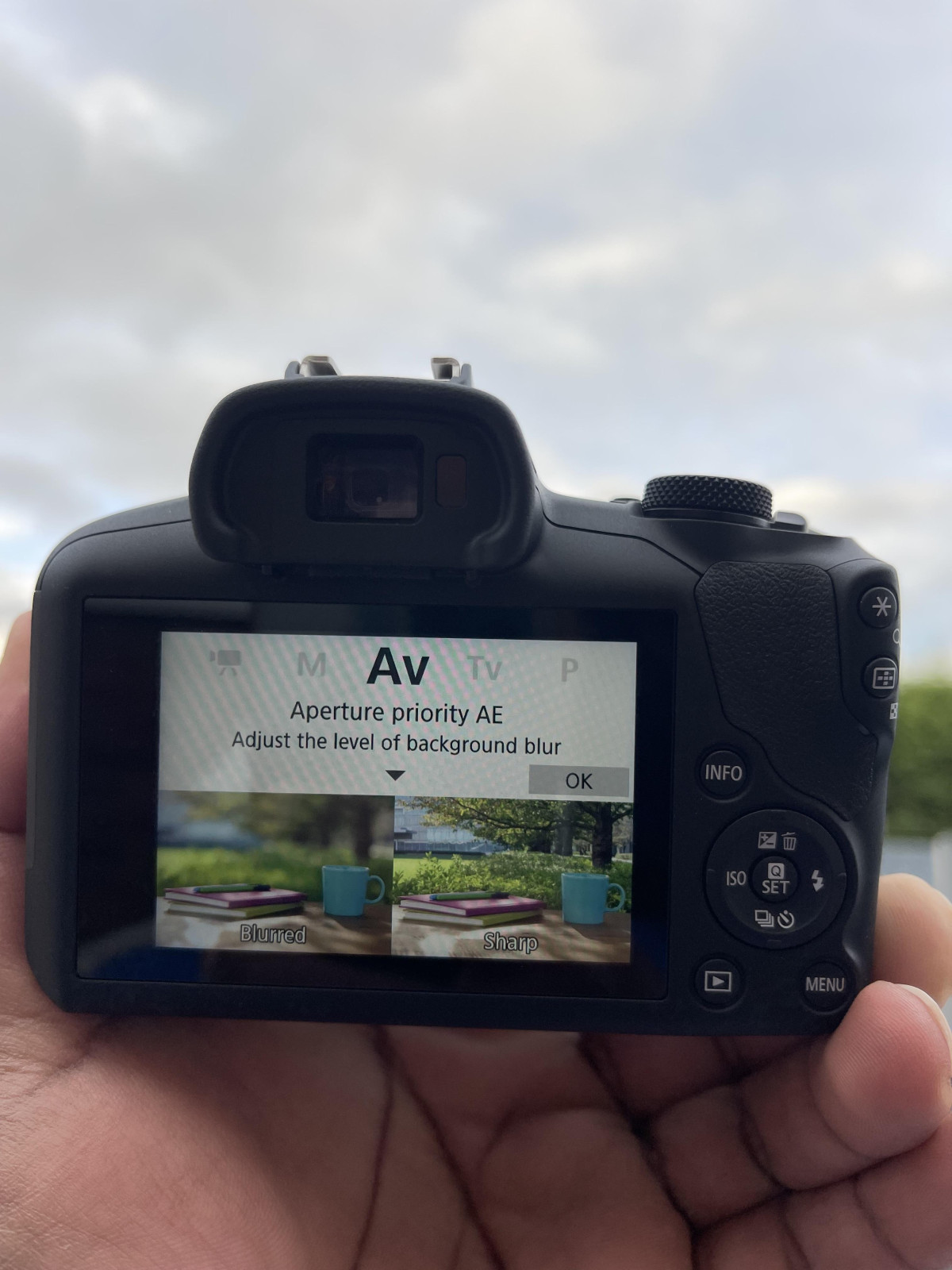
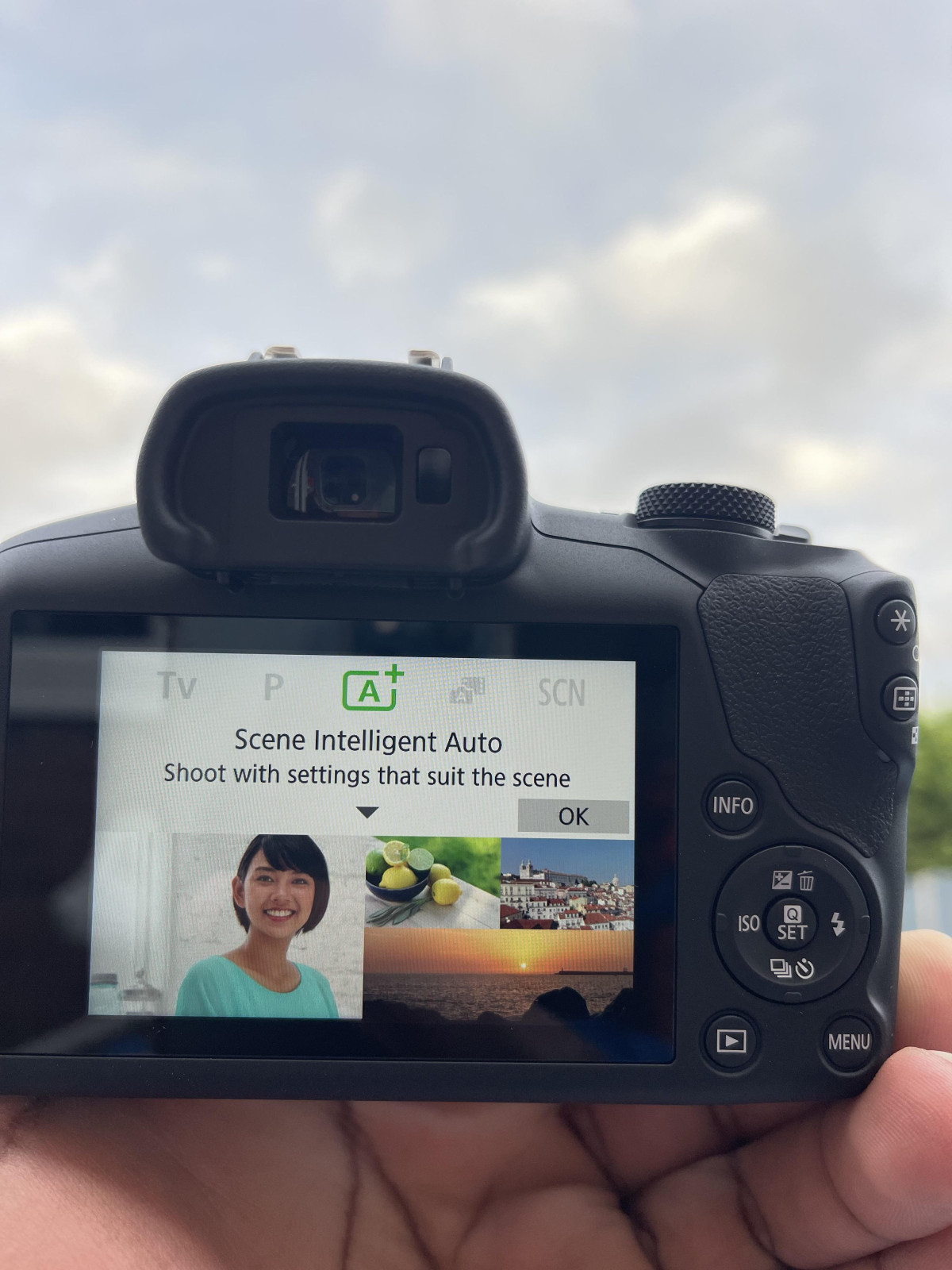
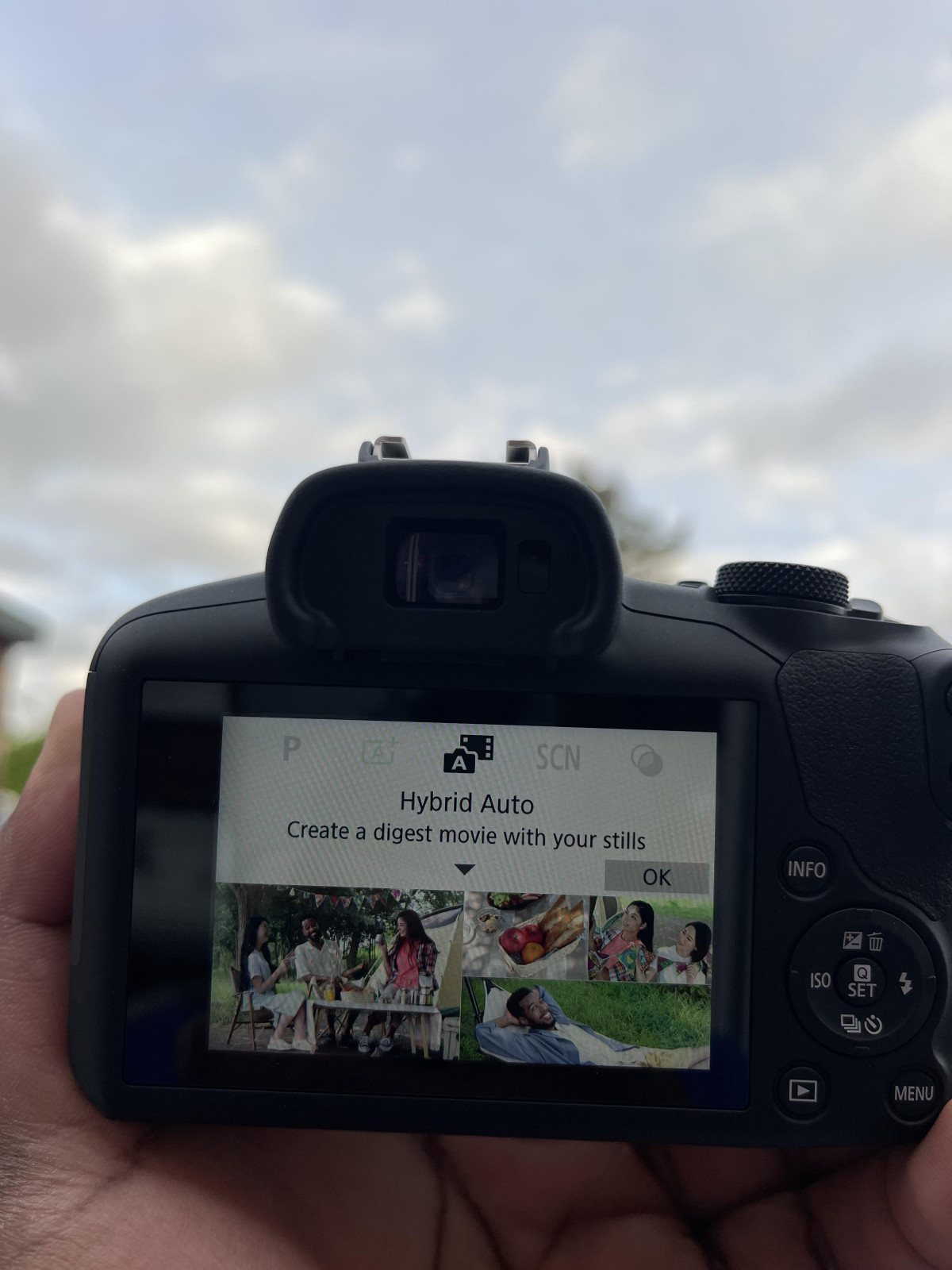
The R100's menu system is arguably its most thoughtful design decision. Rather than presenting a wall of technical settings, Canon's guided interface explains what each mode and adjustment actually does in plain language as you scroll through it — a genuinely useful bridge for anyone who's never touched aperture or shutter speed before.
Creative Assist takes this further by translating photography jargon into intuitive sliders. Instead of asking you to set an aperture value, it lets you drag a slider toward "blurrier background" or "sharper background" and handles the technical side automatically. It's the kind of feature that quietly teaches photographic concepts without ever using the word "aperture," which is exactly the point.
Manual Control When You're Ready
Underneath the training wheels, the full suite of traditional shooting modes is present: program, shutter priority, aperture priority, and full manual, alongside scene-specific options for portraits, landscapes, close-ups, sports, and HDR. Shutter speed ranges from long 30-second exposures — useful for night scenes and light trails — up to 1/4000 of a second, fast enough to freeze most everyday motion, though shy of the fastest shutter speeds found on higher-end bodies for extreme action photography.
Exposure metering offers evaluative, partial, and center-weighted options, and white balance can be set automatically, manually, from presets, or fine-tuned through bracketing — the kind of depth that rewards you as your skills grow, even if you never touch it in your first few months of ownership.
The Screen and Viewfinder Experience
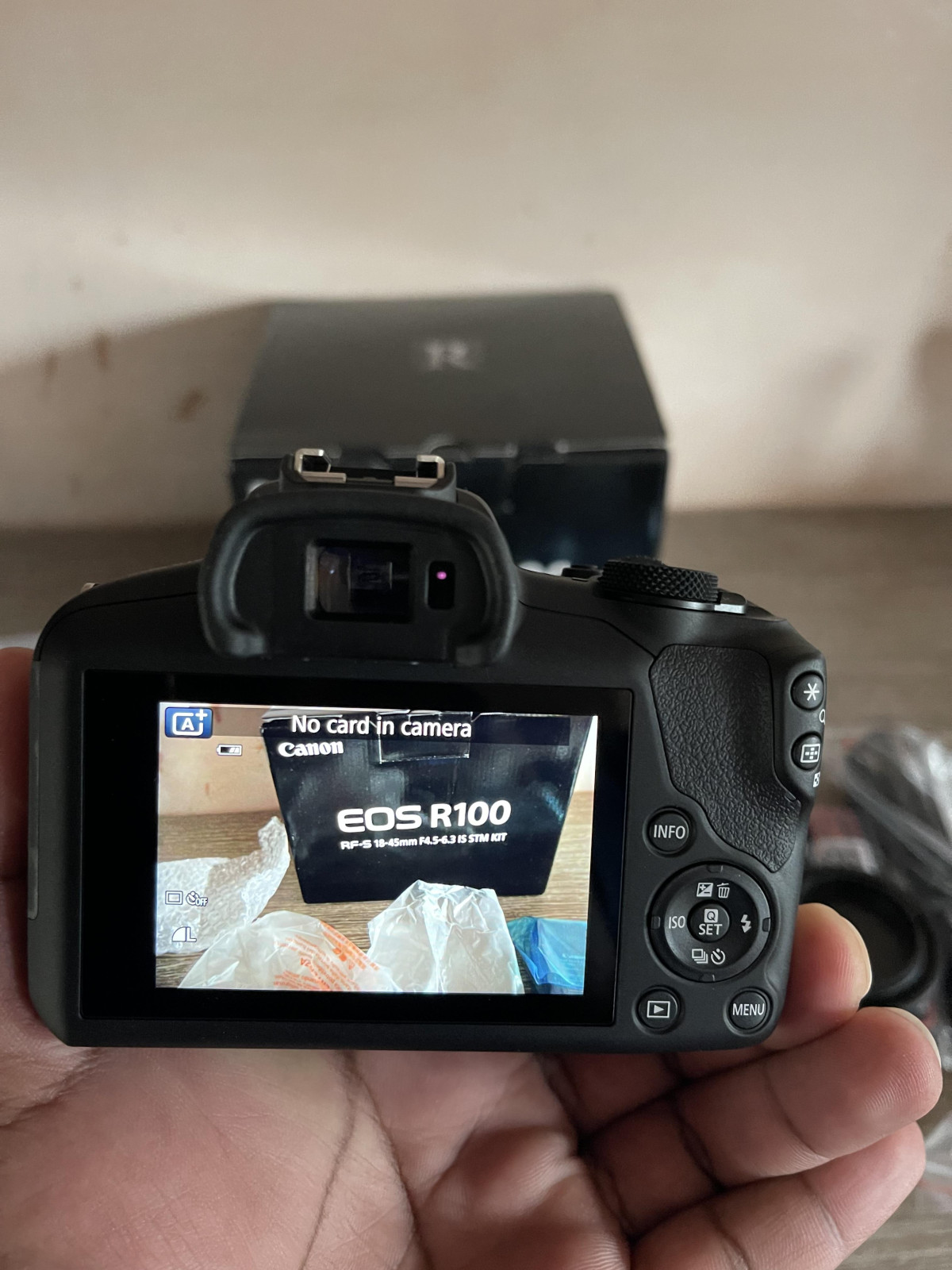
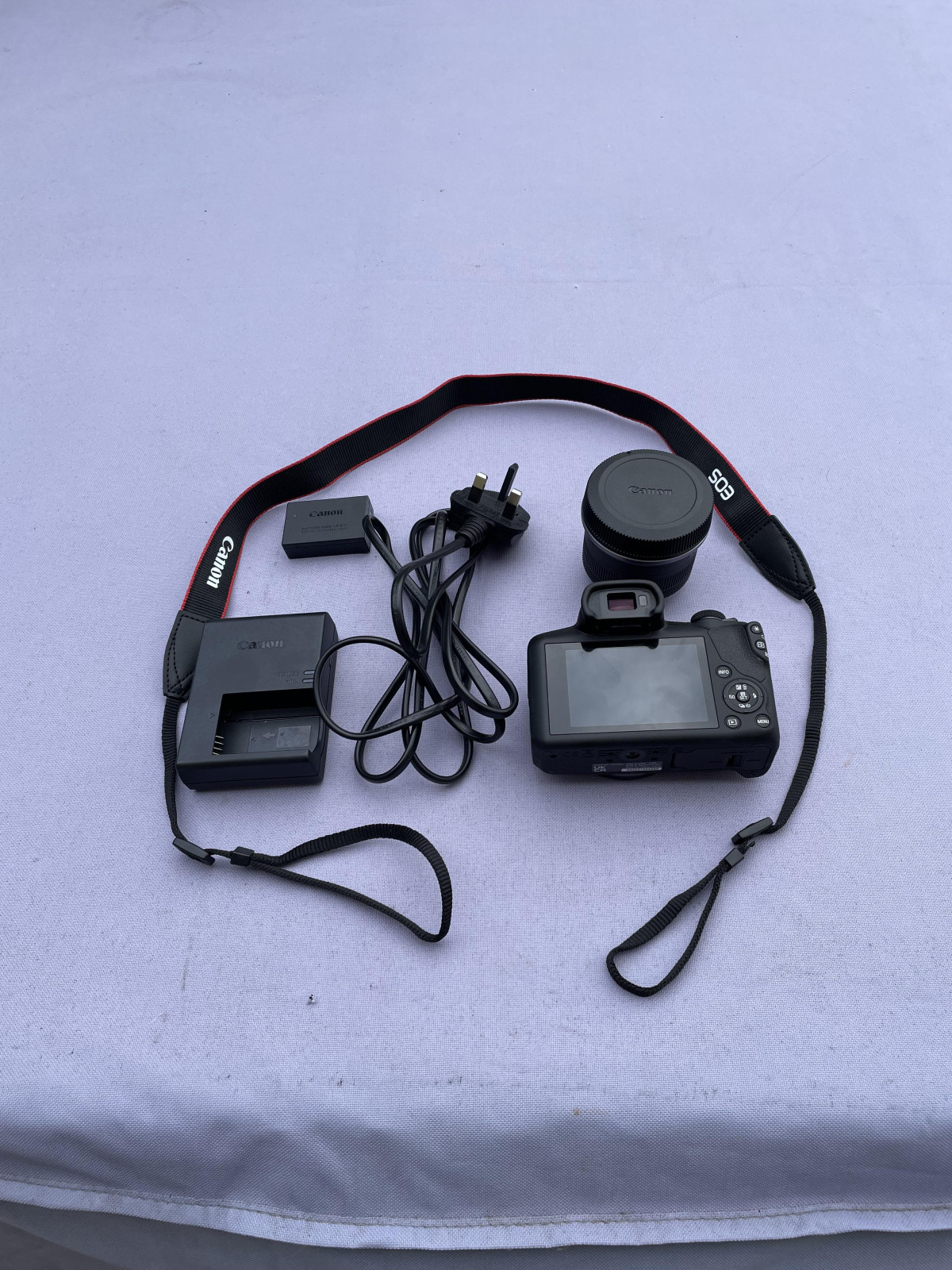
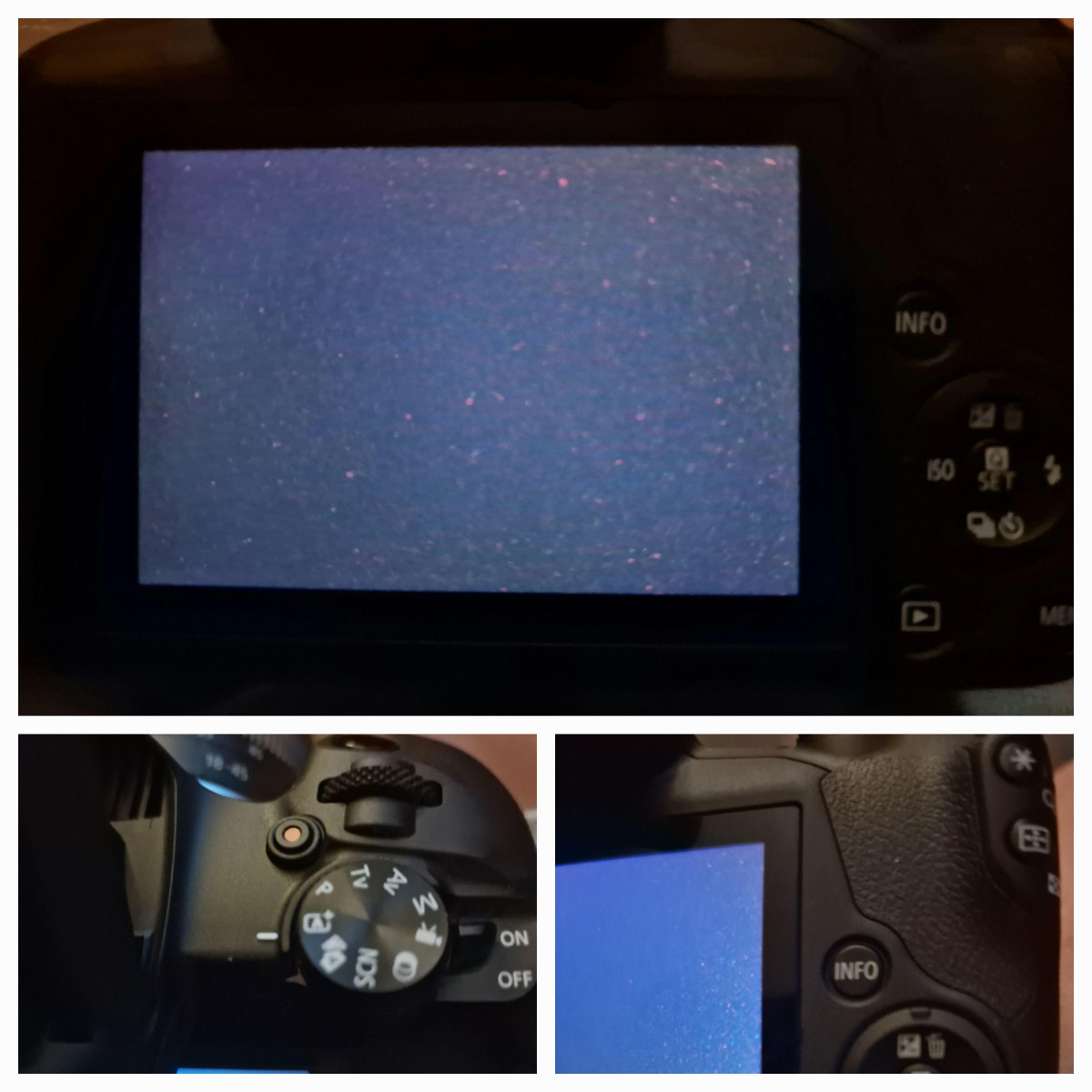
This is where the R100's cost-cutting becomes most apparent, and it's worth addressing directly. The 3-inch rear LCD is fixed in place and, notably, not a touchscreen. In an era where nearly every camera and phone screen responds to a tap, reaching for the R100's screen and having nothing happen is a genuine adjustment. Selecting an autofocus point, navigating menus, and reviewing images all happen through physical buttons and a directional pad instead of a swipe or tap.
For a camera explicitly marketed toward smartphone upgraders, this is the single biggest disconnect between the R100's intended audience and its actual interface. It's not a dealbreaker for stills photography — the guided menus soften the learning curve considerably — but anyone expecting phone-like screen interaction should recalibrate expectations before buying. The screen also doesn't flip or tilt, so framing yourself for a vlog or a selfie means guessing rather than seeing.
The built-in electronic viewfinder fares better. It offers 100% coverage, meaning what you see through the eyepiece is exactly what lands in your final image, with no surprises at the frame's edges — a meaningfully more accurate framing tool than most viewfinders on budget cameras, which often show slightly less than the final capture. A dioptre adjustment lets glasses-wearers dial in sharpness without keeping their glasses on.
Video Capability and Its Limits
The R100 can shoot 4K video, and Canon's own marketing leans into the "first vlogs" angle — but the fine print matters here. 4K footage is captured using a significant crop from the center of the sensor, which effectively narrows your field of view. Practically speaking, the kit lens's already-modest wide end gets pulled in tighter once you switch to 4K, making it noticeably harder to fit a room, a group, or yourself into frame at close range — exactly the scenario a vlogger relies on most.
Full HD recording avoids this crop and gives a wider, more usable field of view, which makes it the more practical everyday video mode on this camera despite being the lower-resolution option. There's also a slow-motion mode capturing footage at 120 frames per second at 720p, handy for creative effects even if the resolution is modest.
One genuinely welcome inclusion at this price is a 3.5mm input for an external microphone — a feature some rival entry-level cameras skip entirely, and one that meaningfully improves audio quality over a built-in mic for anyone serious about voiceover-driven content.
Combined with the fixed, non-flip screen, the R100 is better understood as a stills camera with usable video as a bonus, rather than a video-first tool. Anyone planning to vlog regularly, especially with wide shots or self-framing, will likely find the limitations frustrating within the first few weeks.
Battery Life and All-Day Endurance
Battery anxiety is one of the quiet but real reasons people avoid "real" cameras in favor of phones, and this is a category where the R100 quietly excels. Using the rear screen, it's rated for roughly 430 shots on a single charge; relying on the electronic viewfinder instead brings that down to around 340 shots, since the higher-resolution EVF panel draws more power than the LCD.
Translated into a real day out, that's comfortably enough for a full day of family events, a city walking tour, or a weekend trip without needing to pack a spare battery, provided you're not shooting continuous 4K video for hours at a stretch (which will drain things considerably faster). Notably, this endurance actually beats Canon's own next model up in the lineup when using the viewfinder, making the R100 a genuinely strong choice for anyone who prioritizes not thinking about charge levels over having the latest features.
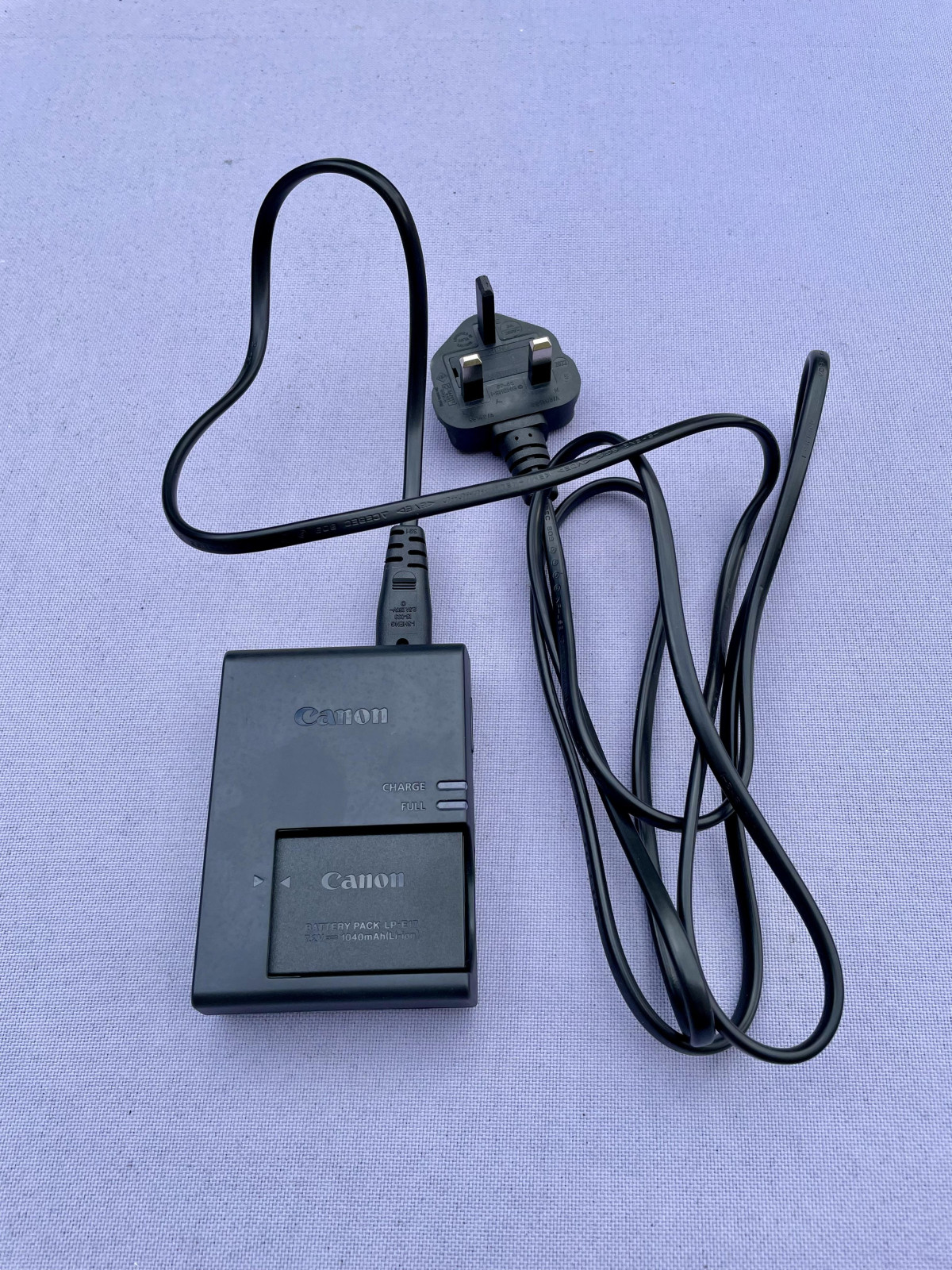
The battery itself is removable and rechargeable via an included external charger, and because it's the same cell used across several other Canon models, replacements and spares are widely available and inexpensive if you do want a backup for longer trips.
The RF-S 18-45mm IS STM Kit Lens
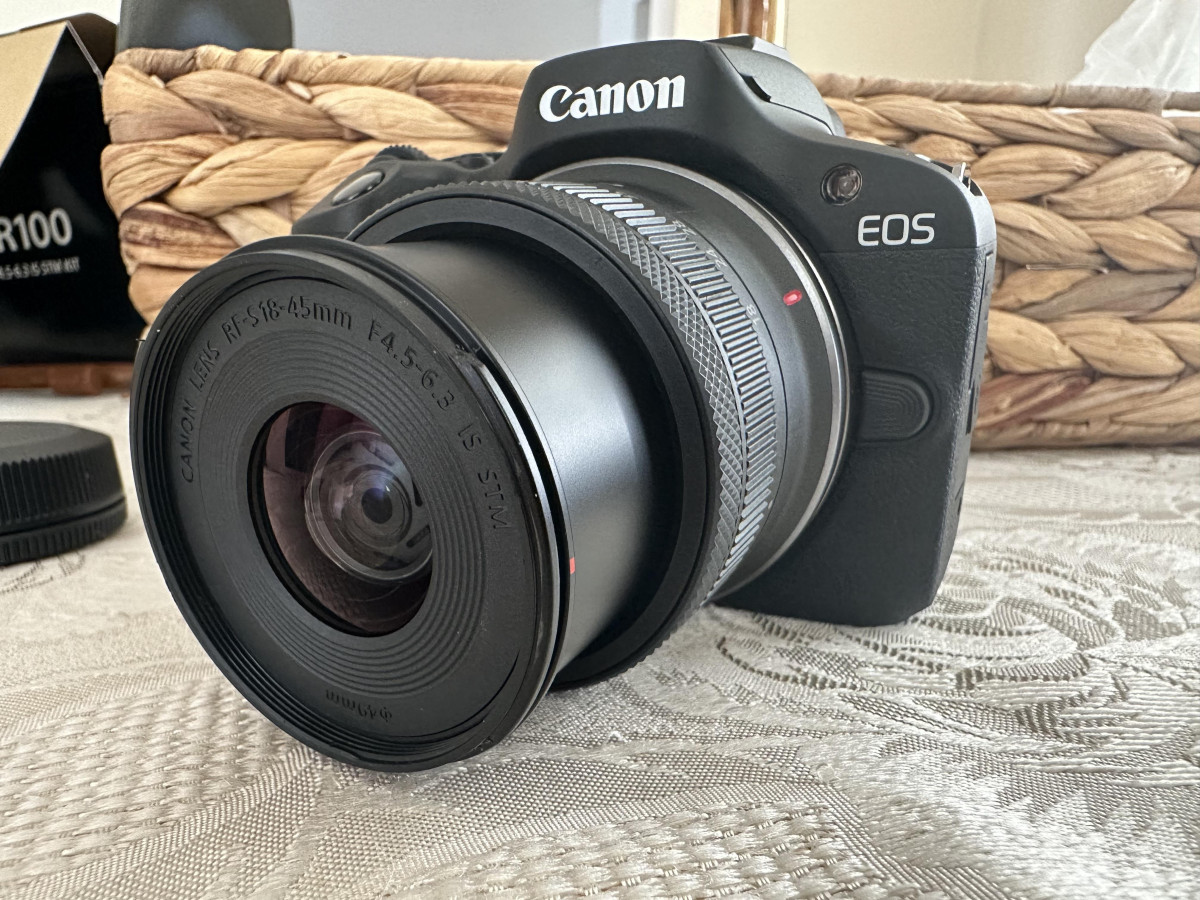
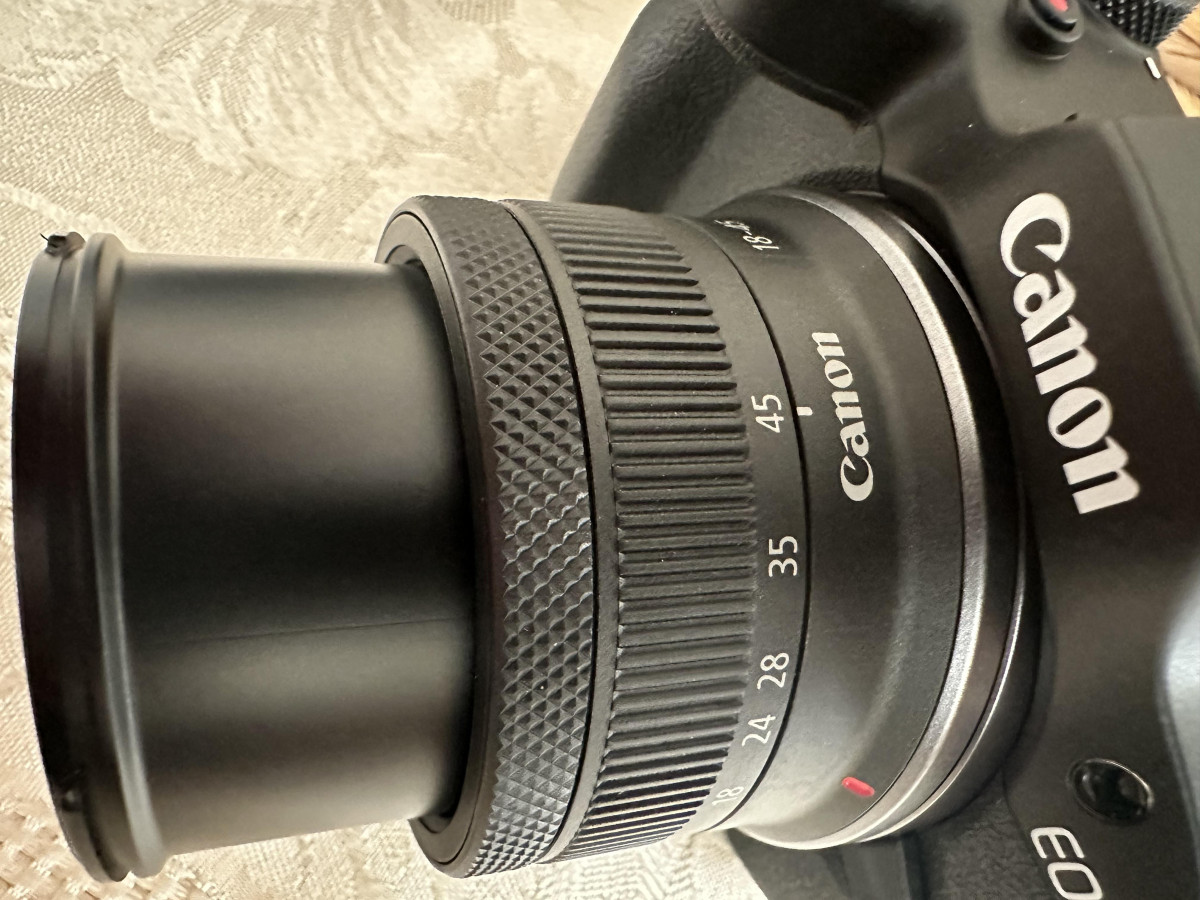
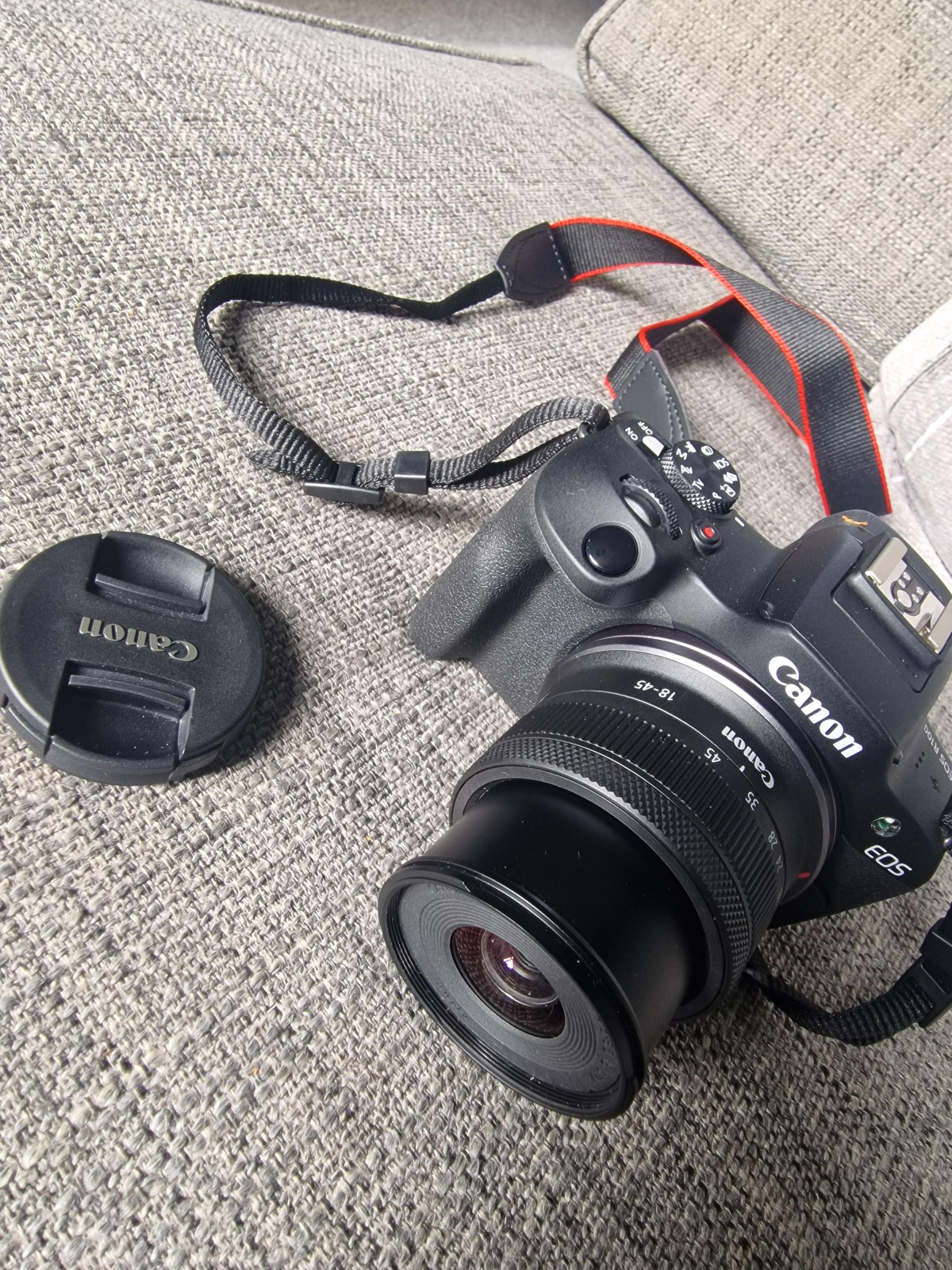
The bundled RF-S 18-45mm lens is a compact, lightweight companion built specifically for Canon's APS-C mirrorless bodies. Because of the sensor's crop factor, its focal range behaves like roughly 29-72mm would on a full-frame camera — a genuinely versatile everyday span covering everything from group shots and interiors at the wide end to flattering portraits and moderate close-ups at the telephoto end.
Built-in optical image stabilization compensates for hand shake, which matters more than usual here because the R100 has no in-body stabilization of its own — a real trade-off worth understanding. Without a stabilized sensor to fall back on, image steadiness depends entirely on this lens (or whichever RF-S lens you might add later), so shooting in dim environments without a tripod will show more blur than on cameras with sensor-based stabilization baked into the body.
The lens also focuses down to about 20cm, allowing reasonably close detail shots of food, flowers, or small objects without needing a dedicated macro lens. And because the R100 uses Canon's standard RF mount, older EF and EF-S lenses from Canon's DSLR era can be used via an adapter — genuinely good news for anyone upgrading from an older Canon DSLR who already owns a lens collection they don't want to abandon.
Connectivity: Wi-Fi, Bluetooth and Smartphone Integration
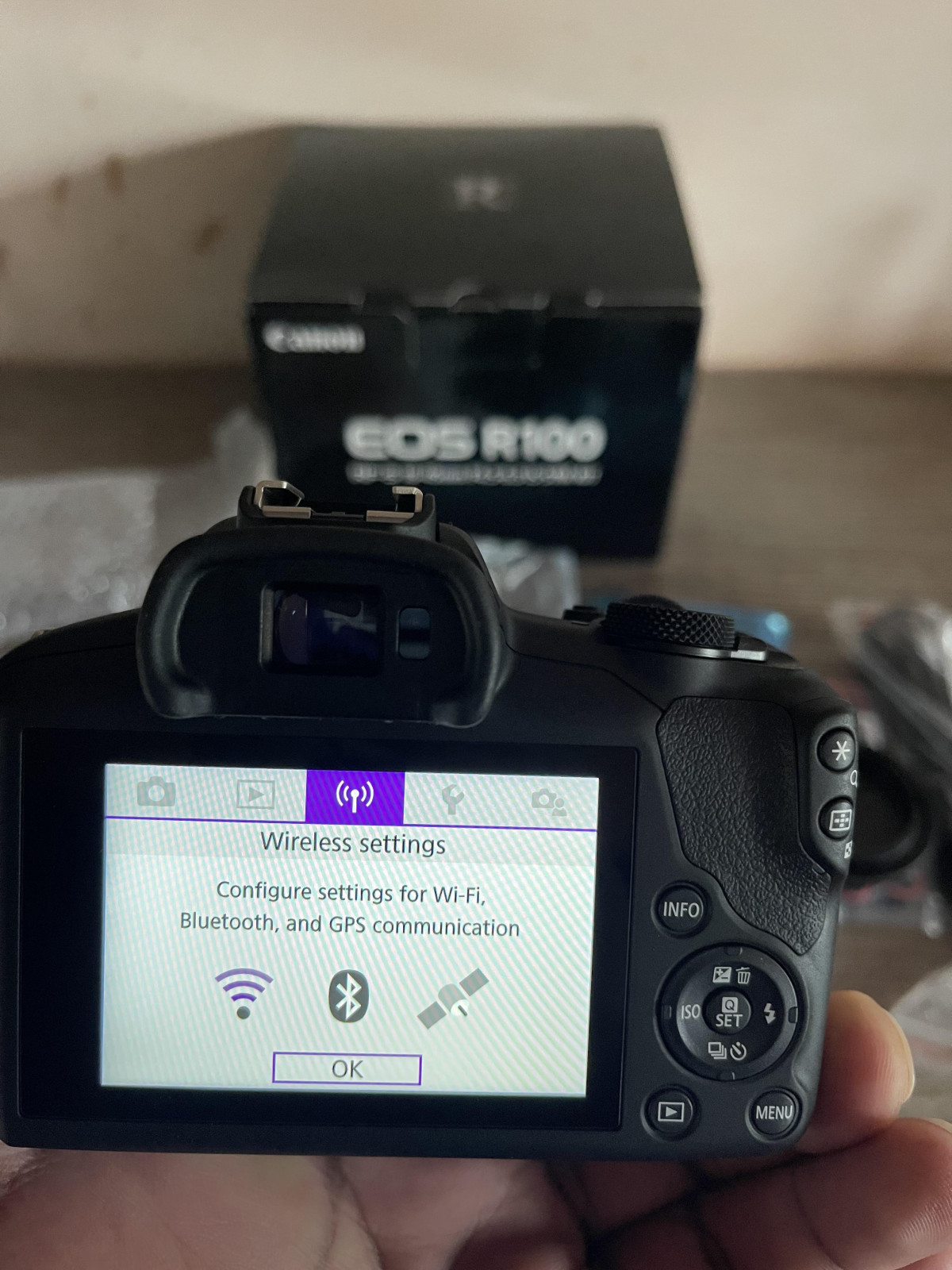
Built-in Wi-Fi and Bluetooth let the R100 talk directly to a smartphone through Canon's companion app, covering the two things most new camera owners actually want: getting photos onto their phone quickly, and triggering the shutter remotely for group shots that finally include the photographer. A USB port and mini HDMI output cover wired transfers and connecting to a television or monitor, while PictBridge support allows direct printing to compatible printers without a computer in the loop.
Storage runs through a single SD card slot supporting SD, SDHC, and SDXC formats, though it's worth noting the card slot supports only the older UHS-I speed standard rather than the faster UHS-II cards found on some step-up models — a limitation that mostly matters if you're shooting long bursts or high-bitrate video and want the buffer to clear as fast as possible.
Who Should Buy the Canon EOS R100 (and Who Shouldn't)
This camera makes sense for:
- First-time camera buyers upgrading from a smartphone who want noticeably better image quality without a steep learning curve
- Parents wanting sharper, more natural-looking family and portrait photos, thanks to reliable face-detection autofocus
- Former Canon DSLR owners with a drawer of old EF lenses looking for an affordable, lightweight entry into the mirrorless RF system
- Travelers and everyday carry users who value low weight and long battery life over cutting-edge features
- Anyone who wants room to grow into manual photography controls gradually, at their own pace
This camera is a poor fit for:
- Vloggers and content creators who need a flip-out screen, wide-angle 4K footage, or touchscreen framing
- Sports, wildlife, or fast-action photographers who need rapid burst shooting and dedicated subject-tracking modes
- Anyone who finds a non-touch, fixed screen a dealbreaker in daily use
- Photographers planning to shoot extensively in low light without a tripod, given the lack of in-body stabilization
- Enthusiasts who expect to outgrow an entry-level system quickly and want a body with more headroom for future lenses and accessories
How It Compares: Canon EOS R100 vs EOS R50 vs EOS R10
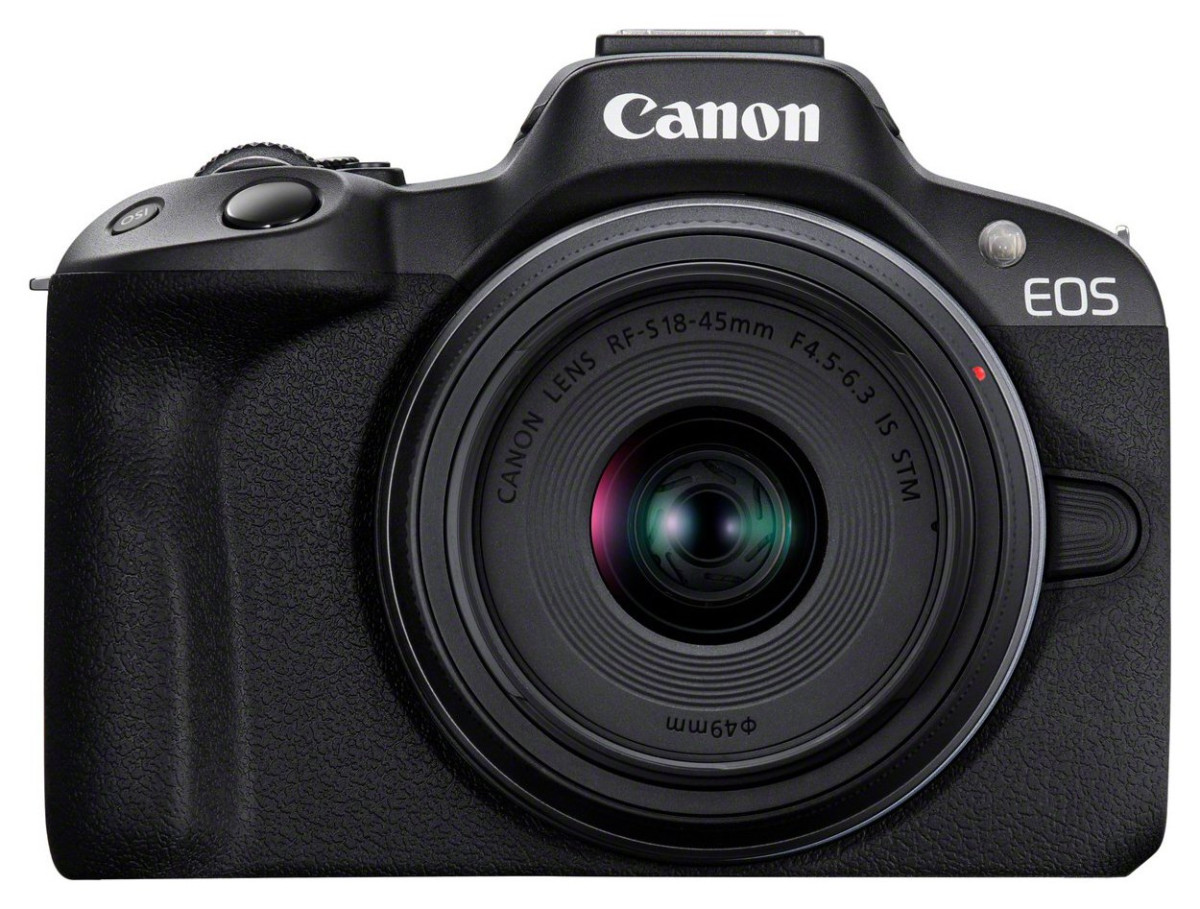
The R100 sits at the entry point of Canon's APS-C mirrorless lineup, with the R50 and R10 positioned above it as more capable — and more expensive — alternatives.
| Feature | EOS R100 | EOS R50 | EOS R10 |
|---|---|---|---|
| Position in lineup | Entry point | Step-up model | Enthusiast model |
| Rear screen | Fixed, non-touch | Vari-angle touchscreen | Vari-angle touchscreen |
| Autofocus sophistication | Face/eye detection only | More advanced subject tracking | More advanced subject tracking |
| Burst shooting | Slower, buffer fills quickly | Faster | Fastest of the three, with RAW burst mode |
| Memory card speed | UHS-I only | UHS-I only | UHS-I and faster UHS-II support |
| CIPA battery life (viewfinder) | Around 340 shots | Comparable to R100 | Around 260 shots |
| Best suited for | Absolute beginners, stills-first shooters | Beginners who also want to vlog | Enthusiasts wanting speed and video flexibility |
The standout detail here is that the R100 actually holds its own — and in the case of viewfinder battery life, outperforms — the pricier R10. If your priority is simply taking great everyday photos without fuss, the money saved by skipping the R50 or R10 is easy to justify. If video, a flip screen, or fast-action shooting are must-haves, stepping up becomes the more sensible move.
Strengths and Weaknesses, Honestly
The R100's biggest strength is how well it executes its core promise: point it at a face, and it will find that face, focus on it, and produce a genuinely good-looking photo with minimal effort. Combined with a sensor that dwarfs anything in a phone, image quality for stills is a clear step up from what most beginners are used to, and the guided menu system makes that quality accessible rather than intimidating. Battery life is another quiet win — you can shoot a full day without battery anxiety, which matters more in daily use than most spec sheets give it credit for.
The weaknesses are just as real, though, and they cluster around one theme: Canon prioritized stills-focused beginners over video-focused ones, despite marketing language that suggests otherwise. The fixed, non-touch screen is a genuine handling compromise for anyone used to a phone. The heavy crop in 4K video undermines the "first vlogs" pitch specifically for wide shots and self-recording. The lack of in-body stabilization means low-light handheld shooting is shakier than it needs to be. And the modest burst rate with a buffer that fills fast rules out fast action as a strength.
None of these weaknesses are dealbreakers for the audience Canon is actually targeting — a family photographer or smartphone upgrader focused on stills. They become real problems only if your needs drift toward video or action, where this camera was never designed to compete.
Final Verdict
The Canon EOS R100 succeeds at exactly what it sets out to do: hand a first-time camera buyer noticeably better photos than their phone, wrapped in a simple, guided experience that doesn't punish inexperience. Reliable face-detection autofocus, a proper APS-C sensor, and genuinely long battery life make it a dependable choice for family photography, portraits, travel snapshots, and anyone easing into manual photography controls for the first time.
Where it falls short is anywhere close to serious video work or fast action — the fixed non-touch screen, cropped 4K footage, and modest burst performance make it a frustrating tool for vlogging or sports despite some of Canon's own marketing suggesting otherwise. Buy this camera if your priority is better stills with minimal complexity, particularly if you're already invested in Canon lenses from an older DSLR. Look elsewhere — likely toward the EOS R50 — if a flip screen, touch controls, or stronger video performance are non-negotiable for how you actually plan to shoot.
What People Say
16 commentsExcellent Camera
The EOS R100 boasts impressive autofocus capabilities. Dual Pixel CMOS AF technology, which provides fast, accurate autofocus performance. Shots are in sharp focus. The Canon EOS R100 is a powerful and versatile compact camera. It delivers outstanding image quality. It has a compact and lightweight design compared to other cameras in this segment.
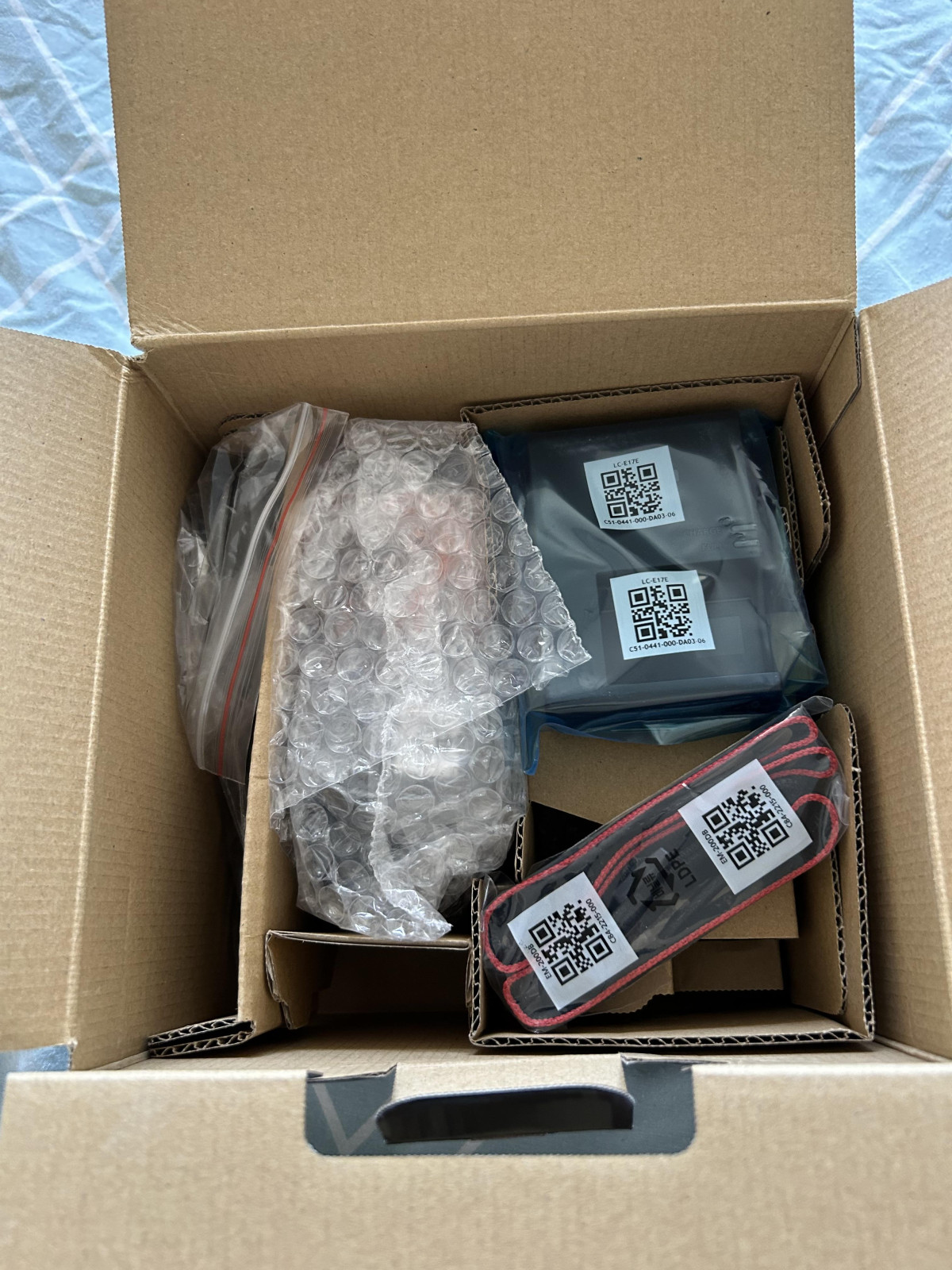
Everything you need is included in the box and setup is simple. As expected from Canon the camera is extremely well made.
What I really like is that the camera pairs with your phone for downloading of photos or taking shots remotely. I personally used an iPhone 14 Pro Max for this and found the process seamless without issues.
Navigation through the camera Menu is simple although there's no touch screen or ability to rotate or move the screen.
Image Quality: The image quality is fantastic. The camera's sensor produces sharp, detailed photos that truly capture the essence of the moment.
Versatility: It's a versatile camera with a wide range of shooting modes. Whether I'm a beginner or tackling a challenging photography scenario, there's a mode that fits the bill.
Interchangeable Lenses: I appreciate the flexibility of using different lenses to match my shooting style. It's great for experimenting and adapting to different situations.
Autofocus: The autofocus is quick and accurate. It's a game-changer, especially when capturing fast-moving subjects or low-light scenes.
Video Capability: The video quality is impressive. I can shoot in Full HD or even 4K, delivering stunning videos with varying frame rates.
Overall it is a Fantastic camera. Photography became my hobby with this Camera.
Great Camera
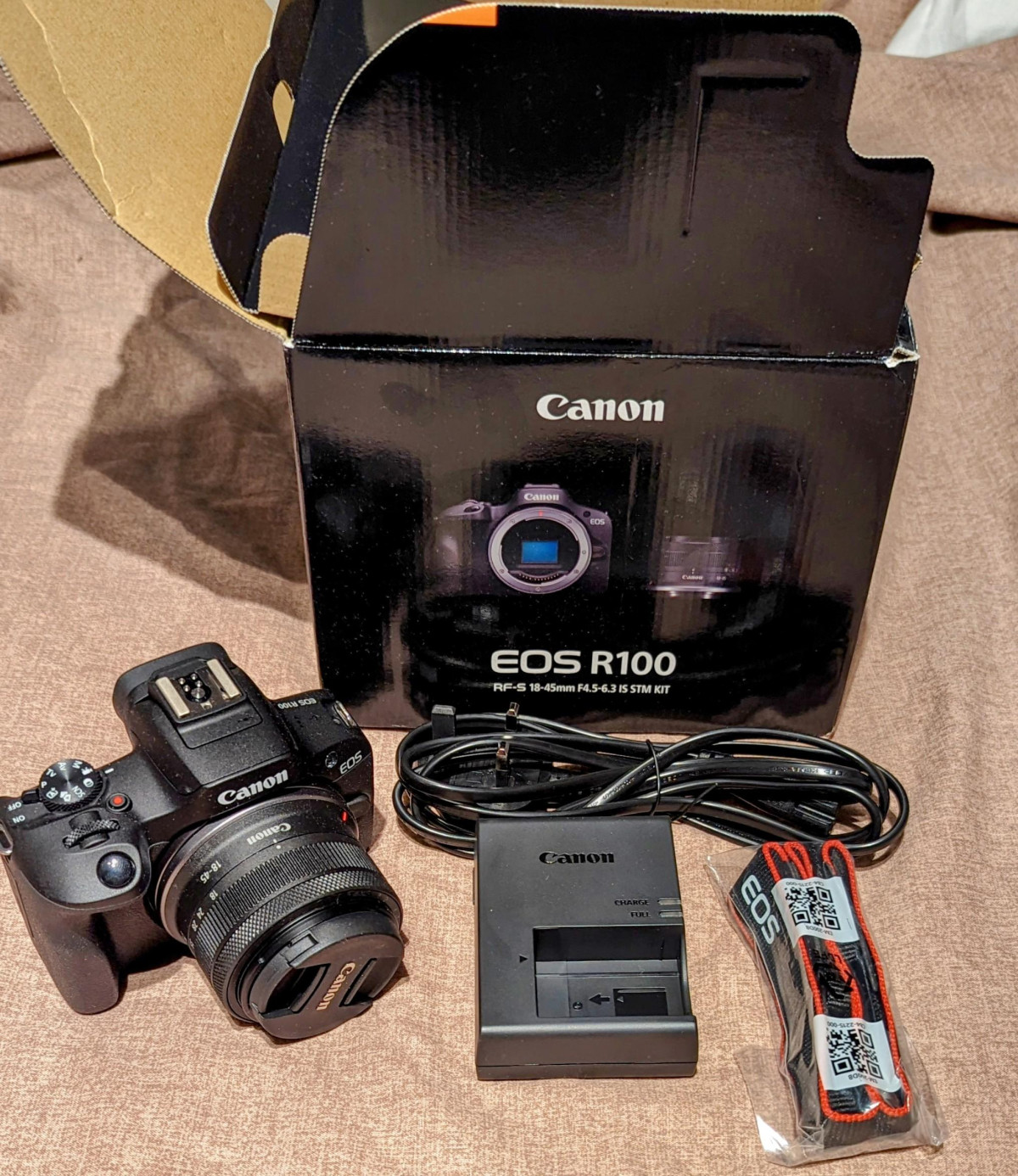
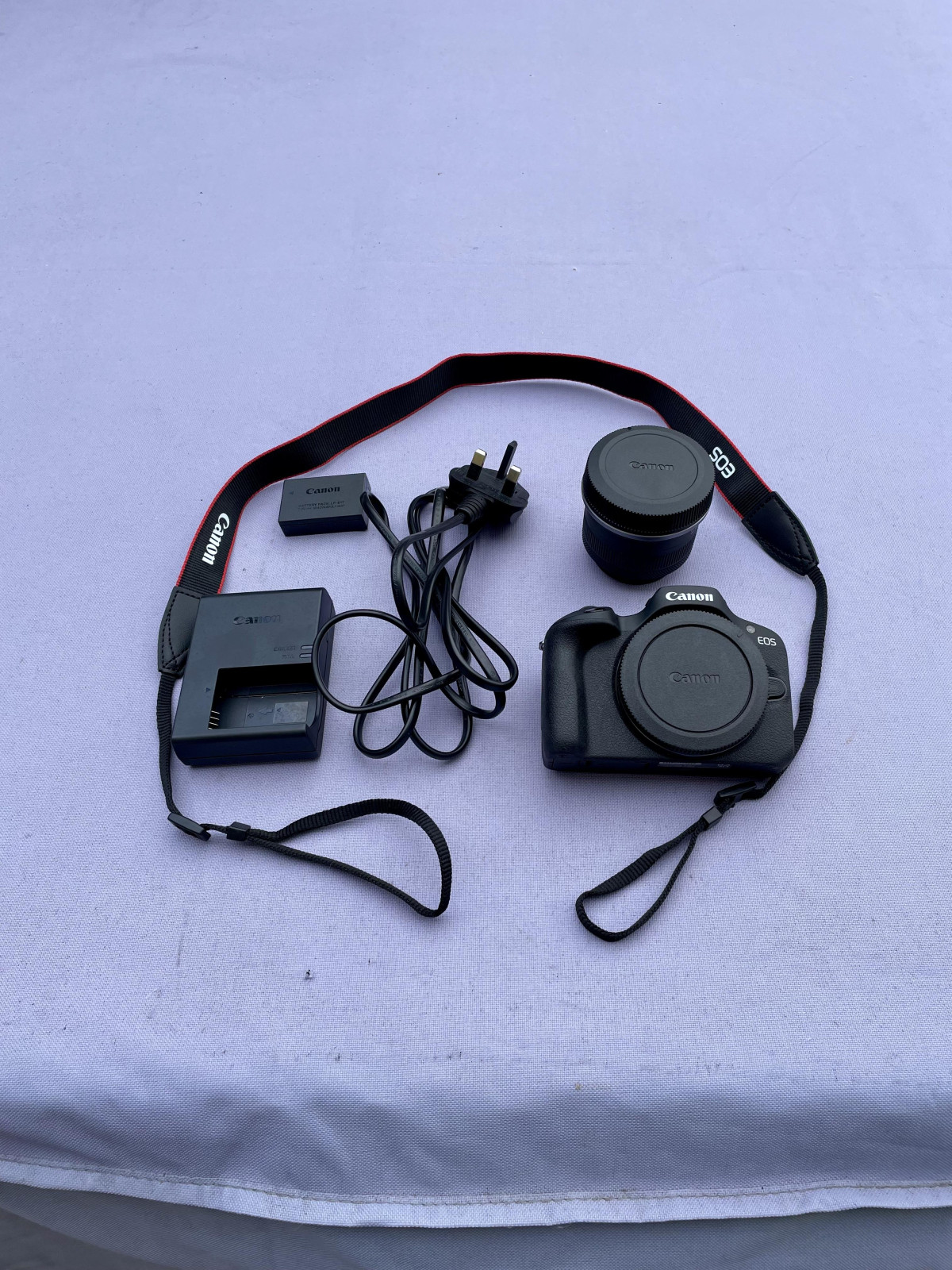
Canon EOS R100 is a lightweight , cropped 24MP DSLR, mirrorless camera for enthusiastic photography. The camera comes with a lens attachment, a charger, battery also carrying strap and houses a inbuilt small camera flash. The camera body is light but sturdy and has good grip from rubberised texture and small enough to fit into a bag.
The camera has good AF, dynamic range and produce some amazing photos The camera preset modes and creative filters for ease of point and shooting and has manual control for more advance photographers such as apeture, ISO etc. The camera preset modes include auto scene detection or manual scene selection and specialised shots such as night mode or pan. Creative filters are digital effect filters which is putting a stylisation into your photos. The camera has some issue with ISO with noise but this is relative.
Video recording has maximum resolution of 4k 25 fps and oddly has a time limit 29 min 59 secs. The quality is adequate for basic video but not ground breaking also this camera does not have IBIS.
Battery life is good and should be adequate for moderate usage with a charge time of roughly 3 hours.
Overall I feel R100 is very compentent and accessible DSLR for the average to moderate person who is into traditional photography but has some compromises.
Nowhere near good enough for the price point.
Not as good as you expect for the price point.
No zoom, no touchscreen, not great image quality, very fiddly to set up (kept hitting wrong buttons), the flash on/off button didnt change the flash, flash had to manually popped up to work (auto flash means differently on this camera).
For such an expensive camera I was very disappointed.
It's aimed at beginners, and I don't think it should be. A beginner wants/needs an almost point n shoot, with minor adjustments (focus/film speed/aperture settings ... that sort of basic).
This is for intermediate who have moved on from basic settings, and now want to go further. As you'll see from the pictures, it's not great quality for something this expensive.
It's very lightweight, almost too light that it feels a bit toyish.
I have a 15 yr old bridge camera that's a ⅓ of this megapix, and bangs out far better images, even on "lazy mode" (point n click click click).
Frame rate was terrible, even in good conditions.
On this occasion, I cannot seriously recommend this camera.
Slow, bad images, doesn't do half the basics you expect from "auto mode".
Always fancied a canon Eos camera, and fortunately I know they do better than this.
Not entirely sure this hits the spot
Having used this camera now for a couple weeks, I am not sure if I’m happy or disappointed, the feel is solid but no frills, feels comfortable in hand and certainly light. I have been used to shooting with full frame dslr cameras for a while so was very different.
The quality of the picture is good, when blown up on a Mac the quality is good. I was pleasantly surprised with the ability to keep the shutter button pressed and the camera doesn’t lag, providing its shooting in jpg not raw as that is very different.
The auto focus worked well for picking out faces and moving around as the person moved.
My big concern is the whole back end of the camera there is zero thrills with this model and potentially makes it feel a bit over priced, it really could do with so enhancements, touch screen and better navigation would bring this camera into a modern world, it’s all using the buttons and can be a bit slow and cumbersome. There is a canon app that I played around with and it connected to that very easily and actually made shooting a bit better but not practical for anything other than shooting on a tripod.
Very light, but solid.
When I first took this camera out of the box, I was surprised by how little it weighed. Even after attaching the lens the overall weight is low which is good for carting it about for the day. As well as being light the camera also feels solid with all the buttons in easy reach. The battery lasts well and with the ability to use a USB to charge it gives it almost limitless use. Couple this with the fact you can connect a Wi-Fi or Bluetooth device to the camera and effortlessly transfer the photos means that memory is almost limitless too. The picture quality is amazing and is further enhanced by the various scene settings and guides meaning even my amateur shots have a much more professional look.
Great value for money!
I brought this on the run up to Christmas to ensure photos of my child’s first Christmas time were captured. The photos are crisp and well lit. The built in flash really comes in handy and ensures that you can really see the subject of then photo. The settings are easy to use and the helpful LCD screen will guide you through selections. There is a setting for portraits, landscape as well as motion capture.
The camera can also take videos which again are crisp and bright.
I have previously used a Canon EOS4000D and this camera has blown it out of the water as it is much lighter and less bulky whilst taking lovely photos.
Really pleased with my purchase and would definitely recommend.
Brilliant lightweight, high performance camera
This camera is lightweight, easy to use, and has the option to shoot from the screen or the viewfinder- this is particularly useful on sunny days and for holiday photos as the suns glare can really affect the view of the screen.
Comes with a lens so that you can snap and go, and a useful carry strap.
The thing I love about this camera is it's adaptability- not only does it come with everything you need to start taking brilliant photos, but it can be added to, with new accessories and lenses, and you can really build up your collection around this model.
I have still to experiment more with the modes and settings, but Im happy with the quality of the images that Ive taken so far.
Great lightweight entry level camera
Great lightweight camera that comes with a 18-45mm lense, which is more than good enough for landscape pictures. The fact that the lense goes upto 45mm is good for portraits and street photography. The auto white balance captures skin tones beautifully. There is an external 3.5mm port to use with microphones, and there is also a port if you want to use a remote shutter. The camera has an inbuilt flash with a hotshoe mounted on top.
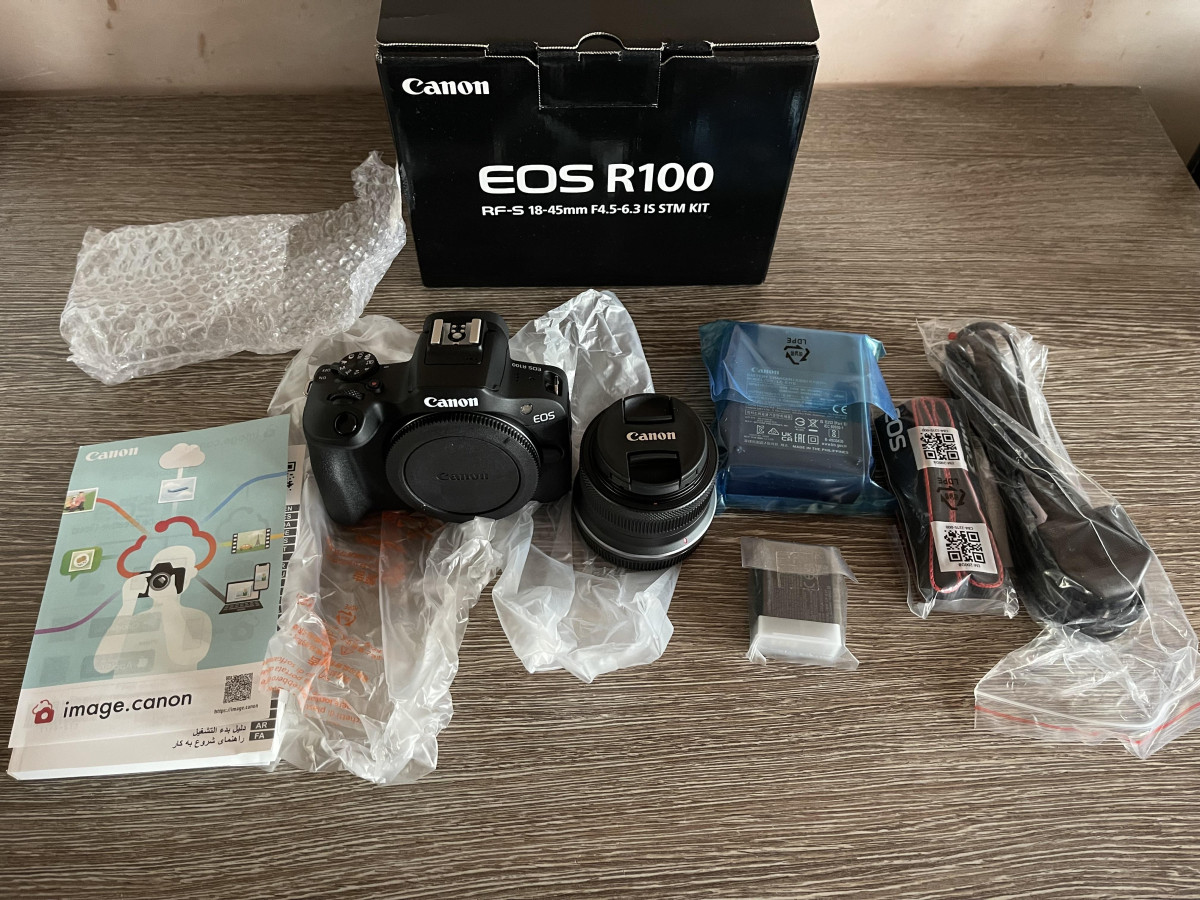
Comes with lense, battery, camera strap, battery charger. But be aware that you will need to buy a memory card as that's not included.
Overall, this is a great mirrorless entry level camera!
Great camera
Great camera, picture quality is exceptional!
Very easy to use and also connects so easy to your mobile phone where you can send the photos too! (Easy printing from a photo machine at a supermarket)
Only down side to it, everything comes seperate i.e the flash. It does zoom in a fair bit with the lense provided but our 'zoo day' could of done with a different lense to zoom in more but i will be purchasing this obviously seperate :) good little buy
To small
I purchased this through Argos it came very quickly. I was disappointed with the camera as it's very small and it's not what I wanted. I returned it the next day without any fuss , the price of the camera was put straight back onto my account very easy way to shop. I would recommend using the Argos card as it's very easy and convenient to shop at Argos well done Argos for an easy shop and easy returns.
Beautiful camera
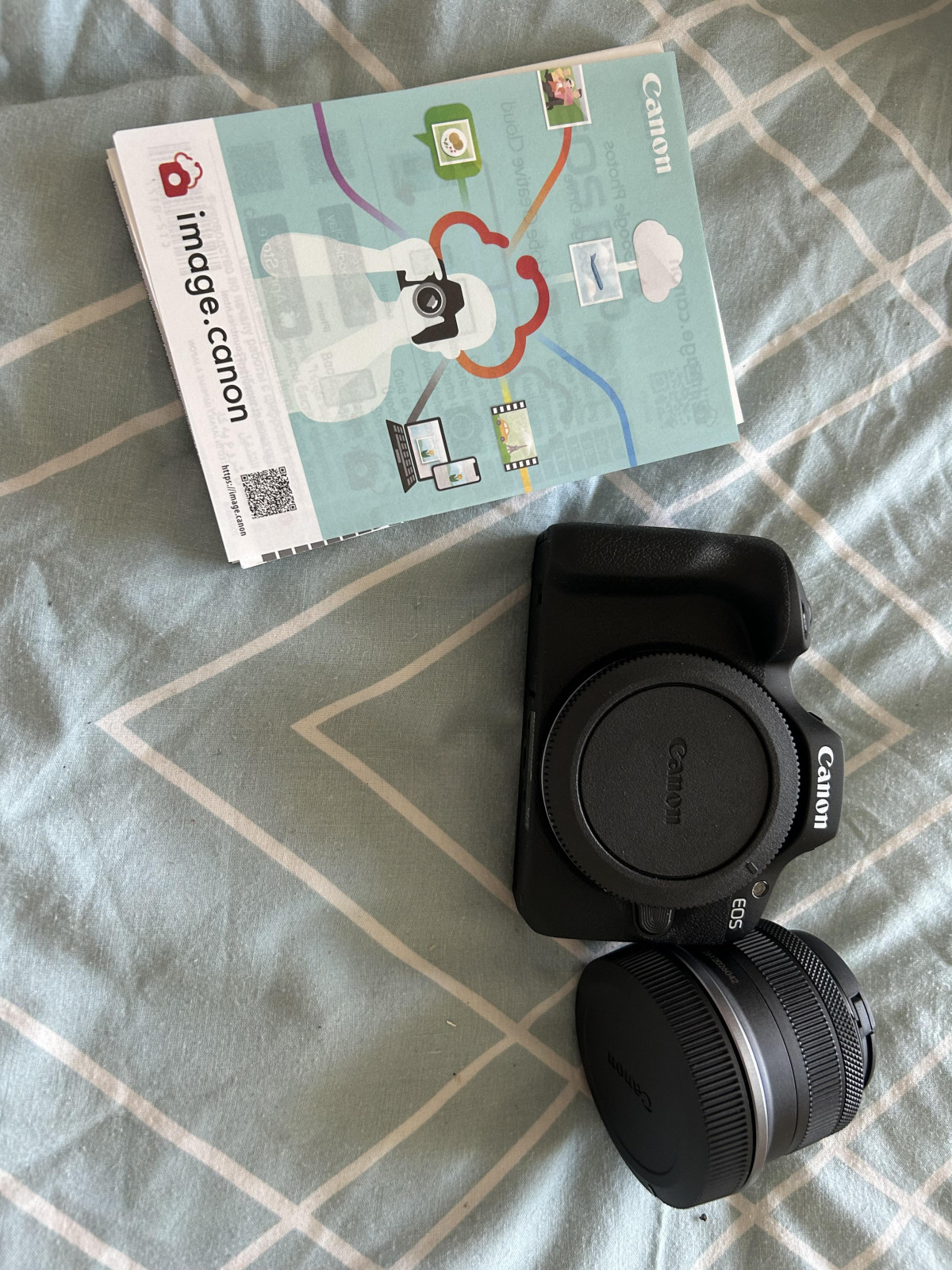
I was given this, absolutely stunning set up. The camera itself is extremely versatile, light weight and easy to use. It comes with a lens, battery pack and charger, CANON branded strap and instruction booklet. The lens is interchangeable if you wanted to upgrade following on from this purchase.
Picture quality is fantastic and would be a great camera for any budding photographers.
Great lightweight camera
I got this camera as the next move up from a Sony bridge camera. I now need a zoom lens to match the strength of my Sony camera as the lens it comes with is very basic. The photo and video quality is excellent. Shame it doesn't have a touch screen.
Excellent camera
Absolutely great camera. Takes brilliant photos. This product also connects to your phone via bluetooth and wifi to automatically uplaod pictures to your phone or other devices. No messing about. Great instructions and easy to use! Highly recommend
Crystal clear performance
Stunning image quality, lightning‑fast autofocus, and intuitive controls—this camera exceeds expectations, making every shoot unforgettable and worth every penny today.
Does the job very well
No complaints, light to hold and maneuver. Pictures are great but zoom lens included in the box is nothing special. Screen is non-touch, so that's a slight bummer.
Best mirrorless camera
It’s the Best mirrorless camera and have enjoyed its features so far including being able to share pictures immediately.