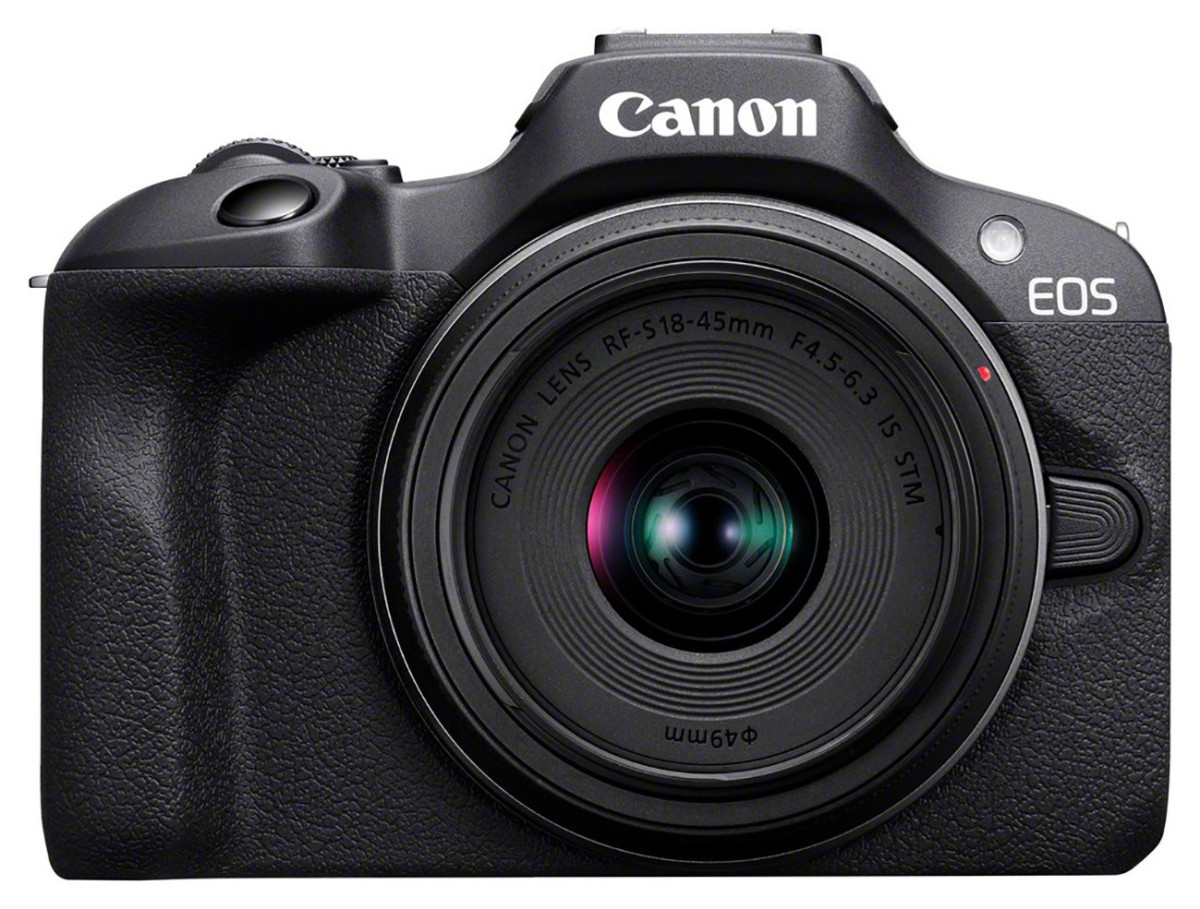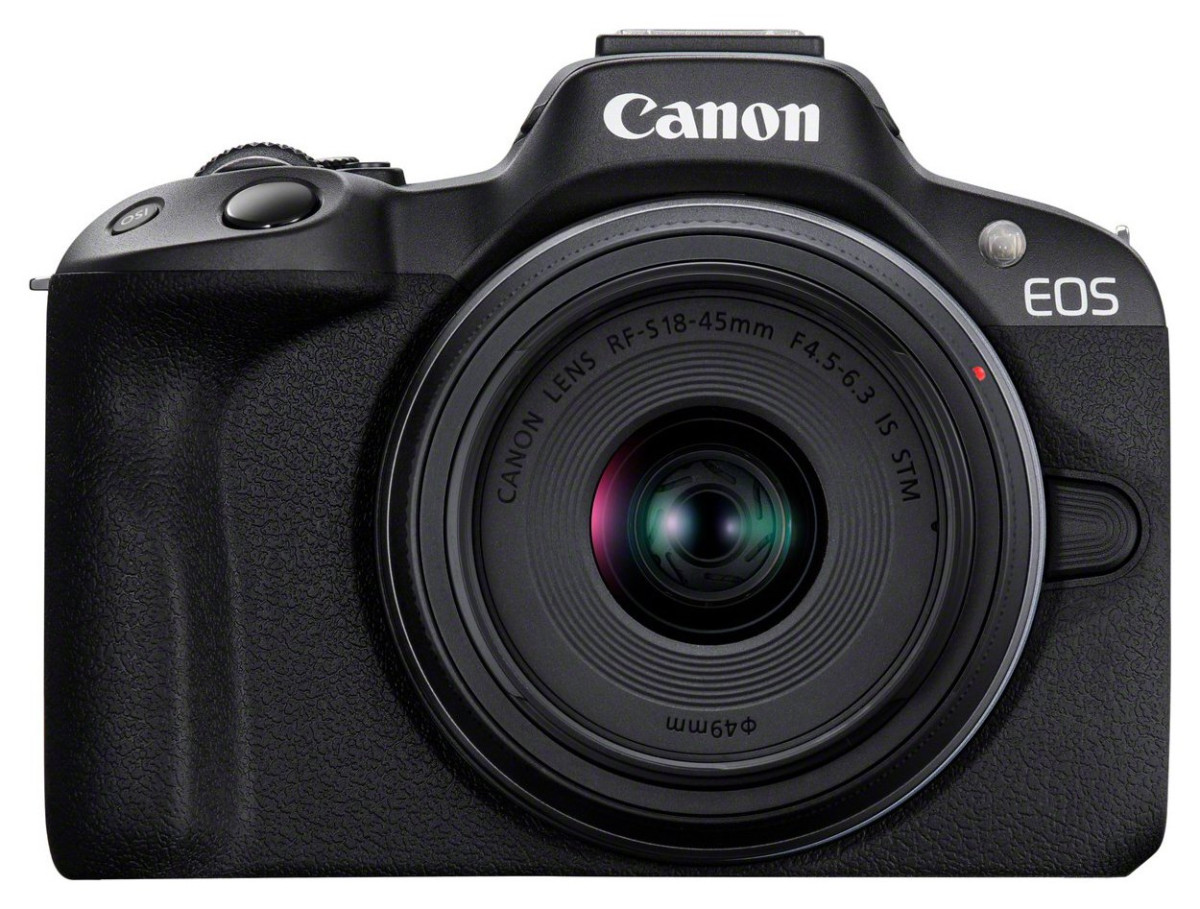
Canon EOS R50
Canon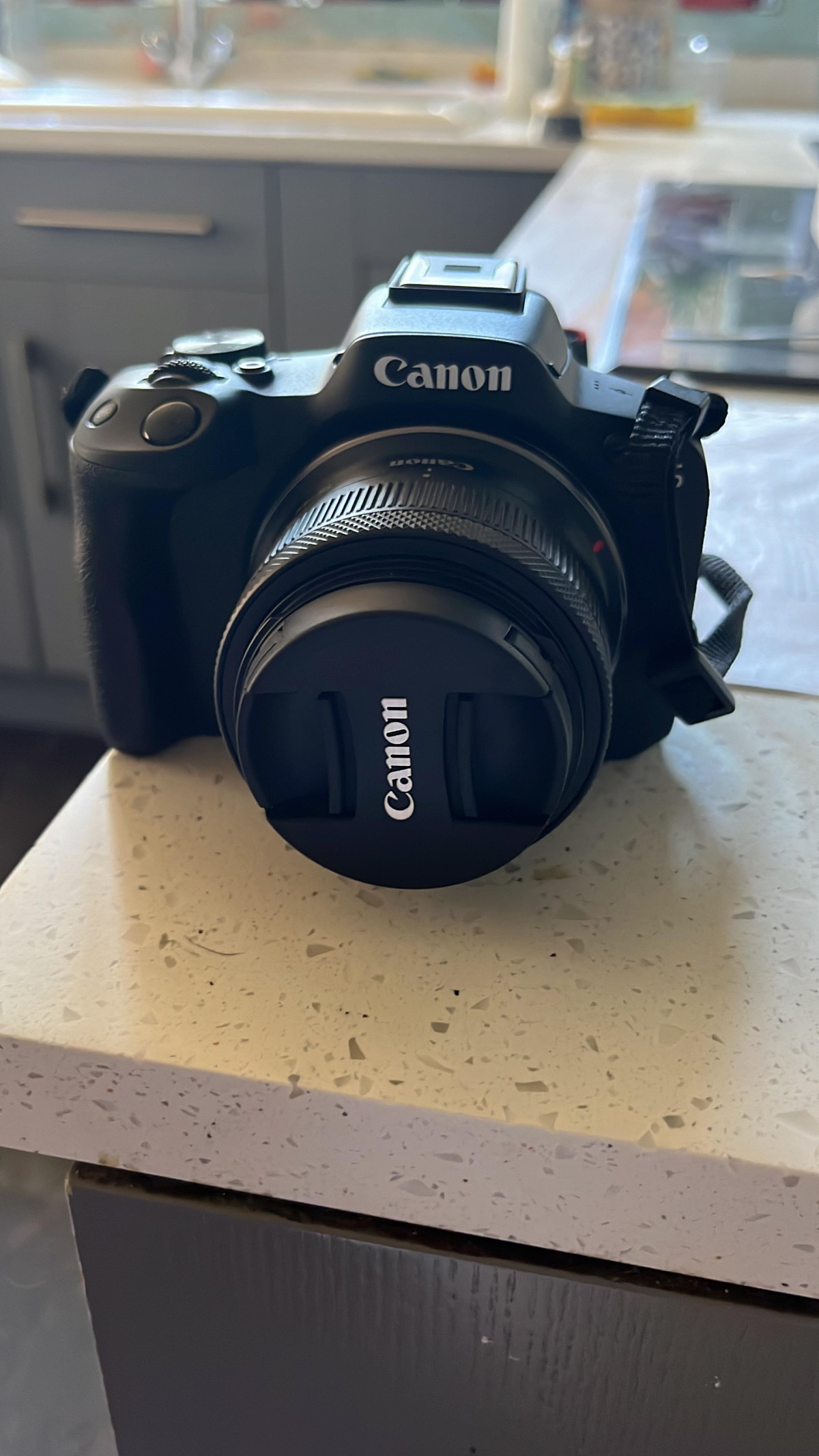
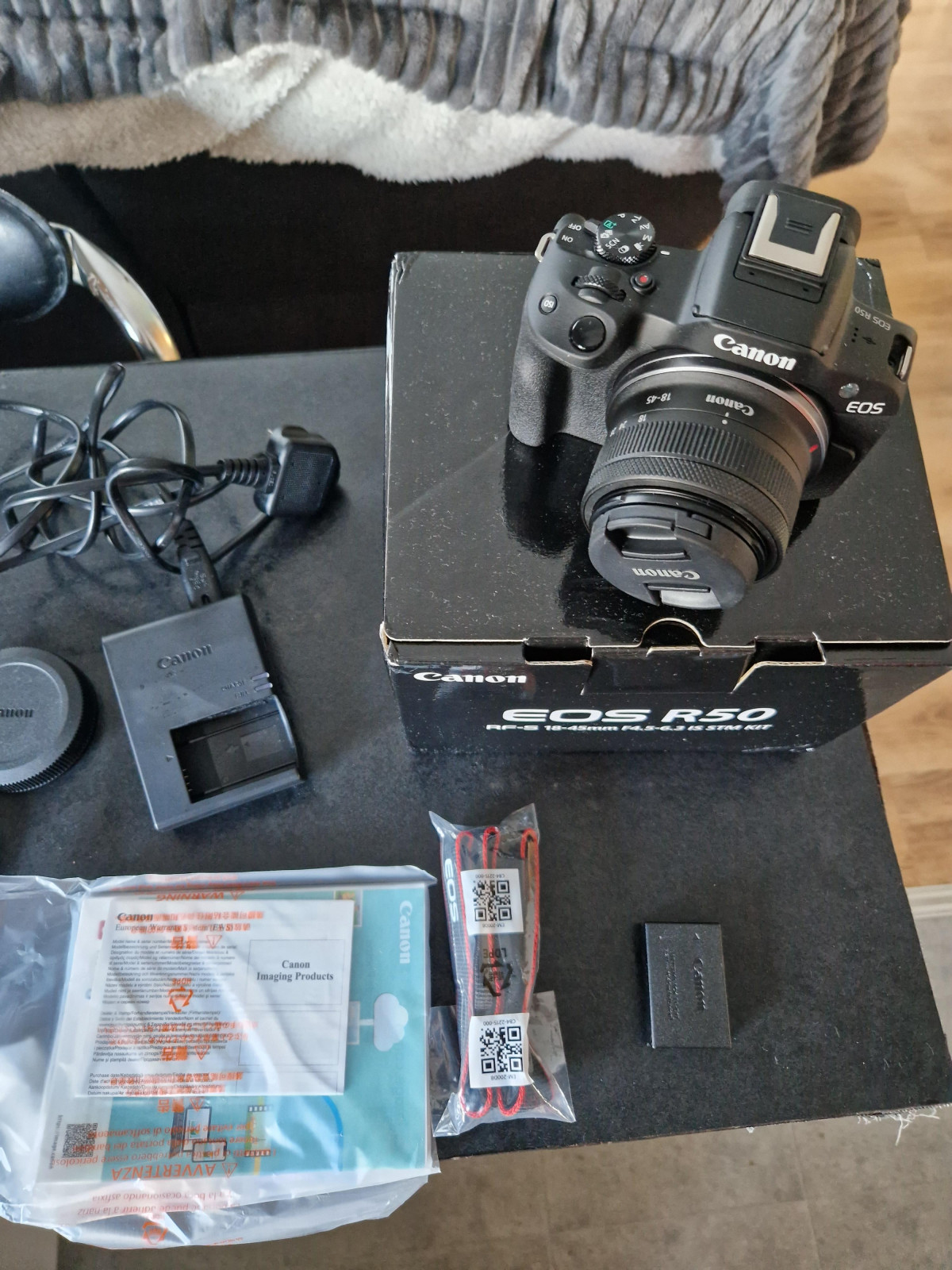
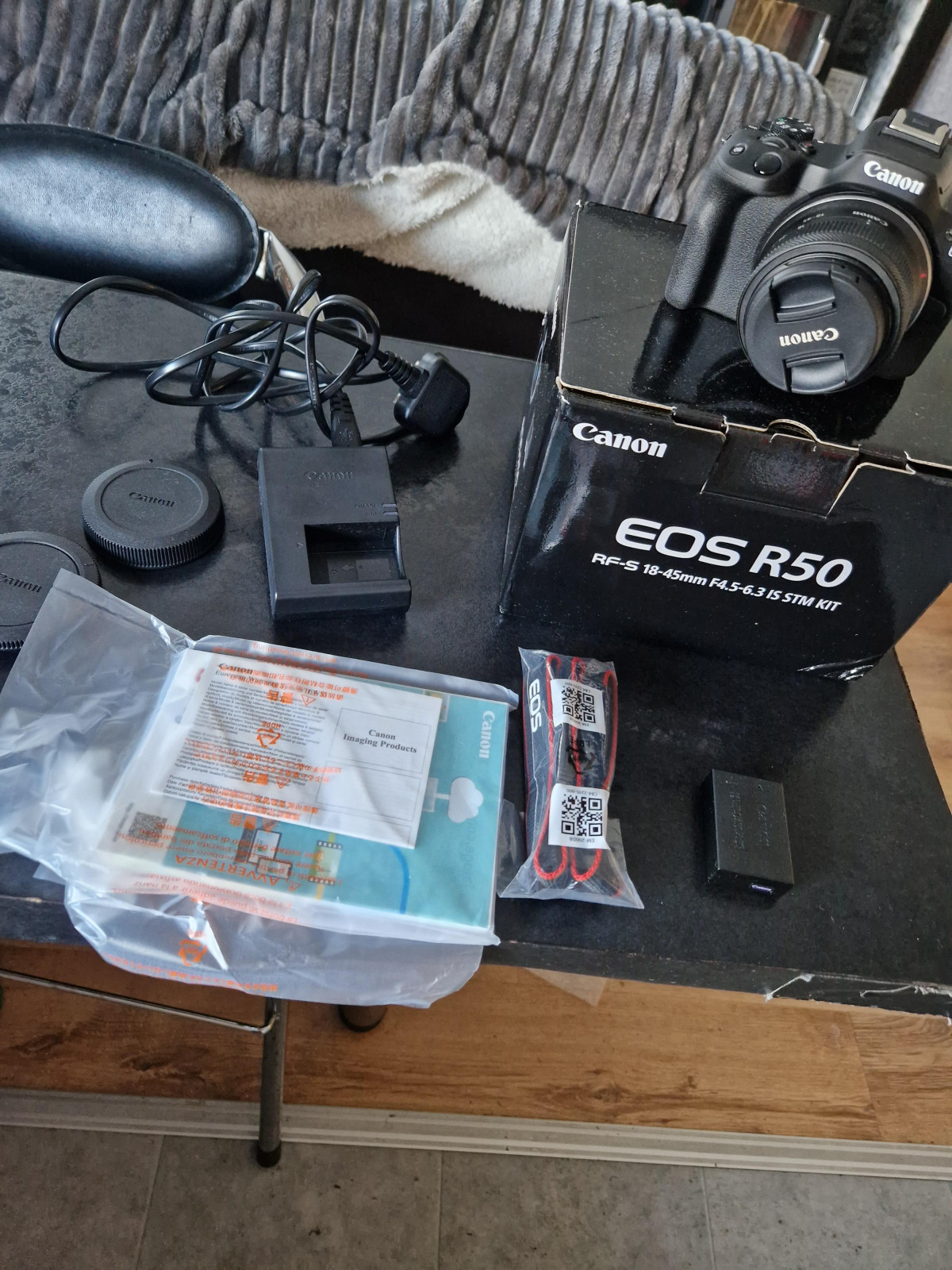
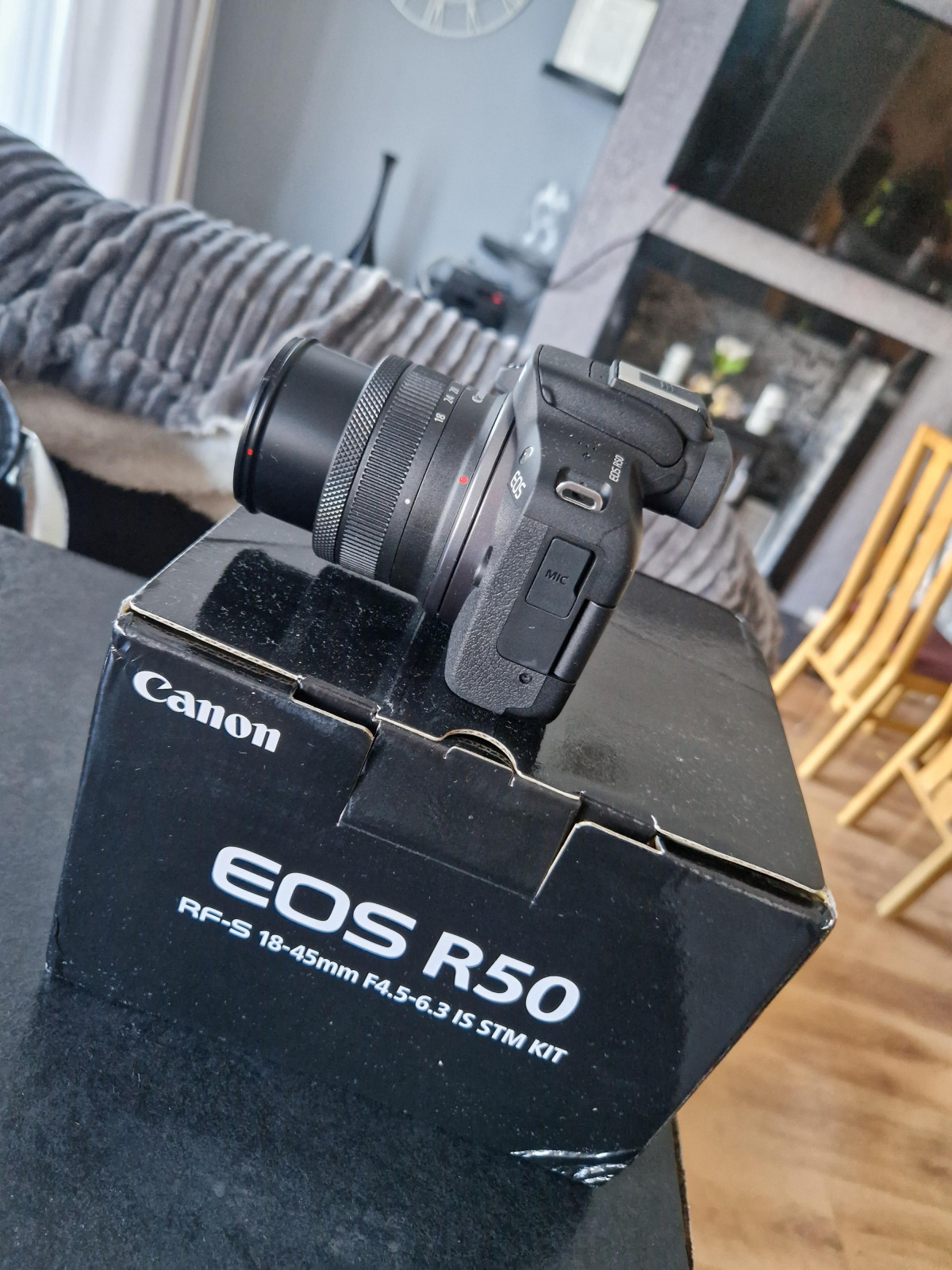
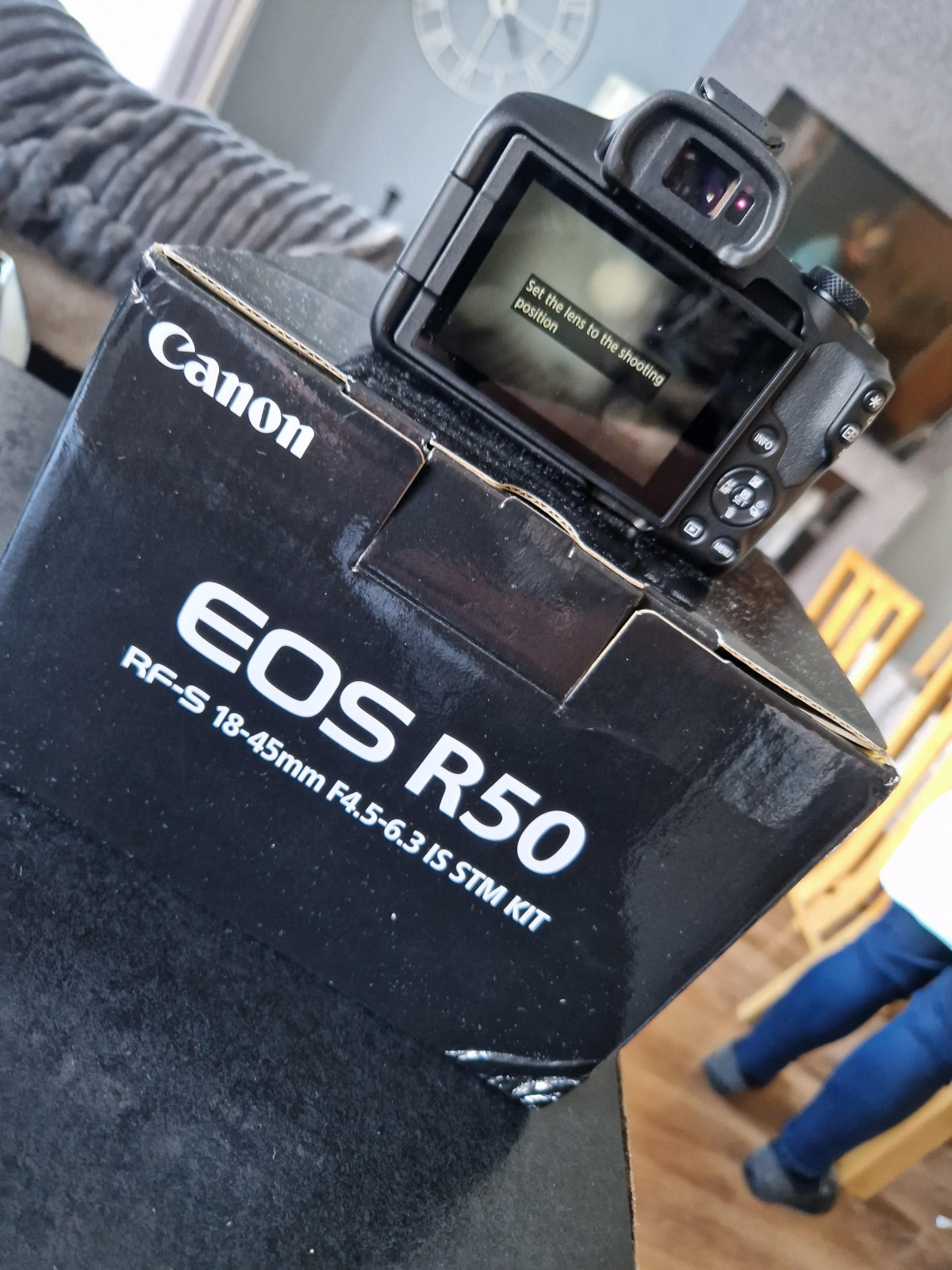
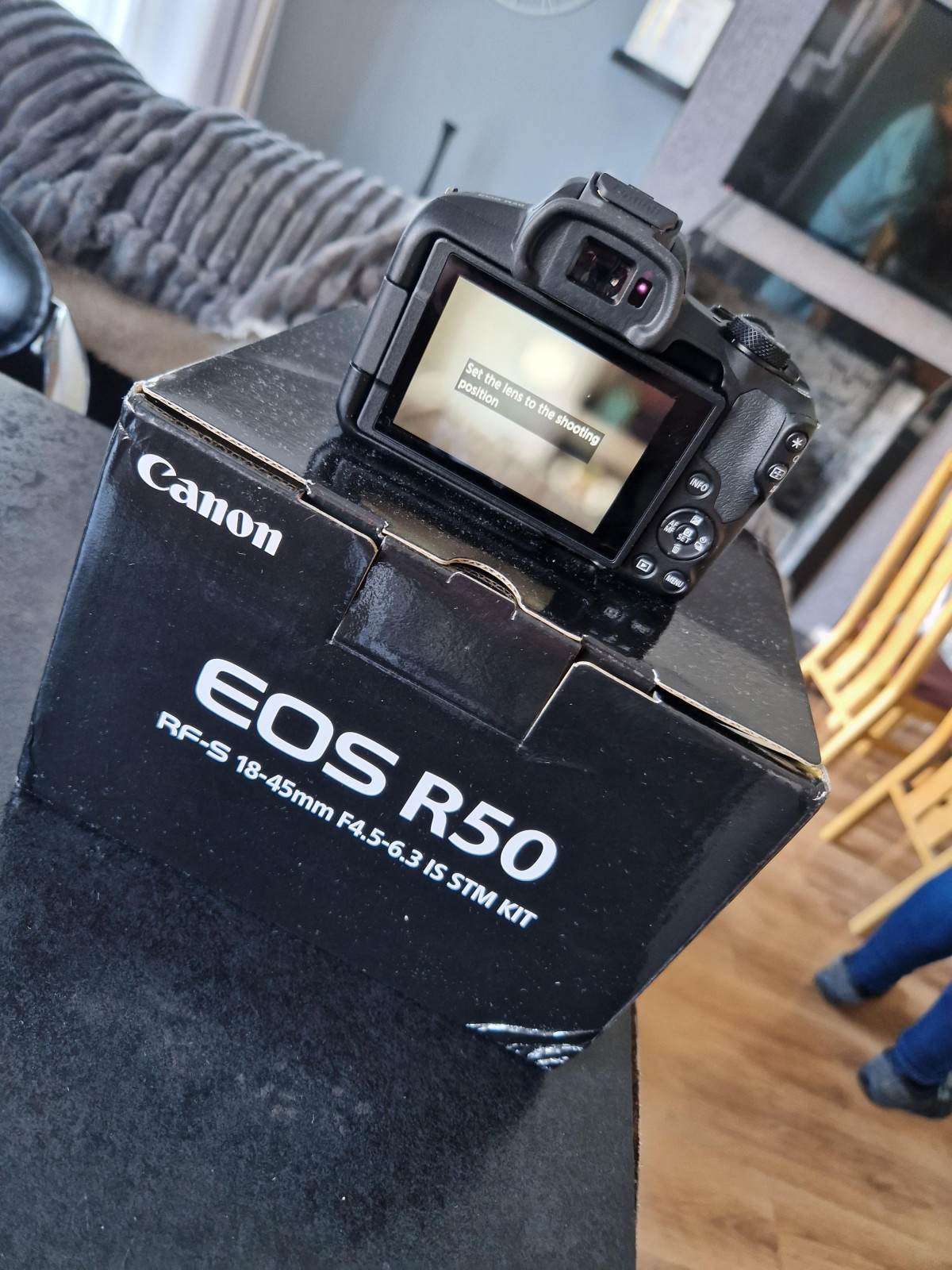
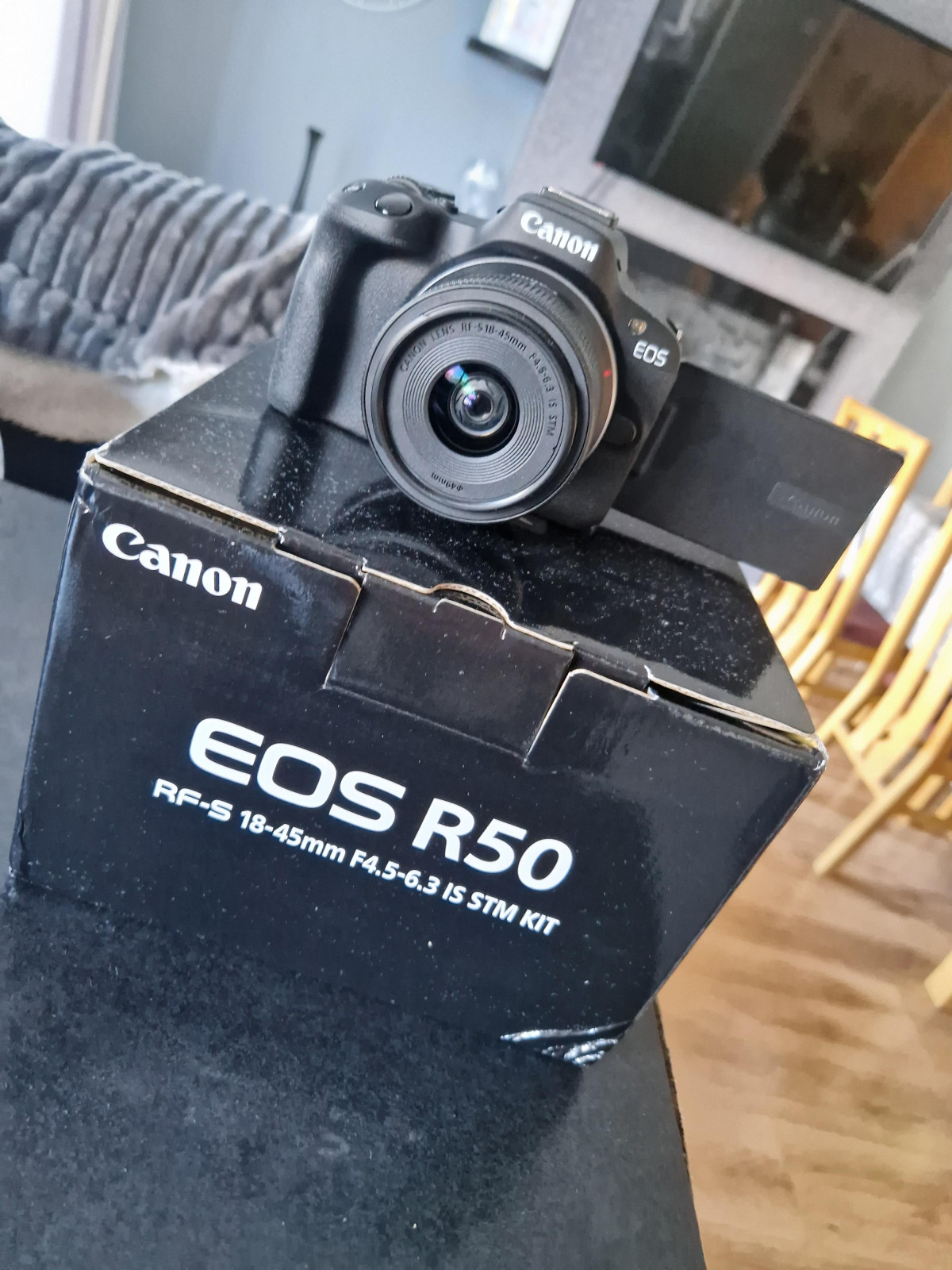
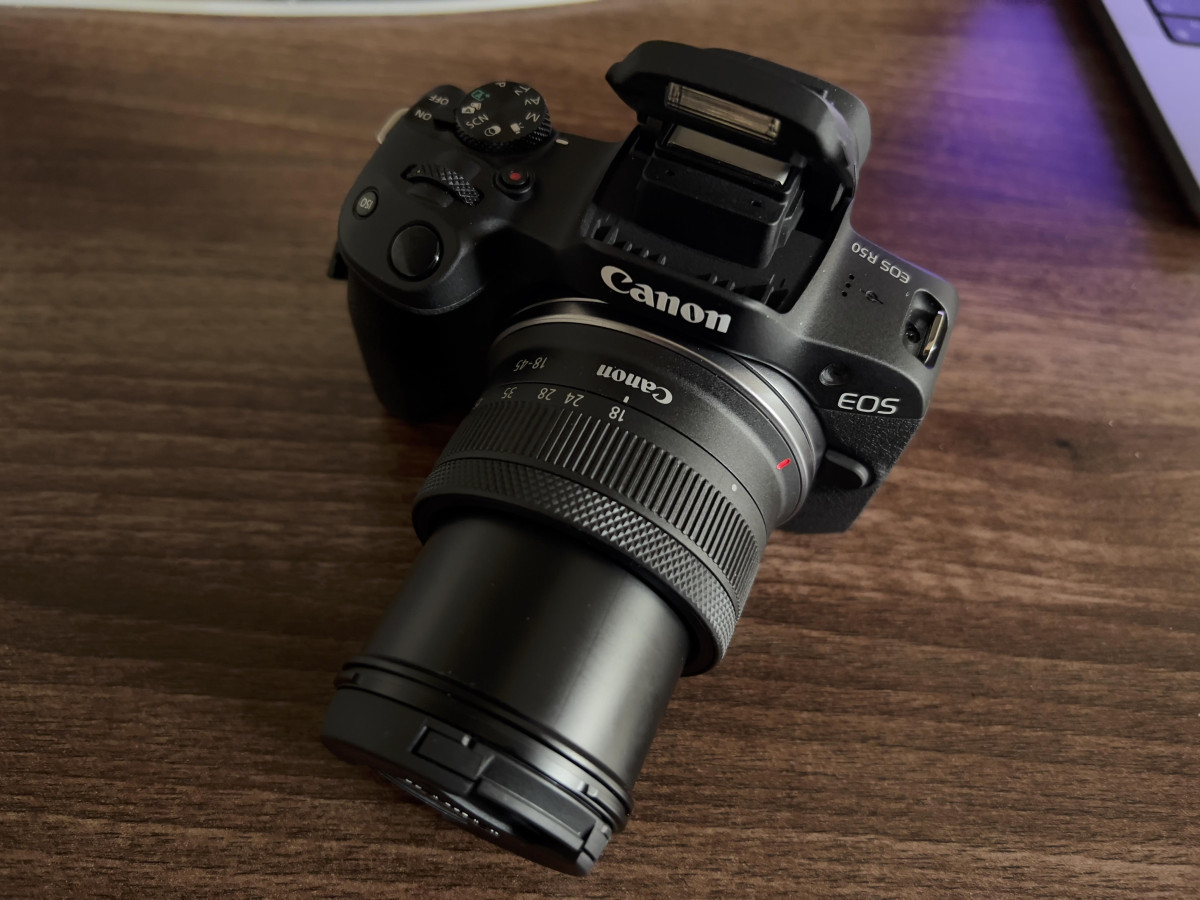
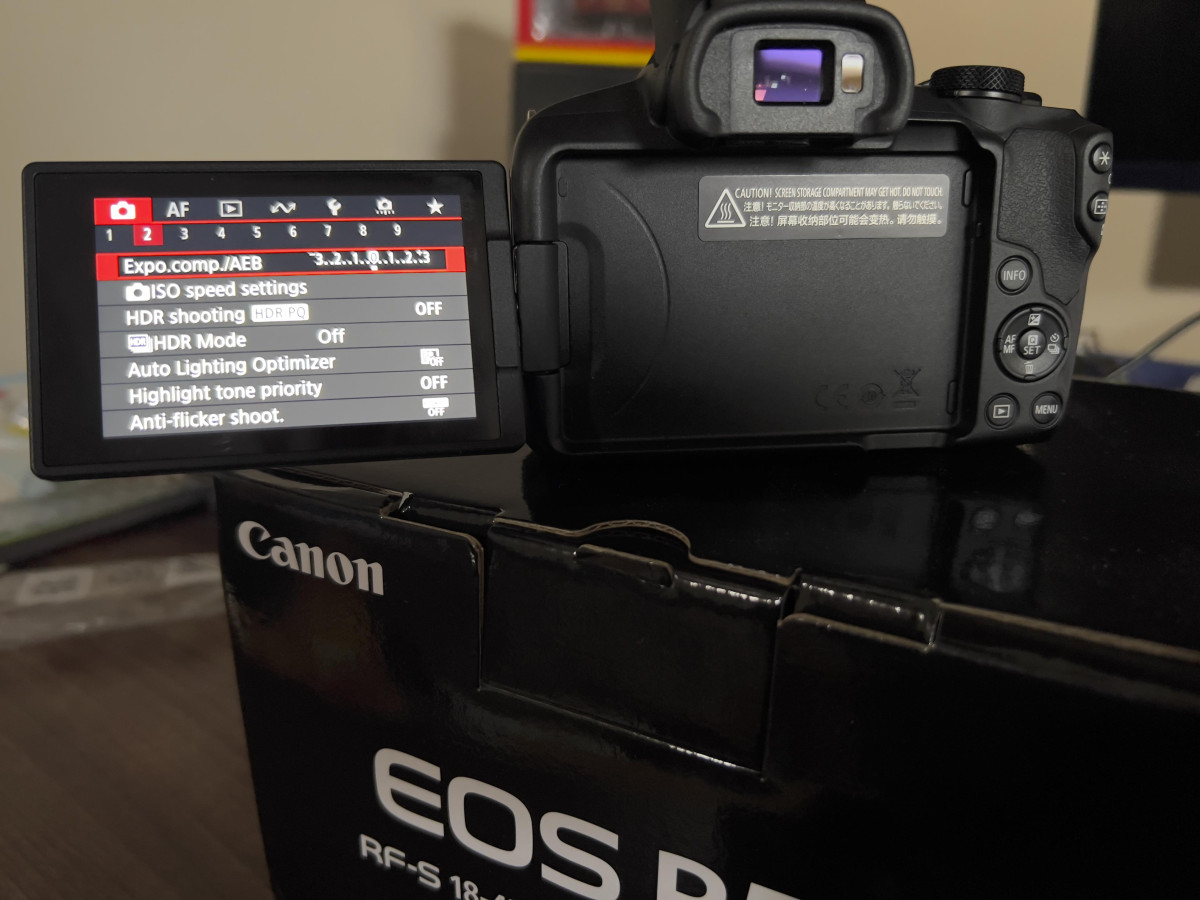
First Impressions: A Camera That Doesn't Look Like It Means Business
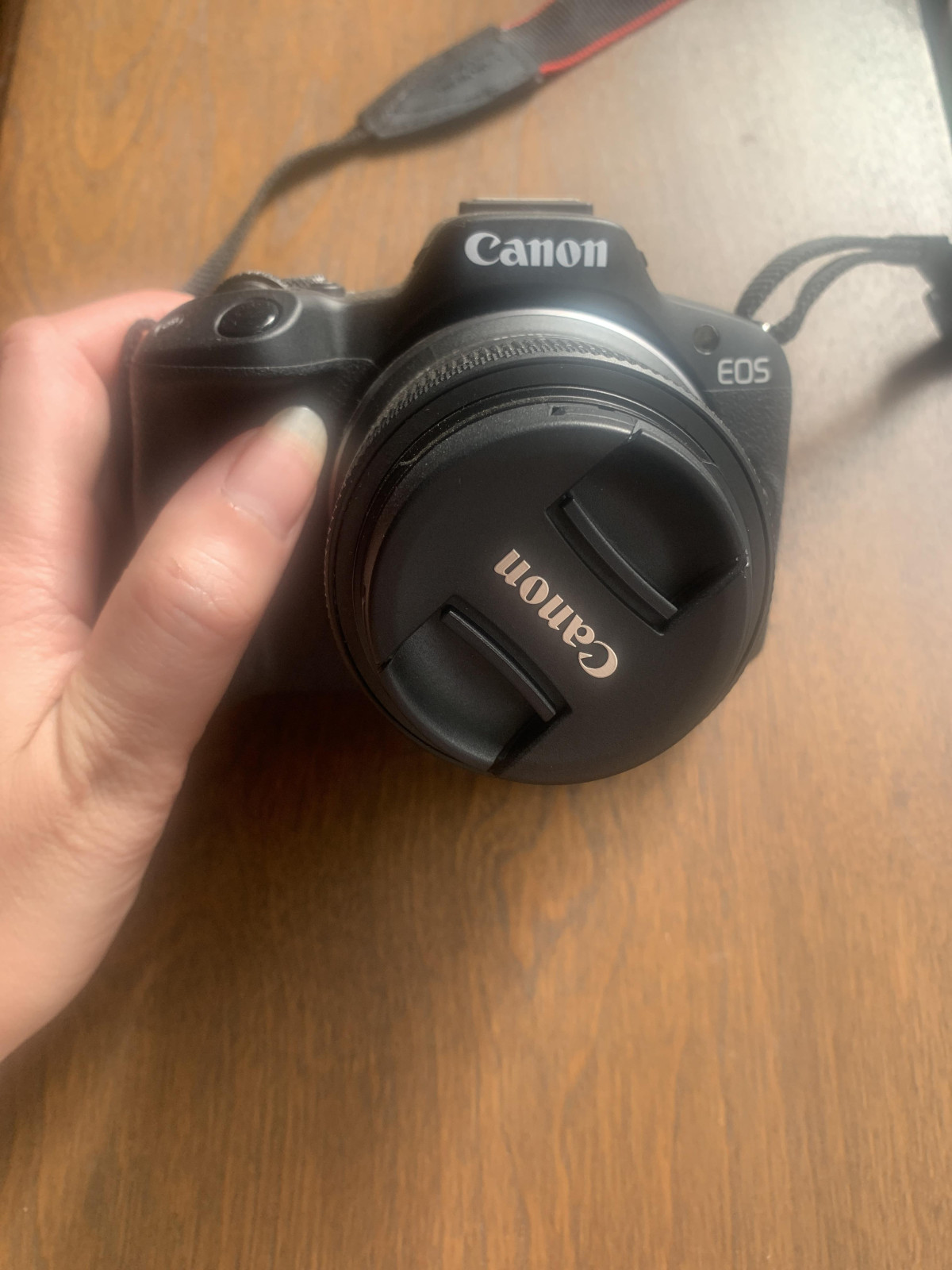
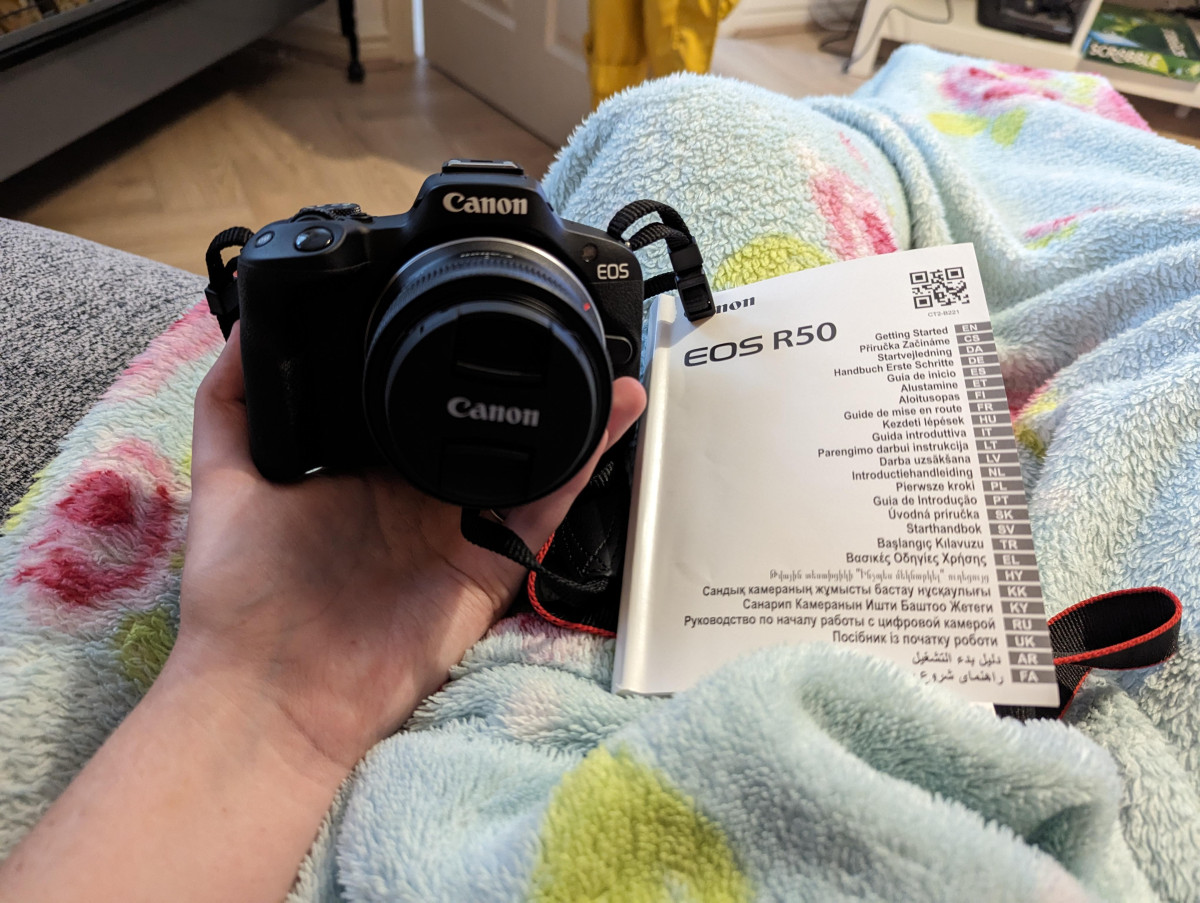
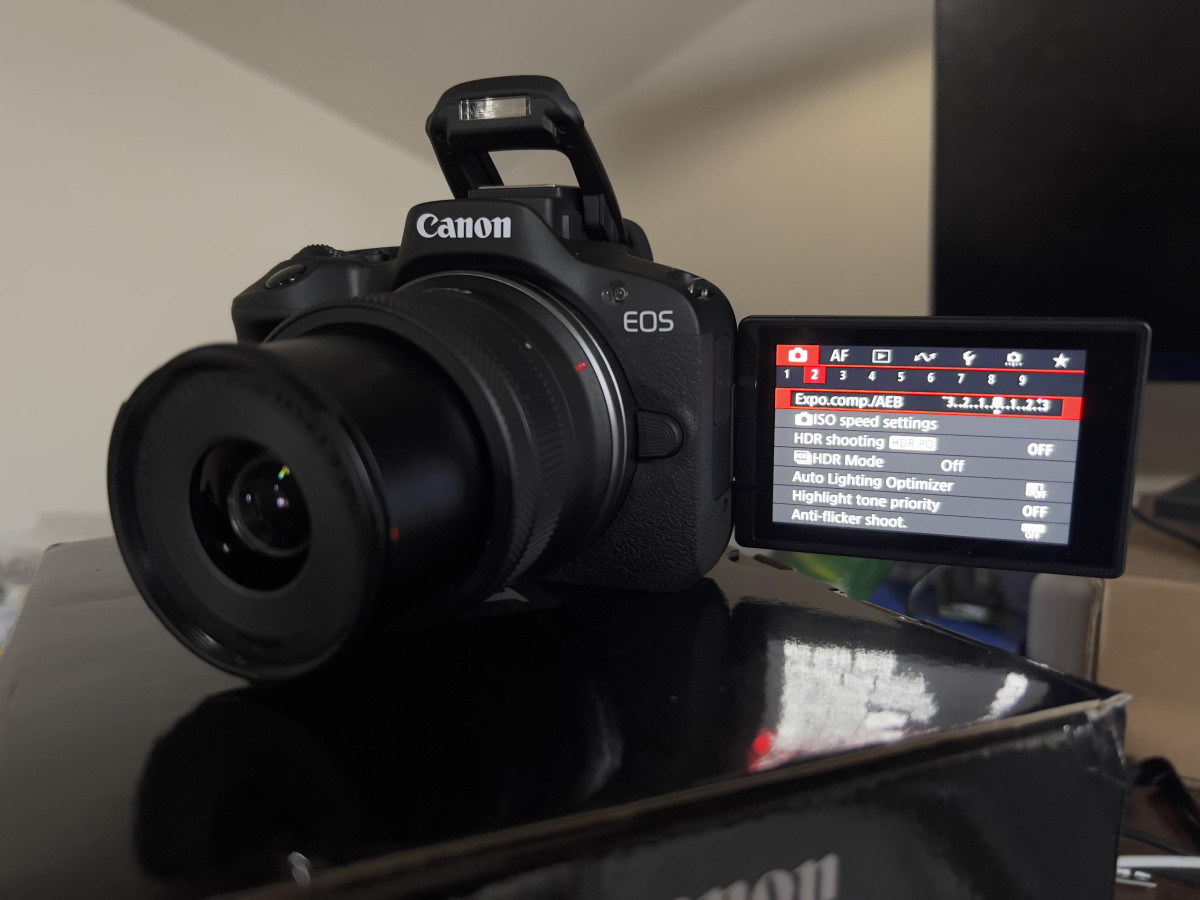
Pick up the Canon EOS R50 for the first time and the instinct is to underestimate it. At 328 grams for the body, it's closer in hand-feel to a premium point-and-shoot than to a "real" camera, and that's precisely the point. Canon built this camera for people who got tired of their phone's zoom falling apart in low light, who want to look and sound better on camera, and who have zero interest in learning a menu system designed by engineers for engineers. Attached to its companion RF-S 18-45mm zoom, the whole kit disappears into a day bag without complaint — and that's before you've even turned it on. What follows is everything that matters once you do.
Design, Build Quality, and How It Feels in Daily Use
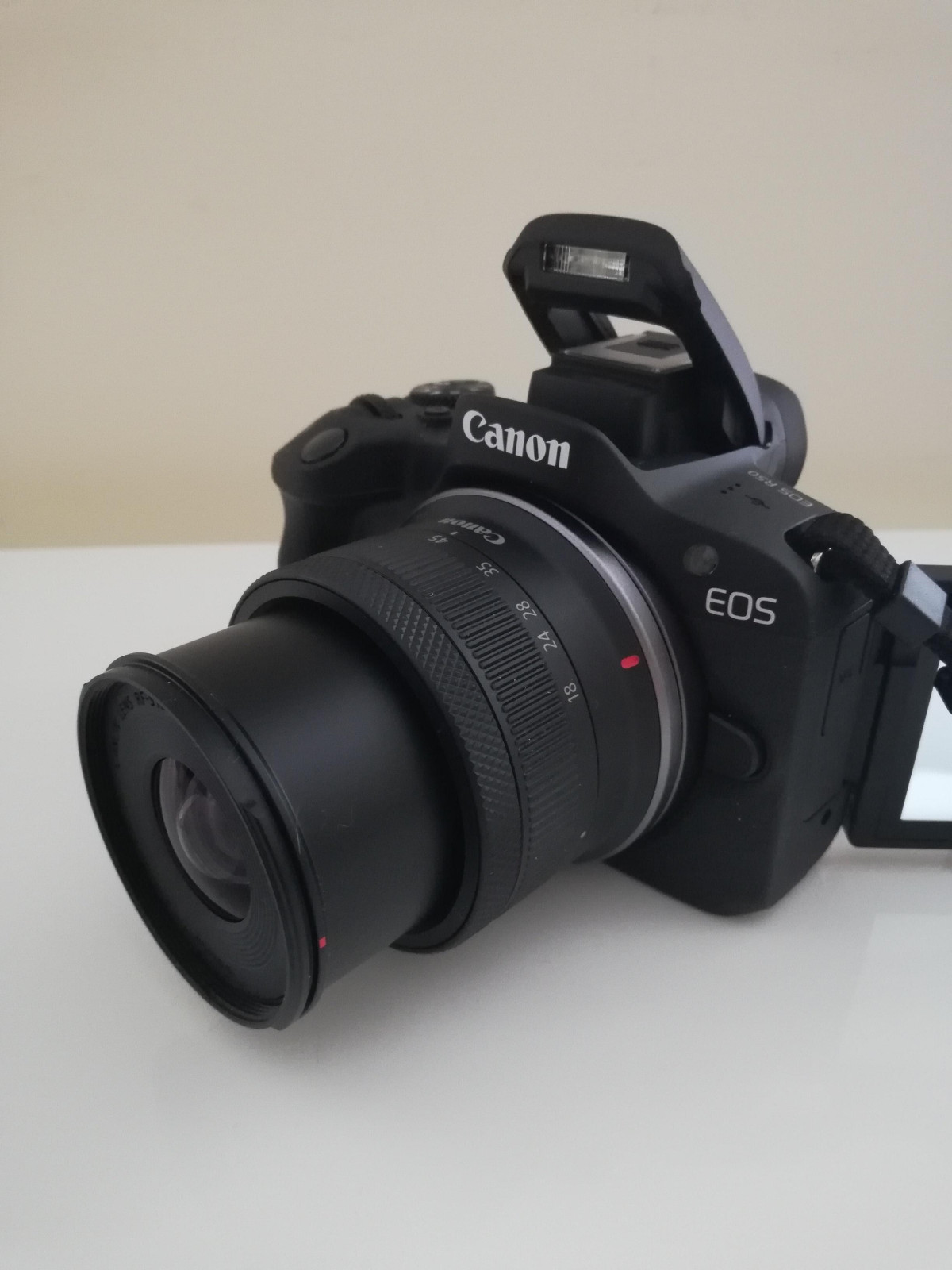
The R50's defining physical trait is restraint. Canon has stripped the body down to a compact block roughly the size of a paperback novel, with a moulded grip that curves just enough to keep the camera secure during a walk around a city or a day at a family event. It's genuinely one of the smallest, lightest APS-C mirrorless cameras Canon has ever put its name on, and that lends it an all-day-carry quality that heavier enthusiast bodies simply can't match — you forget it's around your neck.
That compactness comes with trade-offs worth knowing before you buy. Owners with larger hands have reported the grip feeling a little cramped compared to older, chunkier Canon DSLRs, particularly during extended handheld sessions rather than tripod work. The body also skips weather sealing entirely, so a drizzly hike or a dusty trailhead calls for a rain cover or at least some common sense — this isn't a camera built to shrug off the elements the way pricier, sealed bodies are. The control layout is similarly pared back: there's no second command dial, no dedicated joystick, and fewer physical buttons than you'll find on Canon's own step-up models. For a beginner, that's a feature — less to accidentally bump. For someone stepping down from a more advanced camera, it can feel like Canon removed a few too many direct controls in the name of simplicity.
The trade shows up again in the finish: light, mostly plastic-bodied construction that keeps the weight down but doesn't have the reassuring density of a metal-chassis camera. It's not flimsy, but it also doesn't pretend to be a tool built for punishment. Treat it the way you'd treat a good mirrorless travel companion, not a workhorse for professional shoots in the rain.
Sensor and Image Quality: What 24.2 Megapixels Actually Buys You
At the heart of the R50 sits a 24.2-megapixel APS-C sensor — smaller than the full-frame sensors in Canon's professional bodies, but exactly the size and resolution that has defined the sweet spot for enthusiast photography for over a decade. In practical terms, this resolution gives you enough detail to crop into a shot significantly and still print it at a respectable size, or to display images pin-sharp on any screen without visible softness. You won't be short on detail for social posts, prints up to poster size, or portfolio work.
Paired with Canon's current-generation image processor, the sensor also benefits from more refined colour science than older entry-level Canons — skin tones in particular render with a warmth that many reviewers have singled out as flattering straight out of the camera, meaning less time colour-correcting in post before a photo or clip looks share-ready.
Because this is an APS-C sensor rather than full-frame, every lens you attach effectively acts more zoomed-in than its focal length suggests — roughly one and a half times more, in practice. That's a genuine advantage for anyone shooting distant subjects like wildlife or sports, since you get extra reach without buying a longer lens. The trade-off is at the wide end: if you want sweeping landscape or interior shots, you'll want to seek out a genuinely wide lens rather than assume the kit zoom's shortest setting will feel as wide as it would on a full-frame body.
Autofocus That Thinks Ahead: Dual Pixel CMOS AF II in Practice
If there's one feature that punches well above the R50's price, it's the autofocus system. Canon's Dual Pixel CMOS AF II technology uses deep-learning subject recognition to identify and track people, animals, and vehicles automatically — and crucially, it does this without you needing to manually select a focus point first. Point the camera roughly at a moving subject and it locks on, then follows that subject through the frame as it moves, as you recompose, or as other things pass in front of it.
In real-world use this translates into far fewer missed shots for anyone photographing kids who won't sit still, pets that dart around a garden, or vehicles at a car meet. Independent testers have found it reliably locks onto human subjects across a wide range of compositions, and while it can occasionally lose track of an animal's face at a distance or at an awkward angle, it recovers quickly. For a camera at this price point, this level of intelligent tracking used to be reserved for cameras costing several times as much — it's the single strongest argument for choosing this body over a similarly priced DSLR or older mirrorless design.
People Tracking
Animal Tracking
Vehicle Tracking
Continuous Tracking
Continuous Shooting and Shutter Speed: Freezing the Moment
The R50 can fire off frames at up to 15 per second when using its fully electronic shutter, dropping to a still-respectable rate with the mechanical shutter engaged. For context, that electronic burst speed is fast enough to capture a proper sequence of a diver mid-jump, a dog catching a frisbee, or a kid crossing a finish line — the kind of moment where a single frame captured a fraction of a second too late means the shot is gone. Combined with the subject-tracking autofocus, this makes the camera surprisingly capable for casual sports and action photography, categories that are usually the domain of much more expensive gear.
The maximum shutter speed of 1/8000 of a second (available with the electronic shutter) also gives you the headroom to freeze extremely fast motion or to shoot wide open in bright sunlight without blowing out your highl12hts — useful for portrait shooters who want a shallow depth of field even at midday.
Video Performance: 4K Without the Vlogging Rig
Video is where the R50 earns its keep as a content-creation tool rather than just a stills camera. It records 4K footage at up to 30 frames per second with audio, giving creators the sharp, editing-flexible footage that platforms like YouTube now expect as standard, without needing to step up to a specialist cinema camera. Recording in both PAL and NTSC broadcast standards also means the camera plays nicely whether your workflow or audience is UK/European or North American.
The autofocus tracking carries over into video, which matters enormously for solo creators — the camera will follow your face as you move around a frame while vlogging, without an assistant riding focus manually. That's the feature that turns this from "a camera that also shoots video" into "a genuine vlogging tool."
Prospective buyers should know one real-world caveat surfaced consistently in independent testing: extended 4K recording sessions can trigger the camera's thermal protection and shut recording down, particularly indoors or in warm conditions. For short-to-medium clips — the vast majority of social content — this isn't an issue. For creators planning to record long, uninterrupted takes (a lecture, a livestream, a long tutorial), it's worth budgeting for breaks between clips or considering a body built with more sustained 4K stamina in mind.
The Vari-Angle Touchscreen and Electronic Viewfinder
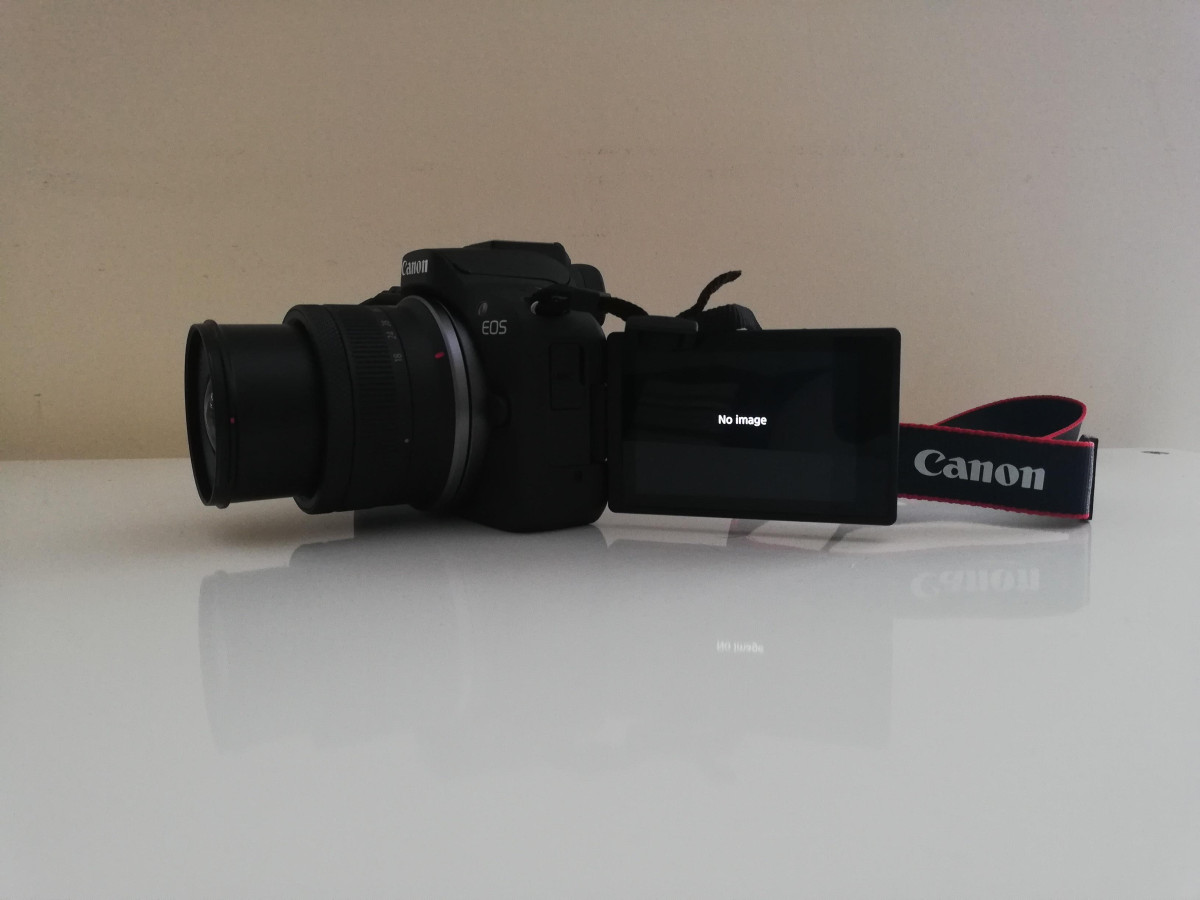
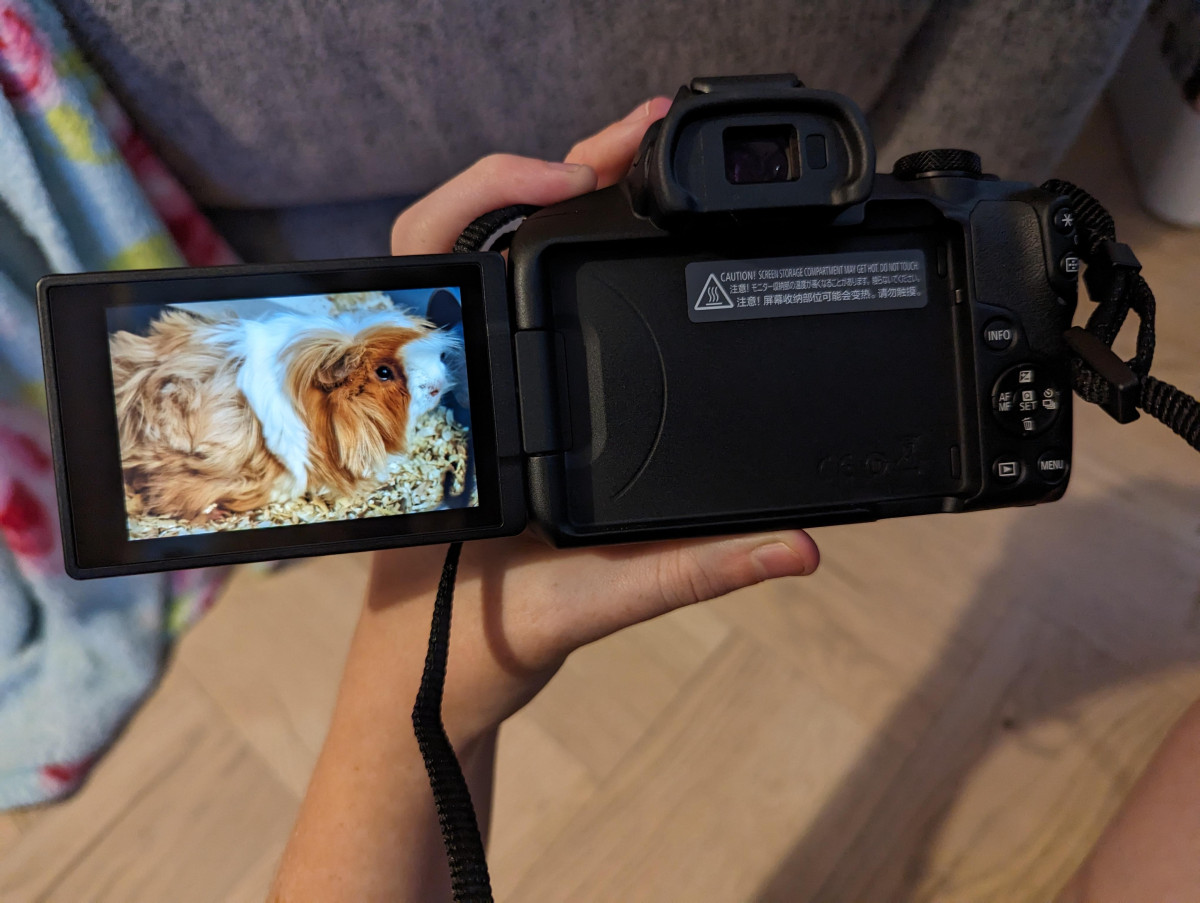
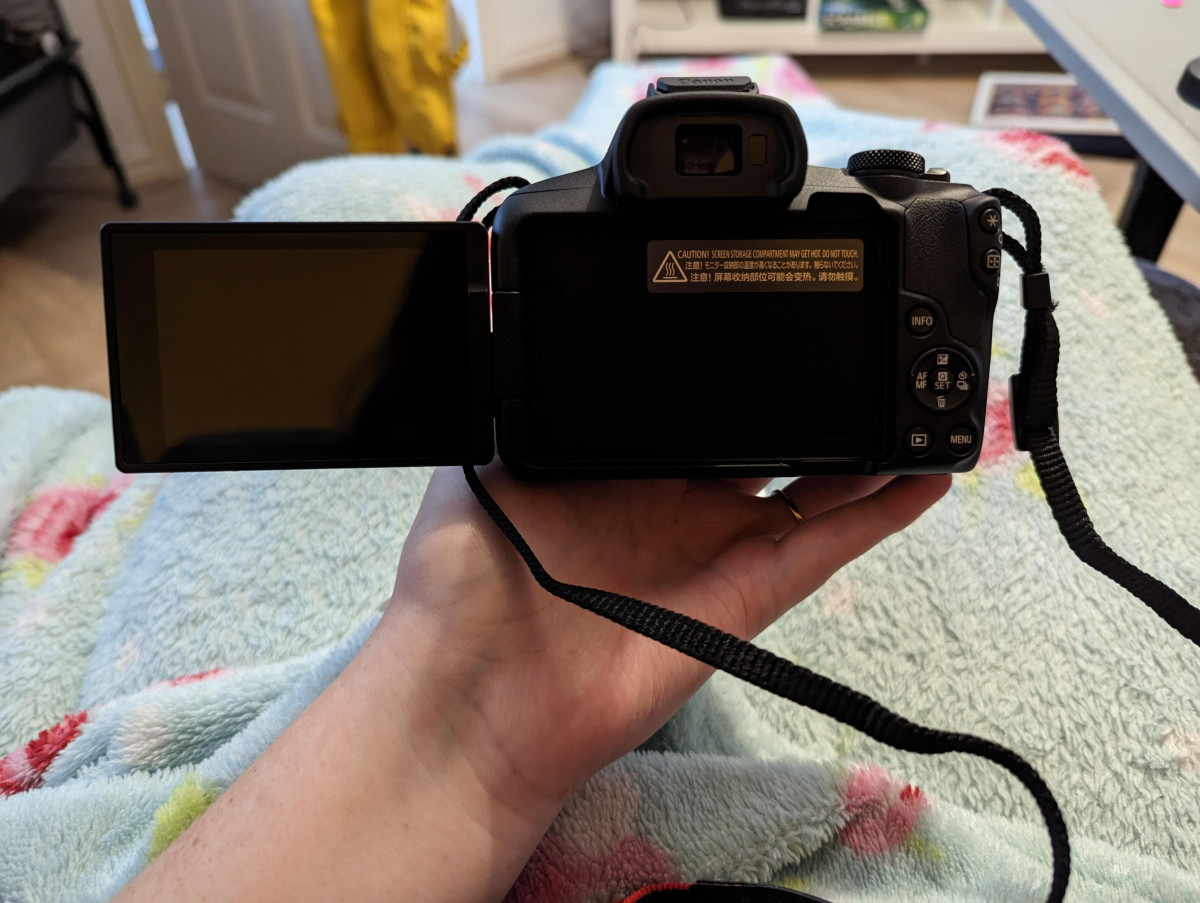
The rear display is a 2.95-inch vari-angle touchscreen, meaning it flips all the way around to face forward — the single most important physical feature for anyone filming themselves. You can frame a shot, check focus, and confirm exposure while standing in front of the lens rather than guessing, which is precisely why this class of camera has become the default recommendation for new vloggers. The touchscreen interface also simplifies navigation through Canon's menu system considerably compared to button-only cameras, letting you tap to select a focus point or swipe through settings the way you'd use a phone.
Where the R50 pulls ahead of many vlogging-first rivals is its electronic viewfinder — a feature plenty of competing cameras in this price bracket skip entirely to save cost and bulk. For traditional stills photography, especially in bright outdoor light where a rear screen can wash out and become hard to read, an eye-level viewfinder makes composing a shot far more precise and comfortable. If you plan to shoot as much through the viewfinder as you do video on the flip screen, this is a meaningful advantage over viewfinder-less competitors.
ISO Range and Low-Light Confidence
The camera's sensitivity range stretches from ISO 100 up to a boosted 51200, covering everything from bright midday sun down to dim indoor and evening scenes. In everyday terms, the lower end of that range is for crisp, clean, artifact-free shots in good light, while the extended upper range exists as a safety net for genuinely dark situations — a dinner lit by candles, an evening street scene, an indoor event without flash — where you'd rather have a slightly grainier photo than no photo at all. Independent reviewers have specifically praised the camera's performance in these harder lighting conditions, noting cleaner results at high sensitivities than you'd expect from a camera at this price. That said, as with any APS-C sensor, image quality is at its best in the lower-to-middle portion of that ISO range; treat the extreme top end as a last resort for capturing a moment at all, not a setting for everyday use.
Battery Life, Power, and Fast Charging
The R50 uses a removable, rechargeable lithium-ion battery rated by independent CIPA testing at roughly 440 shots per charge under standard conditions — a figure that, in practice, comfortably covers a full day of casual shooting, a wedding's worth of ceremony-and-reception photos, or a weekend trip with moderate video use, especially if you're not leaving the screen on constantly between shots. Because the battery is removable, picking up a spare and rotating it mid-day is simple and inexpensive insurance for anyone with heavier shooting plans, such as an all-day event or a multi-day trip without reliable access to power.
Perhaps more useful day-to-day is the camera's support for USB Power Delivery (PD) fast charging — the same charging standard used by modern laptops and phones. In practical terms, this means you're not locked into carrying a proprietary Canon charging brick; a suitable USB-C PD charger and cable, of the kind many people already own for other devices, will top the battery up, and can even be used to power the camera directly while it's plugged in during longer sessions. This is a small but genuinely convenient detail for anyone who already travels with a USB-C charging setup and would rather not add another dedicated charger to their bag.
Connectivity and Everyday Usability
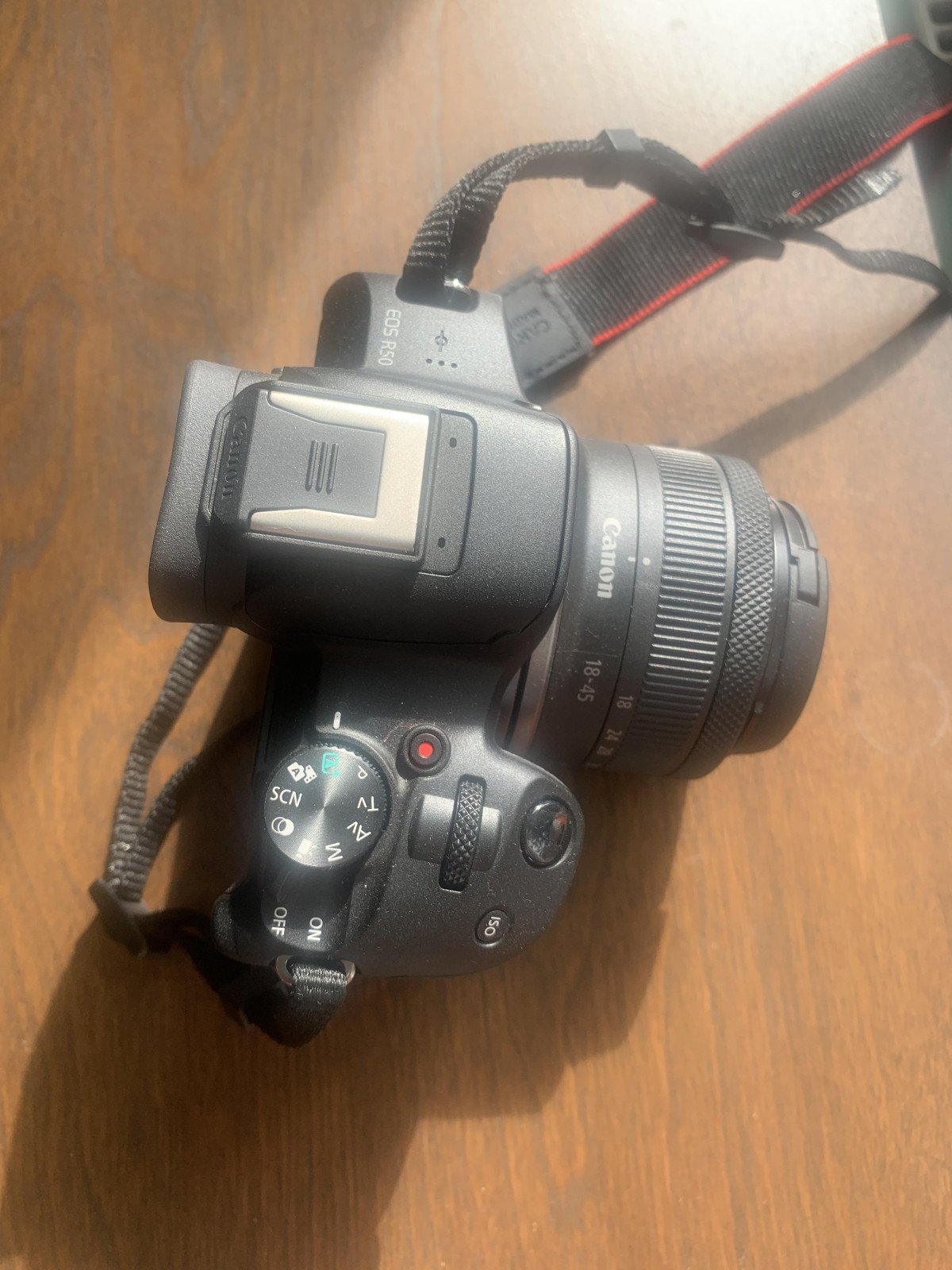
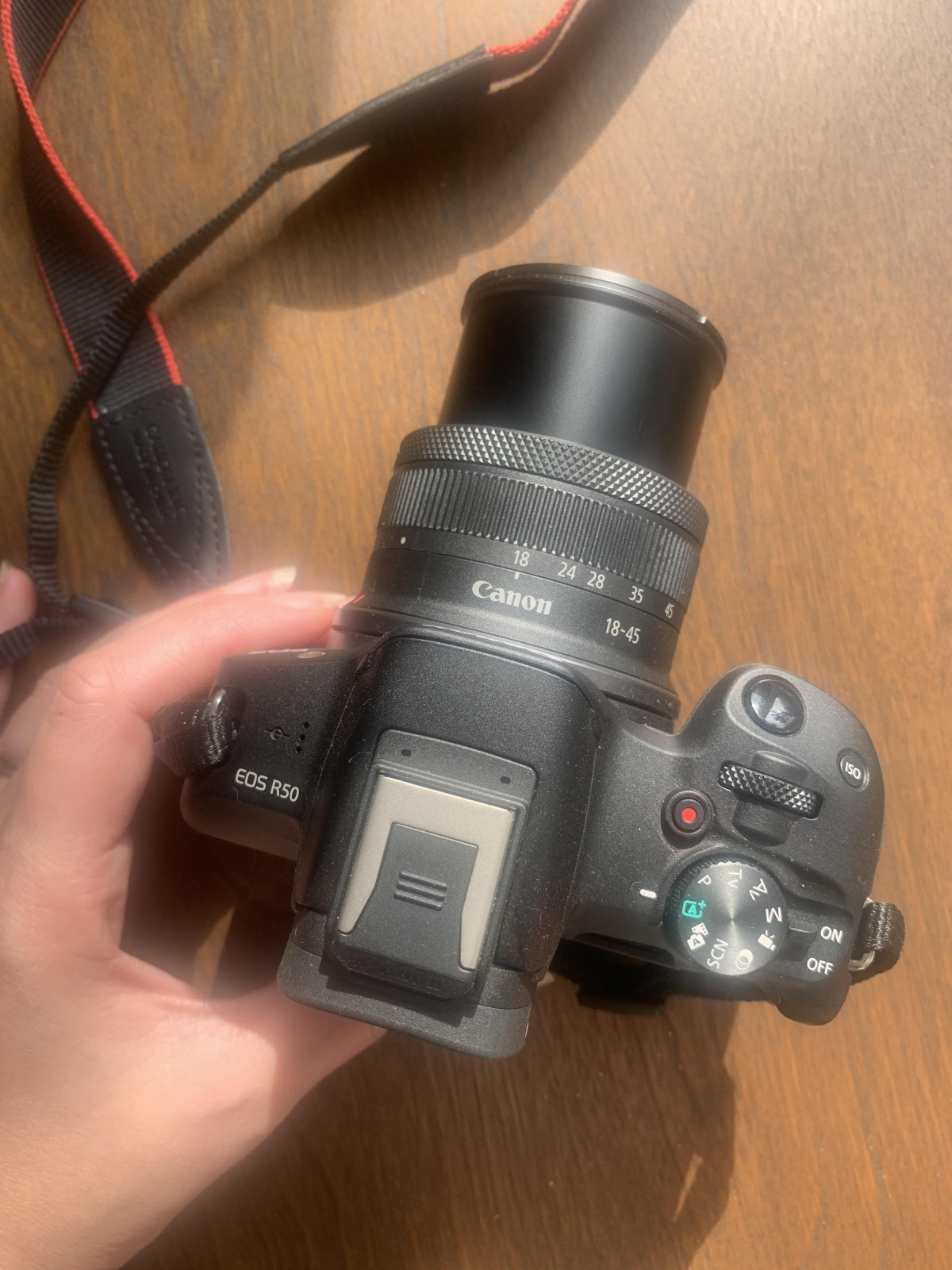
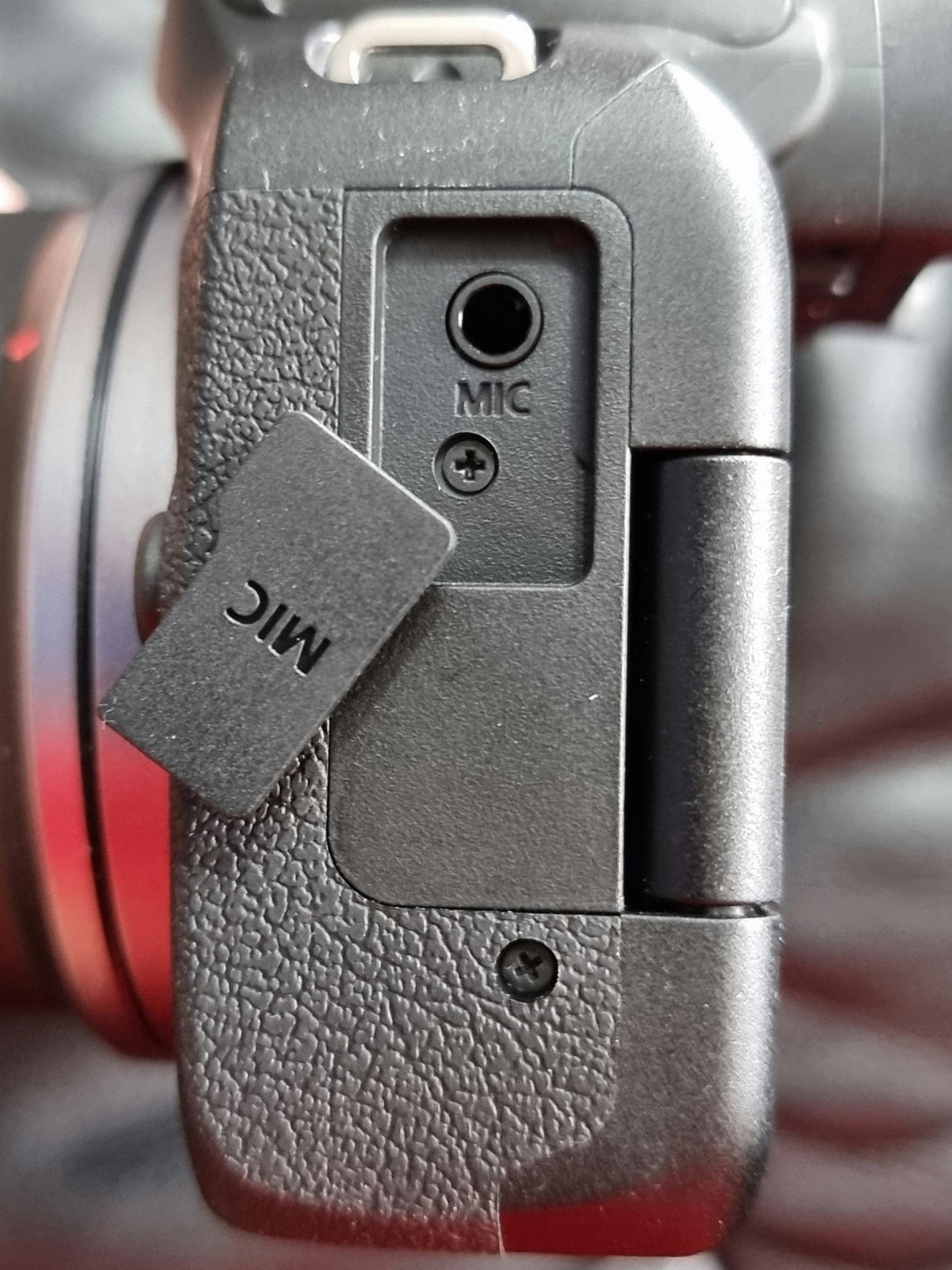
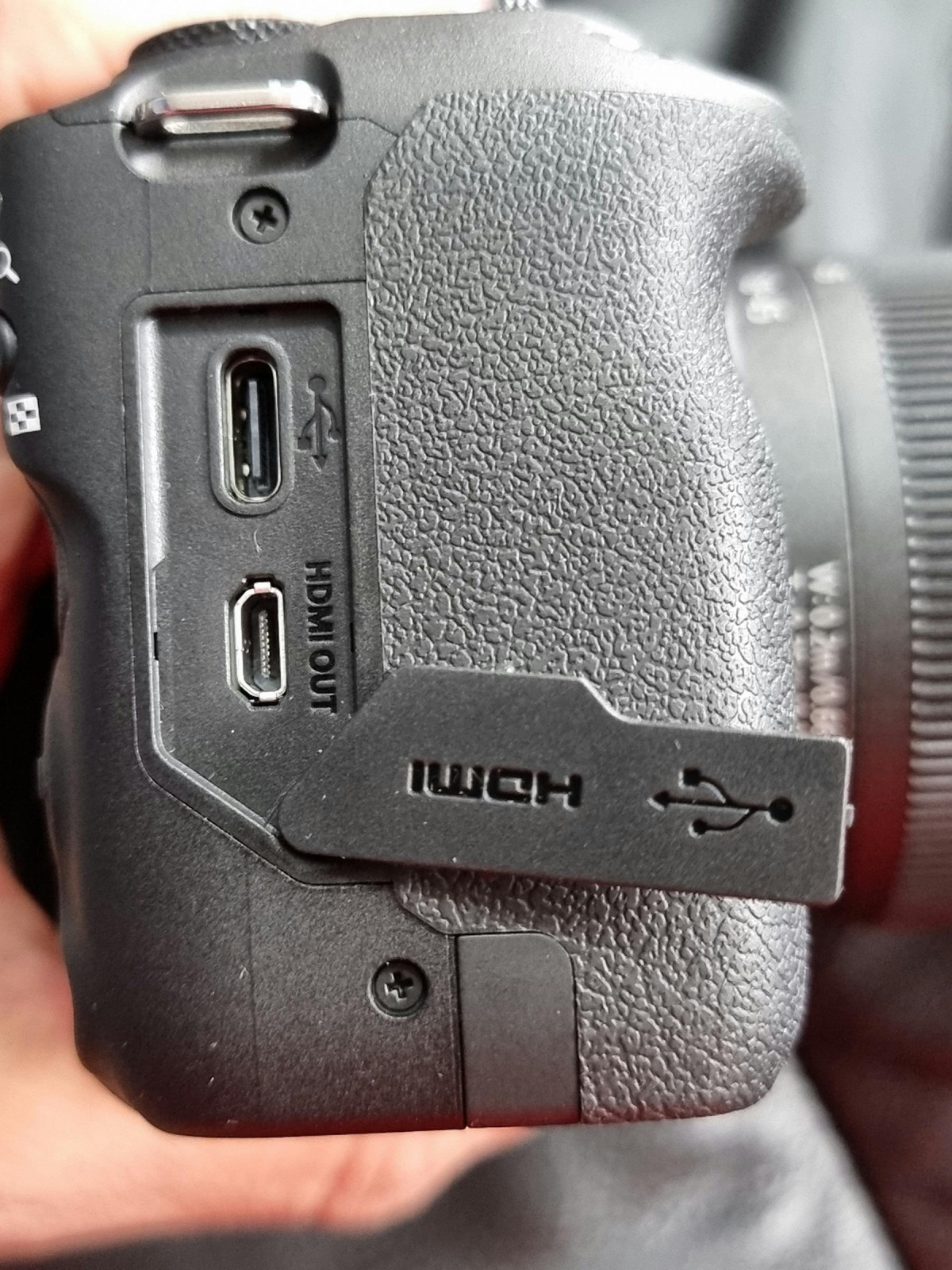
Built-in Wi-Fi and Bluetooth let you pair the R50 with Canon's companion smartphone app, so images and video can be pulled off the camera and onto a phone for quick edits and posting without ever touching a memory card reader — a genuinely important workflow feature for anyone creating content for social platforms on a same-day turnaround. A USB port doubles as both a charging connection and a data-transfer route, while a micro HDMI port allows the camera to output to an external monitor or capture card, useful for anyone livestreaming or wanting a larger reference display while filming. A hot shoe on top accepts external flash units or accessory microphones, extending the camera well beyond its built-in flash and single external microphone input for anyone serious about improving on-camera audio.
One necessary heads-up for new buyers: the camera does not include a memory card in the box. You'll need to separately purchase an SD, SDHC, or SDXC card to actually record anything — whether that's RAW files for maximum editing flexibility, JPEGs for convenience, or both simultaneously for a belt-and-braces approach. It's a minor extra cost, but one that catches first-time camera buyers off guard more often than you'd expect, so budget for a decent-speed card alongside the camera itself.
The RF-S Lens Ecosystem: The One Thing to Know Before You Buy
This is the R50's most important limitation, and the one every prospective buyer should understand clearly before committing. The camera uses Canon's RF-S lens mount, a smaller-sensor-specific version of Canon's newer RF system. Right now, the selection of lenses built natively for this mount is genuinely limited compared to older systems or rival brands — a handful of zooms rather than the deep catalogue of primes and specialty glass available for, say, Sony's equivalent APS-C system. If you want to eventually add a portrait prime lens, a dedicated macro lens, or a fast wide-angle for astrophotography, be prepared to either wait for Canon's lineup to grow, use an adapter to mount older Canon lenses (which adds bulk and cost), or accept that your options are narrower today than a rival system's would be.
For most buyers who plan to shoot primarily with the included 18-45mm zoom and perhaps one additional lens down the line, this won't be a dealbreaker. For enthusiasts who know they'll want to build out a varied lens collection over the coming years, it's a legitimate reason to research the current native lens catalogue carefully before buying in.
Who This Camera Is Built For — and Who Should Look Elsewhere
A Great Fit
The Canon EOS R50 is an excellent fit for a fairly specific but large group of buyers: people upgrading from a smartphone or an old point-and-shoot who want noticeably better photos and video without a steep learning curve; content creators and vloggers who need to look sharp on camera and want autofocus that keeps them in focus without a crew; parents wanting to reliably capture fast-moving kids and pets; and travellers who want genuine image quality without the bulk of a bigger system. Its combination of light weight, intelligent autofocus, and flip screen genuinely does most of the hard work for a beginner.
Look Elsewhere If
It is a poorer fit for a few specific groups. Professional or advanced enthusiast photographers who want deep manual control, dual card slots for backup shooting, weather sealing for demanding outdoor work, or an extensive native lens catalogue will outgrow this camera quickly and should look further up Canon's range. Anyone planning marathon livestreams or long unbroken 4K takes should also be aware of the overheating behaviour noted above. And buyers with larger hands who prioritise a substantial, DSLR-like grip should try holding the camera in person before buying, given the feedback from existing owners on this exact point.
How It Stacks Up Against the Competition
The R50 doesn't exist in a vacuum — it competes directly with a small cluster of beginner-friendly mirrorless cameras, most notably Sony's ZV-E10 and Canon's own EOS R10 and EOS R100.
| Canon EOS R50 | Sony ZV-E10 | Canon EOS R100 | |
|---|---|---|---|
| Positioning | Beginner hybrid: photo + video | Video-first, vlogging-focused | Canon's most basic, budget-first APS-C |
| Viewfinder | Yes, electronic | None | Yes, but with an older AF system |
| Flip screen | Yes, fully vari-angle | Yes, fully vari-angle | No |
| Autofocus | Latest-generation subject tracking (people, animals, vehicles) | Strong tracking, slightly fewer subject categories | Older, less advanced AF system |
| Grip/ergonomics | Compact, can feel tight for larger hands | Boxier, less camera-like grip | Compact, basic |
| Best suited to | Buyers who want both stills and video covered well | Dedicated vloggers who don't need a viewfinder | Absolute budget buyers prioritising price above all |
Against the Sony ZV-E10, the comparison is genuinely close, and the right pick often comes down to one question: do you need a viewfinder? If you're shooting primarily through a rear screen for video, the Sony's more video-centric design and slightly better microphone hold real appeal. If you also want to compose stills through an eye-level viewfinder in bright conditions — or you simply prefer Canon's menu system and colour rendering — the R50 has the edge.
Against Canon's own R100, the R50 is worth the price step up almost without qualification, since the R100 sacrifices the flip screen and uses an older autofocus system, both of which matter enormously for the content-creation audience this camera is aimed at. The EOS R10 sits above the R50 in Canon's own lineup with a more advanced control layout and faster shooting for those who outgrow the R50's simplicity, but at a meaningfully higher price and with more weight to carry.
Honest Strengths and Weaknesses
What It Gets Right
What the R50 gets right is hard to overstate for its price bracket. The autofocus system alone would be a strong selling point at a much higher cost, and the fact that it's paired with a genuinely portable, all-day-carry body and a flip screen built for self-recording makes this one of the more complete beginner packages on the market. Image quality from the sensor is clean and pleasing straight out of camera, ISO performance in dim conditions exceeds what you'd expect at this price, and the inclusion of USB-C PD charging is a small but genuinely modern convenience that plenty of pricier cameras still lack.
Where It Falls Short
Set against that, the weaknesses are real rather than nitpicks. The limited native RF-S lens catalogue is the most consequential long-term issue, since it constrains how far you can grow into this system without adapters or compromise. The compact grip that makes the camera so portable also makes it less comfortable for larger hands during long handheld sessions, and the lack of weather sealing means outdoor shooters need to plan around the elements rather than shoot through them. The 4K overheating behaviour under extended recording is a legitimate concern for anyone planning long-form video work rather than short clips, and the absence of a headphone port limits your ability to monitor audio in real time while filming — a detail that matters more to serious video creators than casual users.
The Verdict
The Canon EOS R50 earns its place as one of the strongest entry points into proper mirrorless photography and video available right now, and it's the right camera to buy if your priorities are portability, intelligent autofocus, and a genuinely useful flip screen for content creation, without wanting to wrestle with a complicated menu system or carry a heavy bag. It's particularly compelling bundled with the 18-45mm kit lens, since that combination alone covers a huge range of everyday and travel photography needs straight out of the box.
Buy it if you're a beginner, a content creator, or a parent who wants dependable autofocus and solid 4K video in a body light enough to carry everywhere. Look elsewhere — likely toward Canon's own EOS R10, or toward Sony's ZV-E10 if you have no need for a viewfinder — if you already know you want deeper manual control, a wider native lens selection today, or a body built for punishing outdoor conditions. For the audience it's actually designed for, though, the R50 delivers more genuine capability per gram than almost anything else at its price.
What People Say
19 commentsR50
** CAMERA & LENS ***
The EOS R50 is Canon’s new entry level mirrorless APS-C camera, that utilises their relatively new RF mount. The camera itself is small and lightweight, being made of hard plastic. The build quality is excellent and it has a good finish throughout.
Like all entry level cameras, it doesn’t have as many controls and dials as you would find on more expensive cameras. That being said the controls it does have are well thought out. Whilst the grip is reasonably deep for a camera of this size, I must admit due to the size and shape of the camera, I still got thumb ache after a while when using the rear controls, and did also accidentally hit the controls with my palm by mistake on occasions. I have large hands though, so hopefully smaller hands will fare better.
The electronic viewfinder (EVF) is comfortable to use, and whilst not the largest, gives a nice, sharp image. The 2.95-inch TFT touchscreen monitor is fully articulated, and can be flipped forward for when taking selfies or videoing yourself. It is responsive to touch and allows you to do things like select where to focus, or change various settings.
The camera uses Canon’s new RF mount. Whilst the camera’s sensor is APS-C, this RF mount allows the camera to use both Canon’s “RF-S” APS-C lenses and their “RF” full-frame lenses. The camera also uses Canon’s new propitiatory muti-function hot shoe, rather than Canon’s traditional hot-shoe mount.
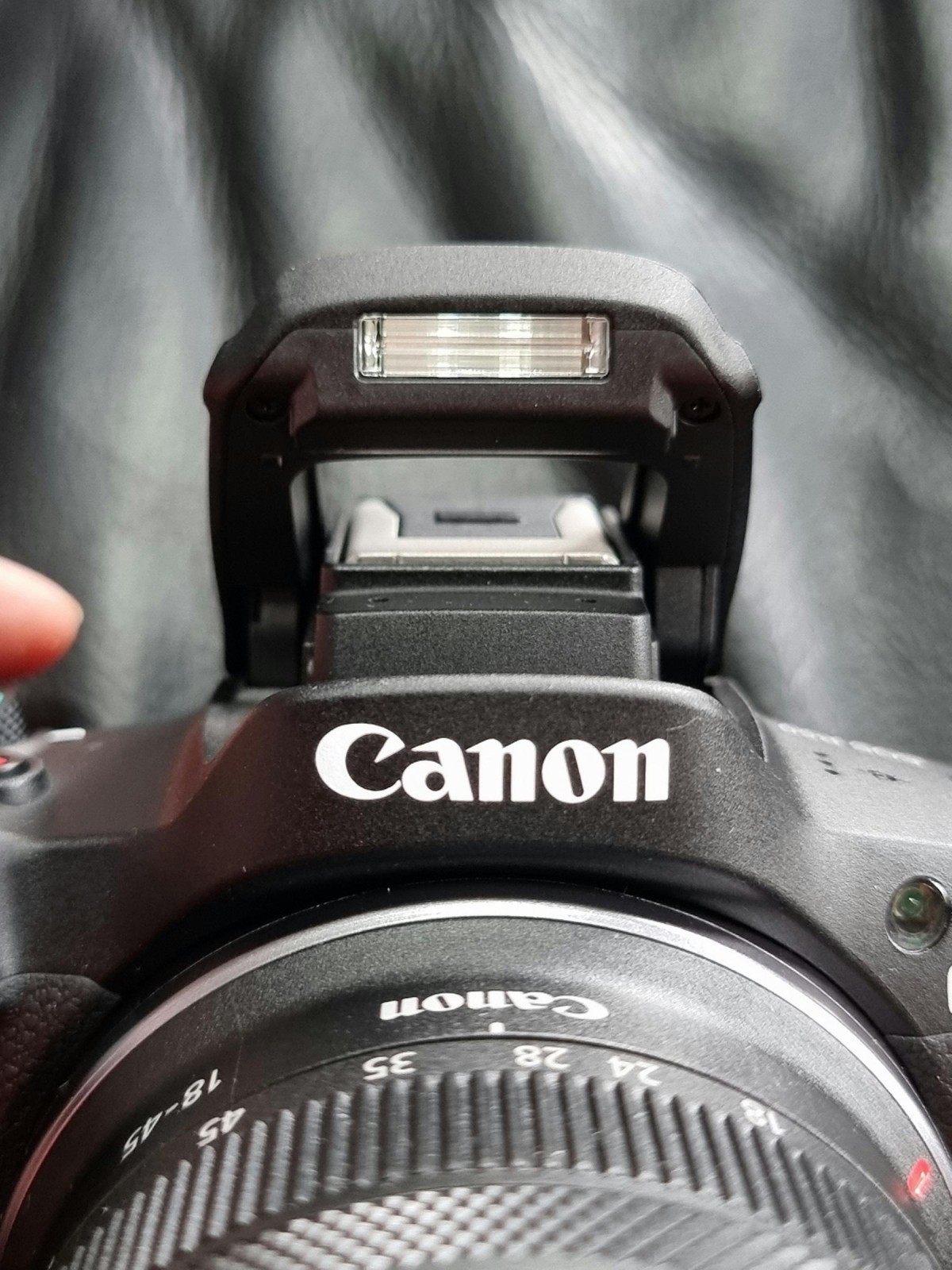
It’s nice to see an on-body flash, however it has to be popped up manually and doesn’t have the same quality feel that the other parts of the camera do. The results from it are not terrific, but acceptable for those times when you have no other option.
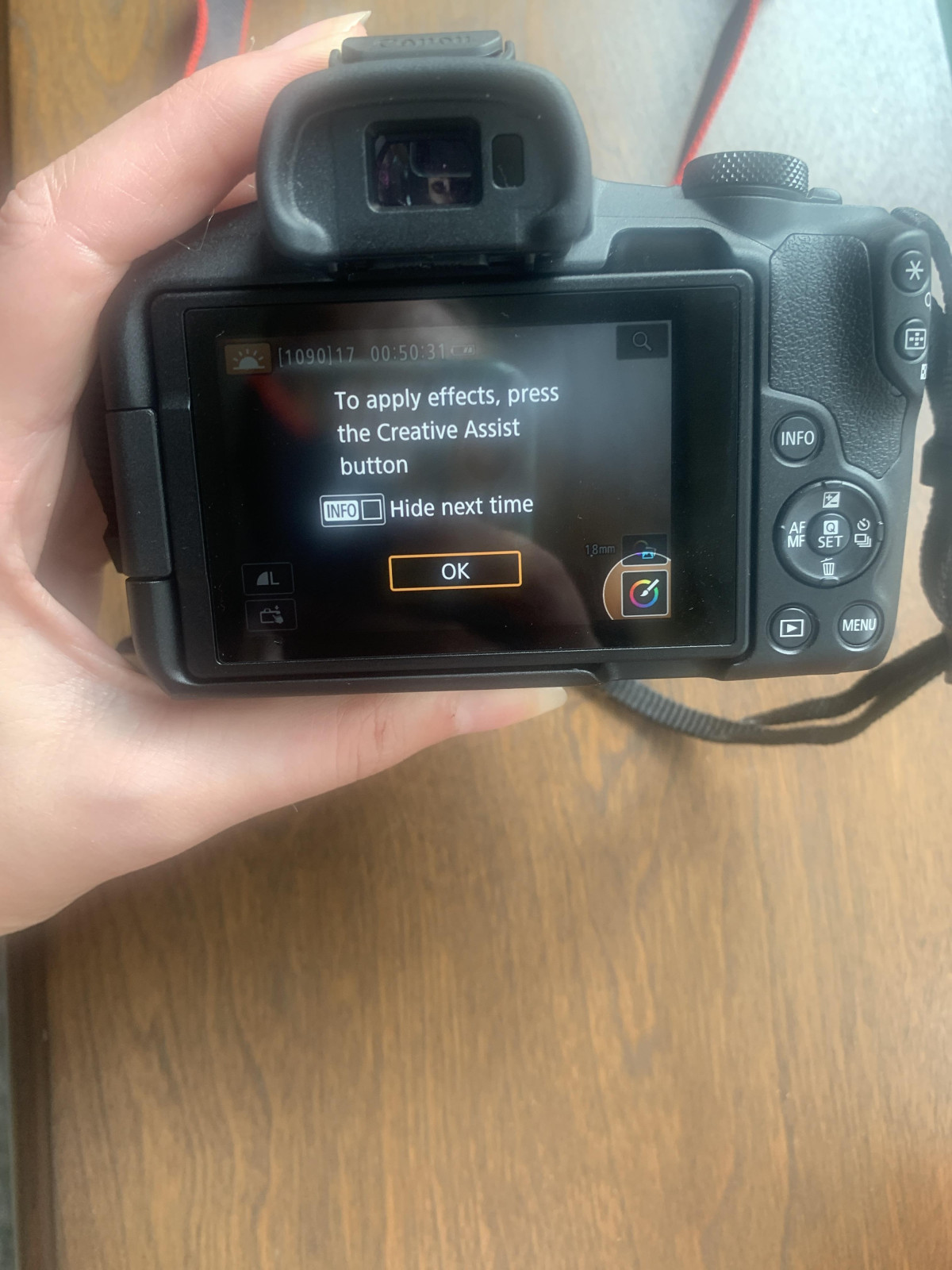
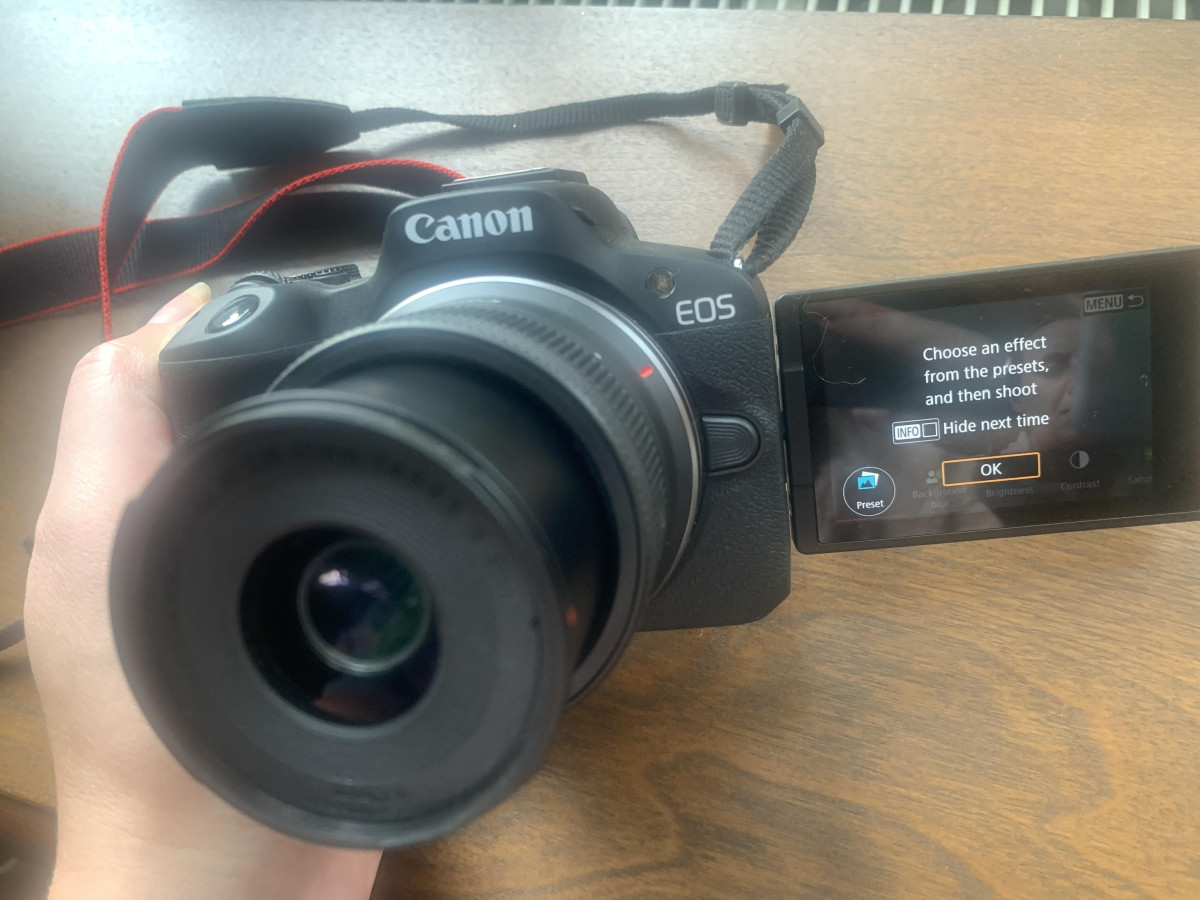
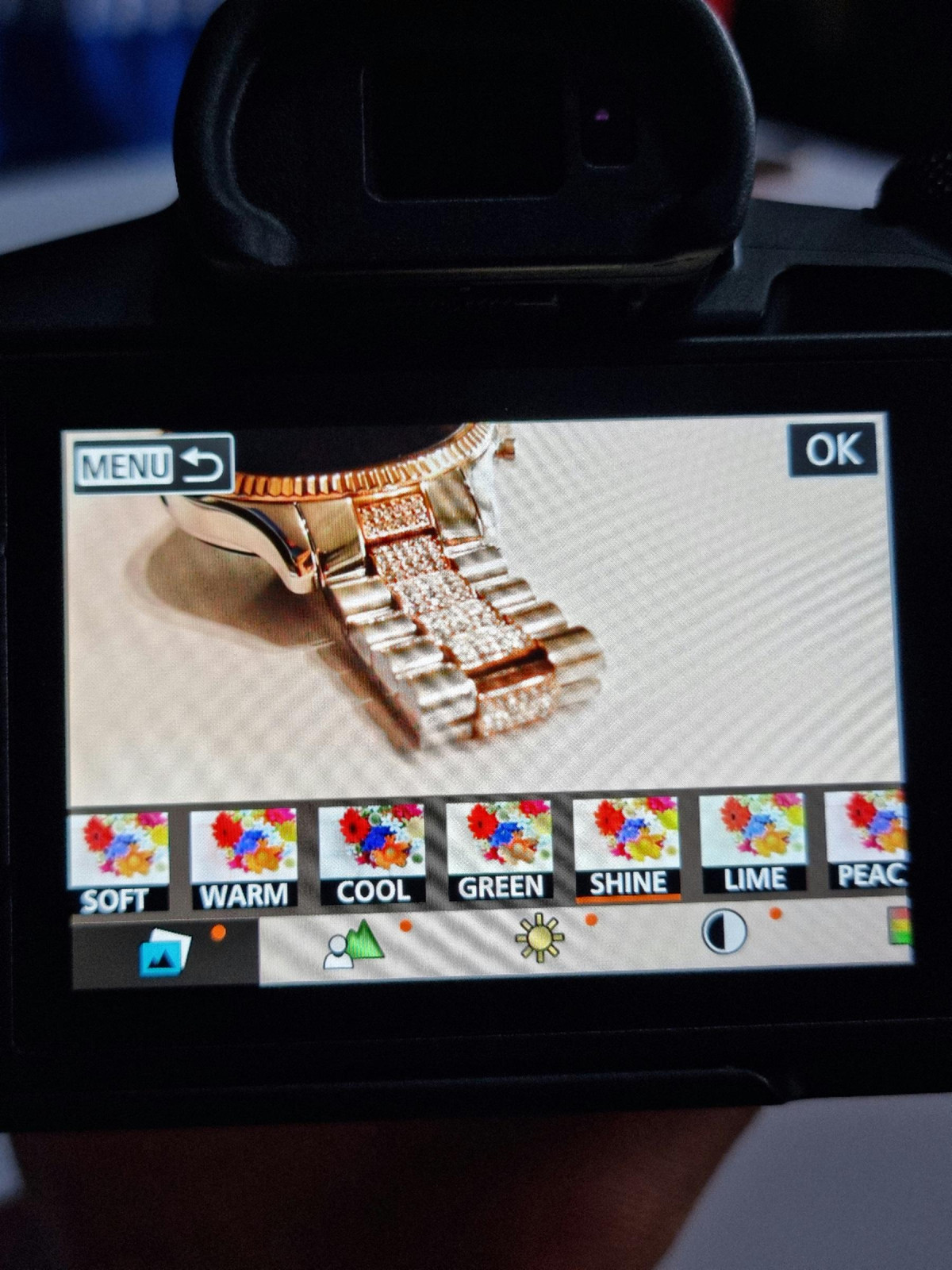
The menu system is excellent, and well thought out. The camera also has auto-shooting modes that make it very easy for beginners to take photos. Its creative assist mode also does a nice job of bridging the gap for people used to taking photos with phones; allowing them to adjust the camera settings in ways/terminology familiar to them. (e.g. Allowing you to adjust “Background Blur” instead of adjusting the aperture.)
The autofocus system is on the whole good. Subject tracking is also good when there is a clear background, however it can get confused with a busy background. Impressively for an entry level model, there are several tracking options, including Humans (Eyes/Face/Head/Body), Animals (Dogs, Cats and Birds) or Vehicles (Racing cars or Motor bikes). When shooting video, there is also a product mode which is very useful when making video content. When stood in front of the camera if you hold up an item/product, the camera changes focus from your face to whatever you are holding, so that you can show your viewers products/items you are talking about easily.
The camera can shoot 12fps using the 1st curtain electronic shutter or 15fps when using the silent electronic shutter; which is very fast for an entry-level camera. However, this benefit is negated a little by the fact that the buffer quickly fills up (after just 7 images when shooting RAW or 28 when shooting jpeg). Also, the rolling shutter effect is very pronounced when using the electronic shutter.
The camera does not have any in-body image stabilisation (IBIS), so you are reliant on using lenses with optical image stabilisation (IOS). Thankfully the 18-45mm lens does. There is electronic image stabilization (EIS) for when filming, however this will crop the image slightly (1.1x for normal and 1.4x for the enhanced EIS).
Talking of video, the camera can film up to 4k at 30fps 10-bit. It is also capable of 120fps at 1080p with full autofocus but no sound, for getting slow motion shots. The camera supports live streaming to YouTube as well as vertical video capture. You can also use the camera as a webcam by plugging it into your computer via the USB cable, and using Canon’s EOS Webcam Utility software.
Battery life is ok for an entry-level camera, but you will want to carry a spare, especially when filming. Disappointingly, whilst it is possible to charge the battery and power the camera directly via the USB-C slot, in order to do so you will need to additionally purchase the PD-E1 USB power adaptor.
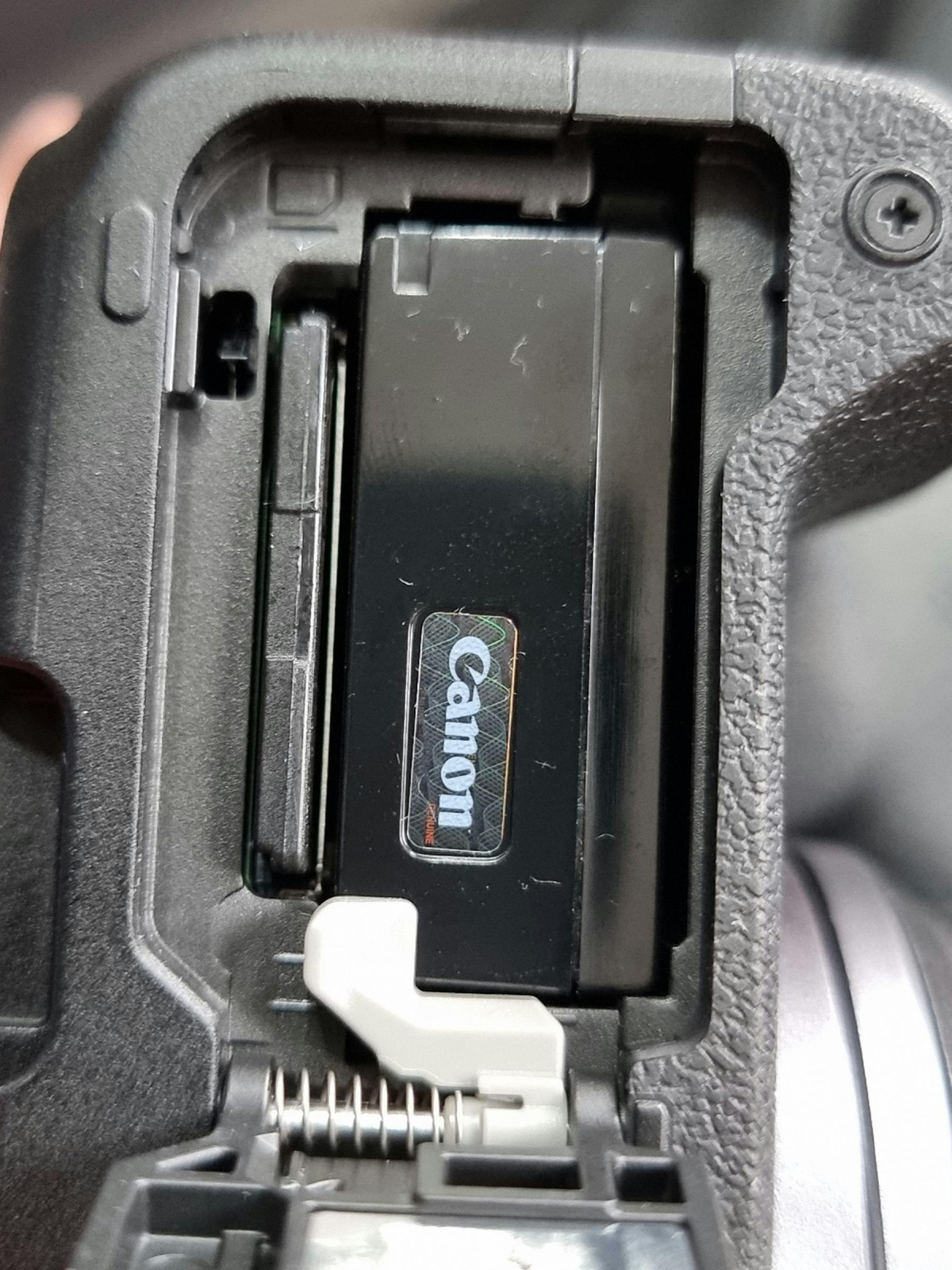
Ports wise, the camera is fairly well catered for given it’s entry-level status. There’s both a USB-C 2.0 port as well as a mini-HDMI port. In the battery compartment is a single SD Card slot, but disappointingly its just a UHS-I SD, rather than the more faster UHS-II. The real frustration comes with the fact that whilst there is a 3.5mm mic in port, there is no headphone port to enable you to monitor audio. The camera also has both Bluetooth 4.2 and 2.4GHz Wi-Fi connectivity.
The RF-S 18-45mm F4.5-6.3 IS STM kit lens (which due to Canon’s 1.6x APS-C crop factor equates to a “35mm equivalent” field of view of 29-72mm) is reasonably good for a kit lens, but doesn’t excel beyond that. So whilst fine for starting out as a general lens, you will probably soon want something with better low light capabilities and a bit sharper. It’s also worth noting that although one is available (model no. EW-53), the lens doesn’t come with a lens hood. This is a head-scratching decision, given that this camera is aimed at novice users not used to handling a camera, and a lens cap would offer the lens some extra protection.
So enough about the hardware, what about performance? In this the camera punches well above its weight. Photo quality is excellent, especially when the camera is paired with better lenses than the kit lens. Images are also being blessed by Canon’s eye pleasing colour science. Noise is handled well in jpegs up to about ISO 3200, but images are still perfectly usable up to ISO 12800. And as mentioned before, the various creative options do a fantastic job of allowing inexperienced photographers to capture some great looking shots.
Video quality is also good. The image might be a little sharp for some, being 6K footage down sampled to 4K, however this can be overcome through the use of a black filter or different lenses, to get a more filmic look. The digital image stabilisation is ok, but not great, and you do need to be careful of the rolling shutter effect, especially when panning, but for an entry-level camera it is acceptable.
*** Conclusion ***
This is a very good, small, lightweight, entry-level, mirrorless camera from Canon. As listed above, it does have its faults and missing features that I wish it had, however given the fact that it is a low cost, entry level camera, this is to be expected. And with that in mind, the features it does have, are very good indeed. The autofocus, subject matter detection and image quality are especially good for this level of camera. And the menu system and creative modes are excellent for those new to photography or looking to step up from taking pictures with their smart phone.
The included lens is a reasonably good kit lens, . The microphone is probably the weakest of the bunch, but is an ok starting point.
As individual products, and bearing in mind the price and the fact that this is an entry-level camera, I would be giving the camera 5/5
Whilst the kit lens is perfectly fine if you wish to vlog by setting it up on a tripod and talking in front of it, most creators also want to be able to walk and talk to the camera at the same time. In order to do this, you will most likely need to use image stabilization, but the Electronic Image Stabilisation on the R50 introduces a crop. The kit lens, which starts at 18mm, is already equivalent to 29mm due to the 1.6x APS-C crop factor. With the enhanced EIS turned on, this gets cropped by a further 1.4x, making it equivalent to 41mm. That’s quite a tight shot when you are only holding the camera at arms length, so you will not get the nice wide shots with your face in the middle, that most content creators strive for. Now it may be if you have good technique you might not need the EIS, but if you don’t, you are either going to have to invest in a new lens, a gimble, or some sort of wide angle adapter that attaches to the front of the lens.
Lightweight, compact and impressive starter camera
This is a great little camera. It would be perfect for street photography or as a travel camera for general landscape travel photography as its light weight and compact in size. It is also great as an introduction to cameras with interchangeable lens as it’s a step up from a standard compact camera or a phone camera. It has huge potential for use with street photography as it is light and unobtrusive. The option to choose silent shutter would further help with the taking of discreet photos.
If you want to step up into proper portraiture, sports or wildlife photography there are certain limitations - primarily that the standard kit lens that comes with this body doesn’t offer the focal length usually required for those types of photography…although you could get away with using the 45mm end of the focal length due to the APSC sensor. For sports or wildlife you’d need a longer reaching lens, these are likely to be heavy and added to the small, lightweight camera body, may be problematic and may cause the weight distribution to be out of balance/uneven.
Anyone who has used Canon previously will have no problems with the menu on this one as it’s remarkably similar to other canon cameras. Being used to using a DSLR, I found the lack of the rear wheel meant making adjustments in manual mode wasn’t as simple. I did however like the ability to set the image aspect ratio in the menu before shooting rather than after and the articulated screen with the touch screen is a nice feature. The ability to take photos by touching the screen was an unexpected surprise! You are able to disable the ‘touch shutter’ and instead use touching the screen to changing the point of focus of the photo. The built in image stabilisation in the lens is phenomenal!
Technically, it is a superb package utilising canons DIGIC X processor found in their flagship R5 and R3 models. The dual pixel auto focus and focus tracking is superb for a camera at this price point which would be a huge bonus for any sports or wildlife photography that you might wish to use it for (after a lens upgrade!)
Setting up EOS Utility and connecting the camera to a laptop to allow remote shooting was simple, straightforward and effective.
Overall, this would be a superb for someone looking for an impressive, lightweight and compact for general photography or for someone just starting to use interchangeable lens. If you are looking for something for portraiture, sports or wildlife I think the lightweight body is going to be too problematic when adding a different lens (weight distribution/balance). Having never used a mirrorless camera, I have been very impressed with the technology and it has certainly given me a push in terms of purchasing the Canon R5!
Perfect starter mirrorless camera
As an experienced hobby photographer, I was looking forward to trying this camera as I had never used a mirrorless camera before which are the next generation of cameras. I was surprised at how light and small it was (most likely due to it not needing a mirror) and it felt good in the hands given that this is an entry-level camera.
Setting the camera up was very easy (just remember to buy a memory card as it comes without one) and even connecting it to the Canon app was straightforward. The touchscreen is responsive and quite useful in terms of changing settings for the camera instead of fiddling with buttons (but you can still do this if preferred). The camera explains the different modes as you scroll through them, meaning that for someone using a camera for the first time will know what mode to use. One setting that a lot of people, including me, may appreciate is the silent shutter button which meant that it doesn’t make a sound when you take a picture. This is ideal for events or places where it’s vital to be silent, such as nature photography and weddings.
On the note of nature photography, the camera has 15 FPS, which is great for catching fast-moving animals such as flying birds or could even work for sports photography. Additionally, with the dual pixel autofocus, the camera is able to track people, animals and vehicles plus can detect eyes and faces to ensure the shots are always sharp. I didn’t experience any issues with these feature, as it always seemed to immediately know where the eye of the subject was.
With all these features, the reason I didn’t give it a full five stars is due to the limitations of the lens. The focal length puts it much more towards a wide-angle style of photography, meaning it is not ideal for portraits or shooting objects far away. Also, the aperture range is also limited as the lowest it can go is 4.5 and then that increases when you zoom in, meaning if you want a nice blurry background, the subject would have to be even further away from the background.
I also did some filming, where it really excelled where the lens in this instant was particularly useful as I was in a smaller space (meaning I needed to be as wide as possible). It tracked and focused well, and being able to film in 4K at 30 FPS will lend itself well to any budding videographers (it also has an input for an external microphone which will help get that crisp clear sound).
All in all, for someone getting started in photography and videography, this is a fantastic setup and there seem to be an array of accessories which can be added on later. My only consideration would be to look at purchasing an additional lens to ensure you can make full use of the many features of this camera.
Lightweight, high quality, perfect for travelling!
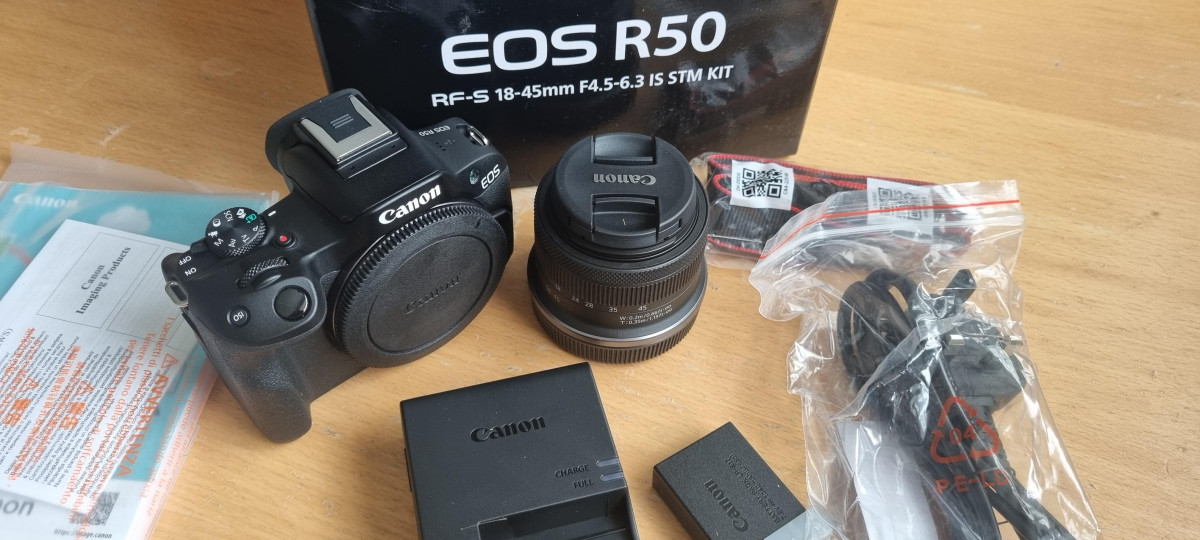
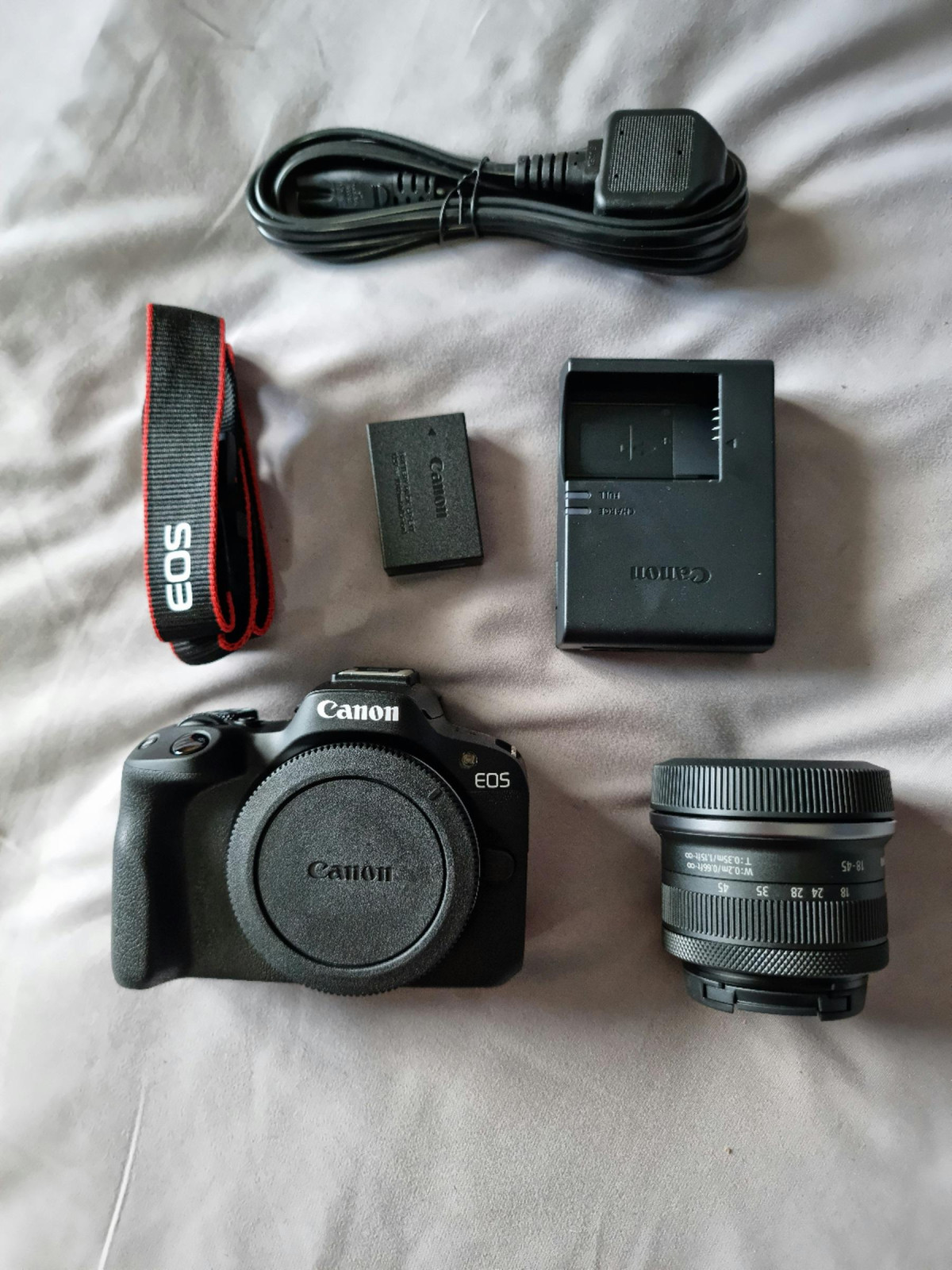
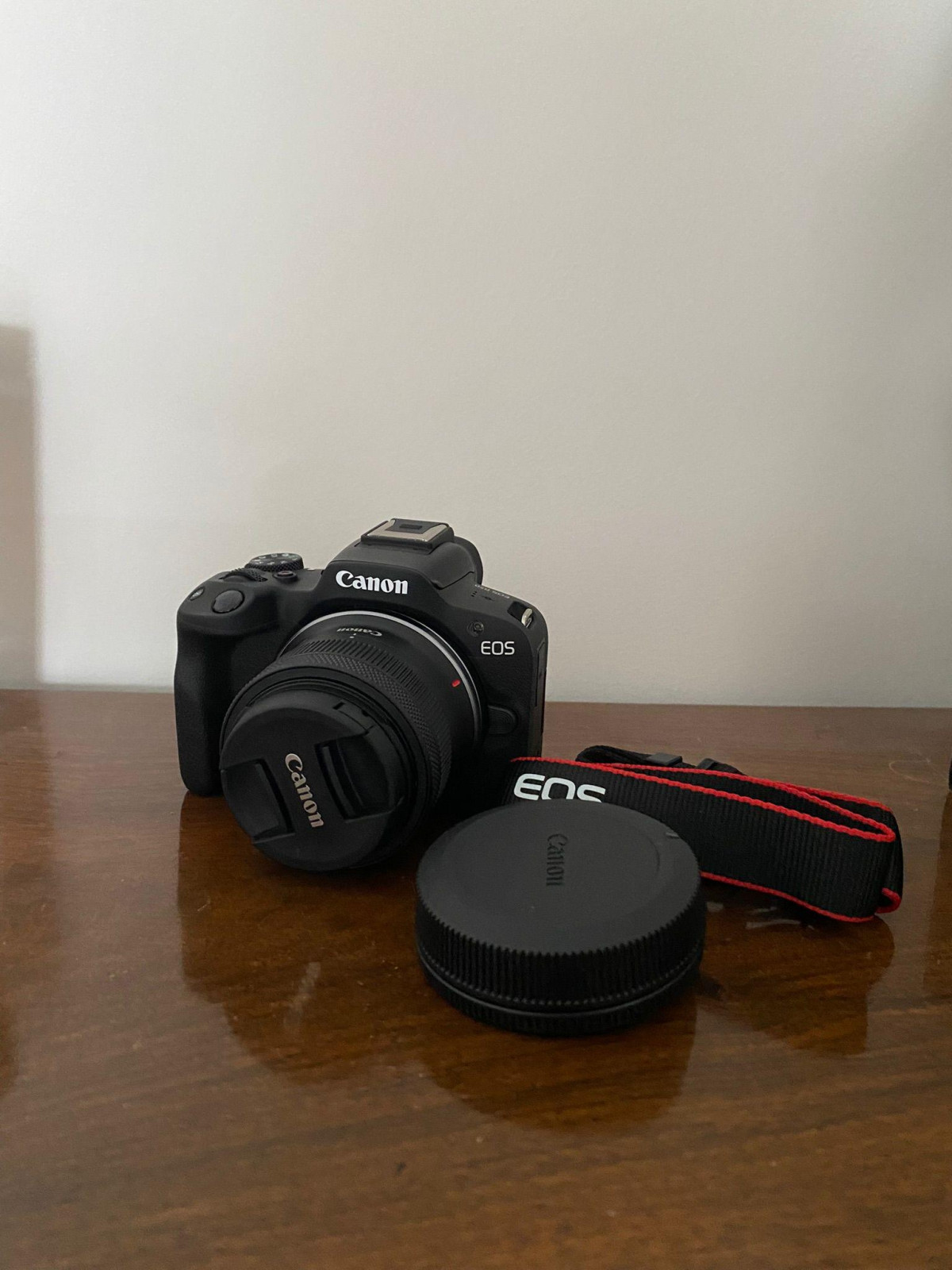
When opening the camera box, I was surprised how compact and lightweight the camera is. My previous cameras have all been heavy and bulky, so was impressed by the compact size and weight- perfect for travelling with! The camera comes with the battery, charger and neck strap. However you will need to purchase a memory card as this is not included.
The camera was very easy to set up following the instruction manual. You can also access a more advanced user manual on the canon site and access software information. I really like the camera connect app to import my images onto my phone via Bluetooth. It allows me to conveniently check the images I have taken. It also allows you do live view shooting and can be used as a Bluetooth remote controller via the app.
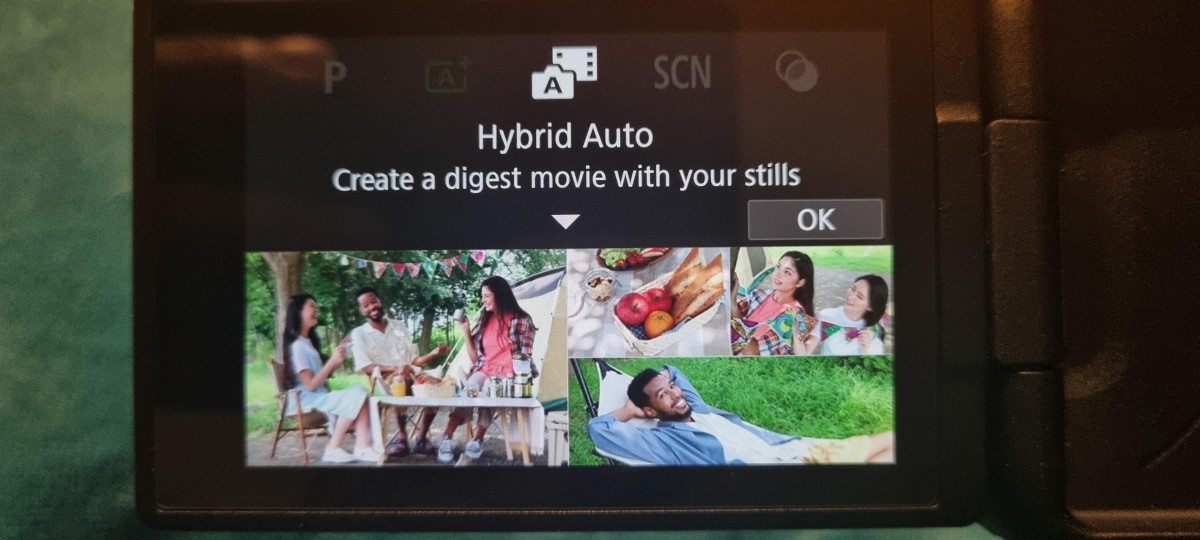
Another feature I found helpful on the camera is that it explains what each camera mode is used for when you select each one. This is really helpful information and ideal for introducing people to how the camera features can be utilised. It also makes the camera ideal for people wanting to start a new hobby in photography.
Modes included are: special scene, self portrait, portrait, smooth skin, group photo, landscape, panoramic shoot, sports, kids, panning, close up, food and night scene- idea for nighttime photography. There is also a built-in flash.
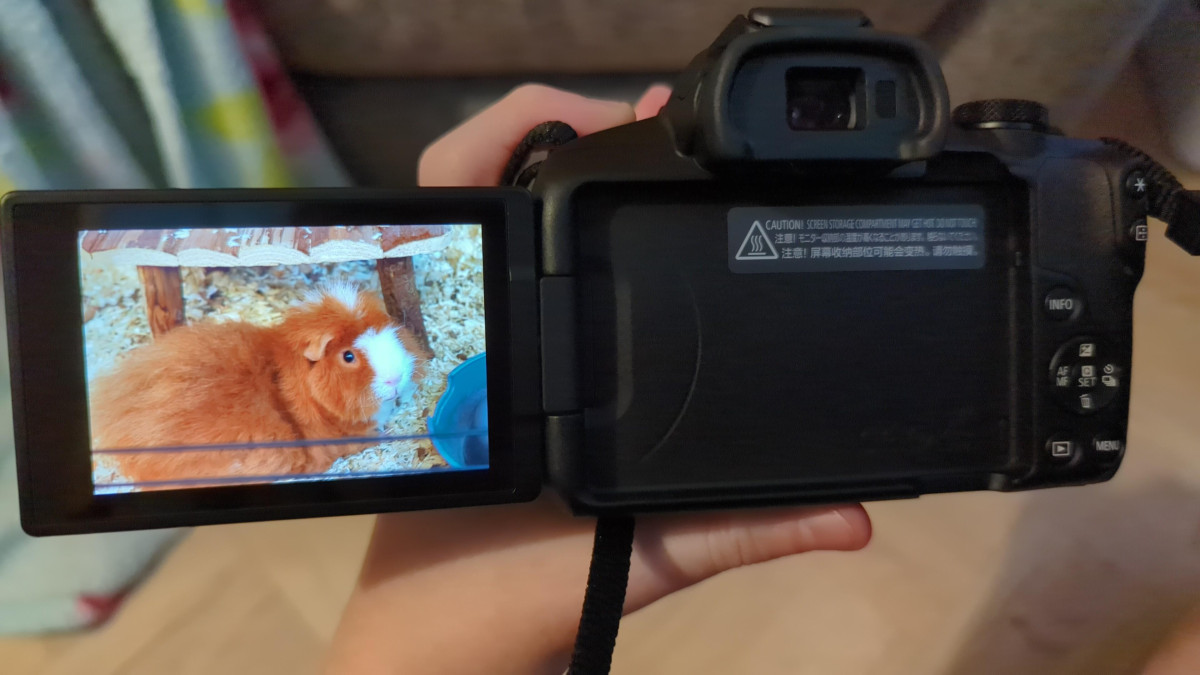
I like the flip out touch screen as it allows me to change and view different angles while taking photos. The touch screen is also responsive while using. I like the autofocus function as it tracks any movement and ensures the photos stay clear and in focus. You can also use silent shutter mode, these features were helpful when I took photos of my moving guinea pigs on the camera.
For me personally as a glasses wearer, the dioptric adjustment slider is very useful for me. This allows me adjust the view finder to my eyesight, meaning I don't have to wear my glasses and can still see a clear focused images.
The video function is also good, allowing you to video in 4K. It also allows you to attach a external microphone if you would like to.
Overall I found the photo quality to be great and I am very impressed with the camera as a whole. I am looking forward to using it more and taking it on holiday to get some fantastic photos! Highly recommend
Little camera with big features
The Canon R50 is more of a entry level APS-C crop sensor mirrorless camera, i would describe this as a hybrid between a digital camera & a interchangeably lens camera, it sits in-between the two, its very light weight due to the hard plastic body the lens is also made of the same hard plastic, seems strong enough which makes it easy to carry around without feeling like you’re dragging a 3kg weight around your neck which is great if your travelling on holiday or family & friends events
It has lots of features including being able to add a bit of creative magic to your photos before you take them, The auto force is very good & forces fast on the object, just touch the screen where you wish it to force, the screen is fully touchscreen & you can navigate through it quite easily, it has a built-in flash which is great and has a mic port and HDML & USB-C ports the memory card slot is next to the battery on the bottom
The pictures came out very well and are clear & you can get a nice bokeh with the kit lens when taking photos it also has 4k video which is great so you will never miss any of those magic moments & you can connect it with your smartphone to upload your photos fast & easy
I think this little camera punches a big hit for the beginner or hobbyist photographer you get alot from this little camera but they have kept the weight down which is probably one of the biggest things that makes a big difference when you are out and about in the real world taking a heavy camera with a lens on it can be alittle bit too much to carry & we tend to leave the camera behind & use our phones, this is light enough to take with you & get some really amazing photos
If you’re more of a amateur leading to professional photographer this might not be the right camera for you but if you just like taking photos as a hobby this would be ideal & giving you the option to buy more lens to fit your hobby interests in the future
Next level vloggers camera
If you’re a blogger and want to up your game, then this is the camera for you.
Take pro quality 24.2MP images and video in 4K,
With its built in microphone, swivel touch screen, mirror less function and instant upload, creating content has never been so easy.
Despite its high functionality and array of features, even a beginner will soon master how to navigate it.
Reasons why this is the superior camera:
Firstly the size, this is incredibly compact and lightweight. You can
Produce professional quality images and video without carrying around a huge kit.
It has excellent subject tracking and autofocus with face and eye recognition- this is particularly essential if you are demonstrating products or other items then want the focus to quickly return to your face
You can shoot and save in vertical orientation and can select the required aspect ratio for the platform you will upload to
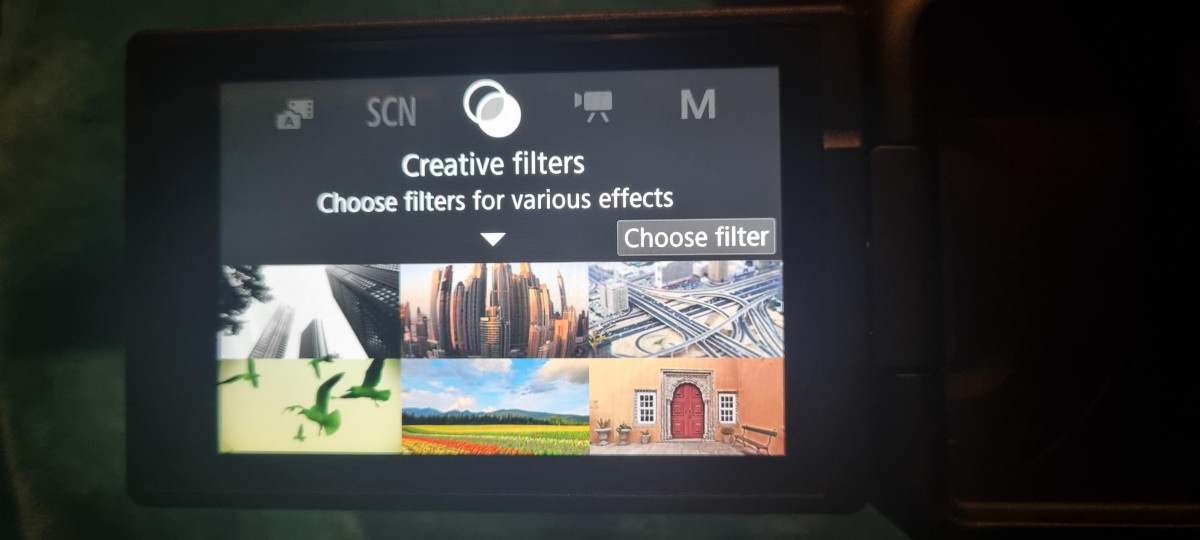
It has cool features such as skin smoothing, creative filters, fun effects and helpful creative assist functions that demonstrates the cameras abilities to the user to help create the perfect shot
Touch screen articulates to a variety of angles- perfect for viewing whilst recording self- you won’t have to mess around with image flipping thanks to the mirror less features.
The built in microphone is great but it has the capability to add an external mic if required.
It also works with cannon’s great accessories to enhance your experience such as tripods and array of other RF mount lenses
My favourite feature of all is the the high speed connectivity with the canon connect app.
It Begins via Bluetooth then the camera activates wifi for almost instantaneous transfer to your device for editing and uploading. This means no waiting around for wifi, laptops and other devices.
It can all be downloaded, edited and uploaded to the platform straight from your mobile phone/device before you’ve even made it back to the office!
A perfect lightweight camera for beginners
EOS R50 mirrorless camera is much smaller and lighter than my dslr camera. It's packed with loads of features and great for beginners either in auto or manual mode.
The easy to use touchscreen allows you to change settings such as sutter speed,iso, etc, in manuel mode and swip between photo's to view. It also has the option to view 10 photos using the view finder. Using the viewfinder, you can check your exposure along with other settings before taking a photo, as well as making sure you have the right focused point before taking a picture. With the face detection feature, it will track peoples faces to keep in focus and can also be used for animals.
When in move mode, you also have a selection of different settings, allowing you to get the best out for the camera.
The wifi and bluetooth allow simple transfer of images and videos straight to apple or android devices using the Canon Connect app.
Having a canon dslr, i thought the lenses would fit straigt on to the eos r50 to my disappointment they don't. However, you can buy a adapter so no need to spend money on buying new lenses.
In saying that, the kit lens that comes with the camera is a great lense to get started with.
All in all, this is a great camera, small and light weight, and packed with loads of features to suit beginners or for someone looking for something a bit easier to carry about.
Travel-Friendly Vibes with Balanced & Thoughtful
I’ve been using the Canon EOS R50 with the RF-S 18–45mm lens for a little while now, and honestly—it surprised me. It’s compact, super easy to use, and still manages to pull off some seriously sharp photos and clean 4K video. Whether I’m snapping quick shots while traveling or filming handheld clips for social media, this little camera’s been punching above its weight.
Coming from a bulkier DSLR setup, the lightweight design alone felt like a game changer. Add to that the snappy autofocus, great colors straight out of camera, and Canon’s classic user-friendly menu system, and it’s basically a no-stress shooting experience. Sure, it’s not perfect (no in-body stabilization and the 4K has a crop), but for the price and size, it’s hard to complain.
If you're a beginner, casual shooter, or even a content creator looking for something lightweight that still delivers quality, the R50 might be a better fit than you think.
⭐ Final Rating: 8.5/10 — A smart, lightweight choice for beginners and hybrid shooters.
Light weight and compact.
Pretty impressed with how easy the camera is to use. The menus are intuitive and the touch screen makes it easy to navigate the menus pretty quickly. It’s quite a versatile little camera. The option to use pre-selected filters makes it easy to shoot without having to do too much post editing which is great for a beginner and the manual mode allows for more control of the settings creating a more personalised style. The camera has a built in flash and the screen flips out and rotates for selfie shooting. The overall image quality if fantastic for both photo and video. For video I selected the neutral filter which gives a flat image so it’s easy to colour grade footage later.
In the box there is the camera body, 18-45mm lens, battery & charger and neck strap. With the Canon app you can control the camera remotely and the ability to use the camera as a webcam is a great bonus.
Fantastic starter camera
This lightweight bridge camera is fantastic for someone starting out. It comes with a removable lens making it ready to use.
It comes with a variety of settings and has a basic description of each function on the camera to help get you started.
The viewing screen opens up, rotates and even acts as a touch screen which makes it user friendly and practical.
The camera is designed as a content creator camera, meaning it would be ideal for videos or creative photos. The built in features and filters cater this, giving the user the freedom to express themselves through their photos.
This would also be a useful camera to take travelling.
Canon R50 camera Missing Lens
I bought my daughter a R50 canon camera for Xmas
When we opened it on Xmas Day the lens was missing
I took it back the following day they ordered a replacement
I went to collect it and was told I had to contact customer service
Which I did and was told it was the stores discretion as to whether I received a replacement and they declined it
All i want is the lens for the camera to work I am absolutely disgusted the way I have been treated I will never shop here again you have lost a loyal customer and I really am at a loss as to what I can do next
Stunning little camera
Incredible bit of kit. Its small light weight ans fits nicely in my hands. It has a easy to use user guide for every setting. Light weight so carrying it on an all day shoot is a doodle. It has a screen you can flip round for taking thise photos up hogh or down on the ground or even a cheeky little selfie
Fantastic upgrade
I bought this camera as an upgrade from an older Canon DSLR. How the technology has moved on is remarkable, I would highly recommend this camera to any beginners and anyone wanting to upgrade at the lower end of Canon. Once you have the adapter then all your existing lenses fit too.
Literally thee best for amateurs or professionals
Literally thee best for amateurs or professionals, no need for the manual, the easy step process on the camera itself makes for the easy usage whilst looking like a professional. The the low lighting has been fixed from previous models, nice weight, perfect pictures
Really nice camera for the price
Did so much research into the camera before buying and I can say everything was like I saw before purchasing.
If I had one con with this camera is the overheating some times it can be a major issues when doing long form recording
Very solid
Good camera for beginners, lots of cool features on there, decent price, can’t go wrong really only thing I don’t like is that it doesn’t have a headphone jack which is a shame. Apart from that a good buy 👌🏽
Solid starter
Really good camera, got it as a starter camera and really cant complain, the lens it comes with doesnt have insane zoom but enough for the everyday
Great features. Easy to use
I am so happy with my purchase. The process on Argos and picking it, was sooo easy. I love the camera. It is very clear and makes it fun to use.
Amazing camera and affordable
Good camera , clicks really good content and affordable as well. I use it for my makeup bookings and everything just pictures very well.